Selecting a mahogany furniture maker involves more than comparing polished photographs. The wood’s reddish-brown color, close grain, and changing patina can make a dining table feel distinctive in a room. Made to order mahogany furniture also gives buyers a chance to specify dimensions, finishes, and practical details. Small choices matter.
This guide to 2026 manufacturers considers how each company handles design, materials, construction, and communication. It looks at useful evidence, such as wood specifications, finish samples, joinery descriptions, and clear explanations of customization options. Ask whether a piece uses solid mahogany, veneers, or a combination; these choices affect appearance, cost, and care. A sample can help, though its color may differ slightly from a finished piece.
The comparison also considers production timelines, delivery arrangements, warranty terms, and after-sales support. These details are easy to overlook when a design looks perfect online. They deserve attention. Buyers should weigh craftsmanship against budget and be realistic about lead times, since custom work may take longer than ready-made furniture. No maker suits every project. Reviewing these factors can help homeowners, designers, and hospitality buyers identify a manufacturer whose capabilities match their needs—and spot unanswered questions before placing an order.
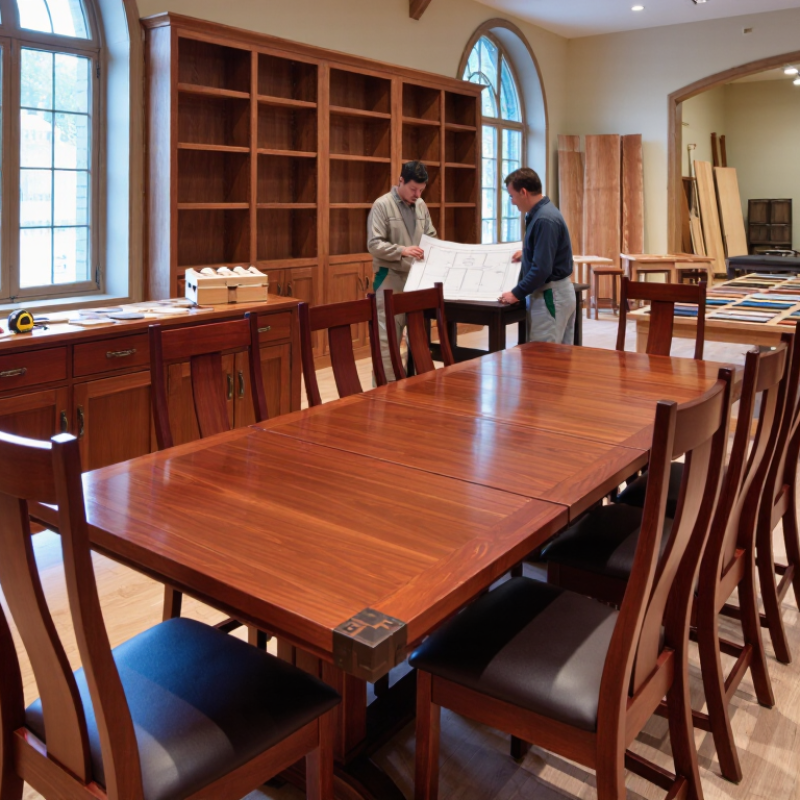
Made-to-order mahogany furniture is designed around a room, its measurements, and the way people use it. Buyers can specify table length, drawer placement, leg shape, and finish sheen before production begins. A dining table may need a narrow profile for a compact room, while a writing desk might benefit from a shallow pencil drawer. The maker should confirm dimensions in writing and explain which choices can still change after cutting starts. Small details matter. “Mahogany” can refer to different species, with variation in color, grain, and availability. Ask which wood will be used and whether adjoining panels can be selected for a consistent appearance.
Good ordering involves more than looks. Discuss joinery, board thickness, finish samples, delivery access, and care before approving a design. Wood responds to humidity, so some seasonal movement is normal; sound construction and steady indoor conditions can help reduce problems. Request a sample finished on the actual timber, since stain may appear warmer under workshop lights than at home. Allow time. Custom work takes patience, and hand-finished surfaces may show slight variation. That is not always a flaw, but expectations should be clear. A detailed quote should identify materials, labor, finish, delivery, schedule, and warranty terms.
Made-to-order mahogany furniture starts with the room, not just a sketch. Designers measure doorways, note window light, and ask how a table will be used each day. Board selection comes next: color, grain direction, and natural marks can vary noticeably. A full-size template helps reveal awkward proportions before cutting begins. Small details matter.
Moisture control shapes the design. The USDA Forest Products Laboratory’s 2021 Wood Handbook places the fiber saturation point of most wood near 30% moisture content; below it, drying causes shrinkage. Mahogany parts therefore need time to acclimate, while panels and tabletops should allow for seasonal movement. Wood moves. A rigid joint can crack or distort when it cannot accommodate that change.
During crafting, makers match boards, cut joinery, and dry-fit each assembly before glue-up. Hand-planed edges catch light differently from machine-sanded surfaces, so finish samples should be checked in the intended room. A satin oil may deepen the reddish-brown grain; a clear finish can preserve a lighter look. Even careful matching has limits. Natural variation remains, and pretending otherwise would set the wrong expectation.
Hardness values help furniture makers consider how a wood may respond to everyday wear and shaping during production.
Janka hardness measures the force required to embed a steel ball halfway into wood. Values shown are typical published figures; results can vary with species, growing conditions, and testing.
Choosing a made-to-order mahogany furniture manufacturer takes more than comparing photographs. Ask how the wood is selected, dried, and stored before construction. Moisture control matters. Poorly seasoned timber may shift, crack, or distort after delivery, especially when indoor humidity changes. Request clear details about the wood’s grade, grain variation, and any repairs or color matching. Mahogany is not perfectly uniform, and a small sample may not show the full character of a finished table.
Look closely at construction methods and the finish process. Ask whether drawers use solid-wood joinery, how panels are allowed to move, and what protective coating suits your intended use. A workshop willing to explain these choices is easier to evaluate than one offering only polished images. Share room measurements and practical needs, such as cable openings or a specific chair clearance, then request a written drawing before production. Confirm the estimated lead time, revision process, delivery protection, and what support is available if a part arrives damaged. Trade-offs remain. A thicker finish can resist spills but may soften the wood’s natural feel; custom details can also extend production. I would still revisit assumptions before approving the final specification.
Use this weighted framework to compare manufacturers. The weights are suggested evaluation values, not an industry certification or a claim about any specific manufacturer. Score each criterion from 0 to 5, then calculate: criterion weight × score ÷ 5.
| Evaluation criterion | Weight | What to verify | Useful evidence or evaluation method |
|---|---|---|---|
| Wood species and material identification | 15% | Whether the offered wood is identified by botanical or commonly recognized species, and whether solid wood, veneer, and engineered components are clearly distinguished. | Request a written material specification, sample, and bill of materials. Check that descriptions identify where veneer or other substrates are used. |
| Legal sourcing and traceability | 15% | Whether the supplier can document the origin and chain of custody of the timber and meet applicable import, export, and wildlife-trade requirements. | Ask for sourcing records and applicable permits or declarations. Confirm requirements for the specific species, product form, and destination market with the relevant authorities. |
| Moisture control and timber preparation | 12% | Whether timber is dried, stored, and conditioned appropriately for the furniture design and intended delivery environment. | Request moisture-measurement records and the manufacturer’s target range and measurement method. Assess whether its specification accounts for the destination climate and expected indoor conditions. |
| Customization and design control | 12% | Ability to meet agreed dimensions, construction details, wood selection, finish, hardware, and functional requirements for a made-to-order piece. | Review dimensioned drawings, approved samples, written specifications, and the process for recording and approving design changes before production. |
| Construction and workmanship | 12% | Consistency of joinery, alignment, stability, surface preparation, and hardware installation relative to the approved design and intended use. | Inspect a comparable finished piece or production sample. Request documented inspection points and acceptance criteria for dimensions, finish, and function. |
| Finish and indoor-use information | 8% | Whether the finish, care instructions, and any emissions or chemical-compliance claims are specified for the product and destination market. | Request the finish specification, maintenance guidance, and applicable test reports or declarations where required. Verify the scope and validity of any stated compliance claim. |
| Quality assurance and defect handling | 10% | Whether inspections are performed at defined production stages and whether defects, repairs, and customer complaints are handled through a documented process. | Ask for an inspection checklist, sample inspection records, photo updates, and written procedures for reporting and resolving defects. |
| Lead time and order communication | 6% | Whether the production schedule, approval milestones, shipping estimate, and process for communicating delays are clearly stated for the specific order. | Compare the written quotation and order schedule. Confirm which events start the production clock and how changes affect delivery estimates. |
| Packaging and delivery risk management | 5% | Whether packaging and shipping arrangements are appropriate for the furniture’s size, finish, route, and delivery conditions. | Request packaging details, delivery terms, transit-damage procedures, and clarification of responsibility for freight, insurance, and delivery access. |
| Warranty and after-sales support | 5% | Whether the written warranty explains its duration, coverage, exclusions, claim process, and available repair or replacement support. | Review the actual warranty terms and confirm how claims are handled across the buyer’s location and the product’s intended use. |
| Total evaluation weight | 100% | Compare suppliers using the same evidence requests and scoring scale. Record unanswered questions separately rather than assuming a claim is verified. | |
Suggested score scale: 0 = no evidence provided; 1 = limited or unclear evidence; 2 = partial evidence; 3 = adequate documented evidence; 4 = strong, consistent evidence; 5 = independently verifiable evidence that fully meets the buyer’s stated requirements.
Notable made-to-order mahogany furniture manufacturers in 2026 are defined by more than polished photographs. Look for clear timber provenance, accurate lead times, and drawings that show joinery before production. A well-built dining table should feel solid at its apron and remain stable through seasonal humidity changes. Ask whether boards are kiln-dried and how the workshop matches grain across tabletops and cabinet doors. These details reveal more than a broad claim of “handcrafted” quality.
The FAO’s Global Forest Resources Assessment 2020 estimates that forests cover 4.06 billion hectares, about 31% of the world’s land area. That figure is not specific to mahogany, but it underscores why responsible sourcing matters. Request species identification and supporting origin documents; vague answers deserve follow-up. Custom work also carries risk: finish samples can look warmer under showroom lights than beside a real window. A missed detail happens.
Tips: Get a full-size finish sample and approve dimensions in writing. Ask for progress photos before finishing, when repairs are still practical. Compare the quote’s timber, hardware, delivery, and warranty terms—not just its final price.
Made-to-order mahogany furniture works best when the brief is specific. Measure the room, including doorways and stair turns, before requesting a quote. Share the intended use, preferred dimensions, and photos of the space. A dining table for daily family meals may need a more durable finish than a display cabinet. Specify details such as drawer depth, handle style, edge profile, and whether the finish should look matte or glossy. Ask which mahogany species is being used and how the wood is sourced. Small details matter. Request a drawing or written specification before production, then check every measurement. Custom options can become excessive; one extra shelf may solve a real need, while several may make the piece feel crowded.
Before placing an order, confirm the price, estimated production schedule, delivery arrangements, and what happens if approved details change. Keep the specification and finish sample for comparison when the furniture arrives. After delivery, allow the piece to settle in the room before judging minor changes in appearance. Solid wood can respond to shifts in temperature and humidity. Use a soft, dry cloth for routine dusting, and follow the maker’s care instructions for the chosen finish. Avoid placing the furniture beside a radiator or in strong direct sunlight. If a drawer sticks or a finish concern appears, take clear photos and contact the maker promptly. A calm, documented conversation usually makes after-sales support more useful.
You can often choose dimensions, drawer placement, leg shape, and finish sheen. A compact dining room may need a narrower table.
“Mahogany” can describe different species with varied color, grain, and availability. Ask for species details and whether adjoining panels can be matched.
Check that it lists materials, labor, finish, delivery, schedule, and warranty terms. A low final price alone tells little.
Yes. Request a sample finished on the actual timber. Workshop lighting can make a stain look warmer than it will at home.
Ask about joinery, board thickness, kiln-dried wood, and grain matching. Drawings can help you review details before work begins.
Wood can move with seasonal humidity changes. Stable indoor conditions and sound construction may help reduce problems. Some movement is normal.
Ask for photos before finishing, while repairs may still be practical. I might be overthinking this, but timing matters.
Request the species identification and supporting origin documents. Vague answers deserve follow-up. Don’t rely on polished photos alone.
Made to order mahogany furniture combines the distinctive color and grain of mahogany with designs created to suit a customer’s space, style, and practical needs. This overview explains how a project typically develops, from selecting suitable timber and discussing dimensions to shaping, joining, finishing, and inspecting each piece. It also considers how careful craftsmanship and clear communication can help ensure the finished furniture is both attractive and built for everyday use.
When comparing manufacturers in 2026, buyers can look at material sourcing, construction quality, design capabilities, production timelines, pricing transparency, and the clarity of warranties and service policies. The article also explores customization options, what to expect when placing an order, and how to care for furniture after delivery. By understanding these factors, customers can make more informed decisions and choose a maker whose process, workmanship, and support align with their expectations.