Choosing the best Solid teak console table for 2026 requires more than admiring its warm, honey-colored grain. A convincing piece must balance timber quality, joinery, proportions, finish, and everyday practicality. Teak can resist moisture well, but poor construction still causes movement, uneven doors, or unstable legs. Look closely. Run a hand across the surface. The grain should feel smooth, not heavily buried beneath synthetic coating. Inspect the underside, drawer runners, corner joints, and leveling feet. These details often reveal more than a polished showroom photograph.
Furniture designer and woodcraft authority George Nakashima expressed the material’s deeper value: “The tree is a living thing and its growth is a kind of miracle. It is not a commodity.” His words remain useful when comparing modern console tables. A responsible evaluation should consider reclaimed or certified teak, transparent sourcing, repairable construction, and a finish that can age gracefully. Certification alone is not proof of excellent workmanship. That deserves scrutiny.
This guide examines leading 2026 designs through a practical lens. It considers hallway clearance, storage capacity, visual weight, and resistance to daily marks. A narrow apartment may need a console under 35 centimeters deep. A larger entryway can support thicker legs and broader drawers. No table is perfect. Some beautiful models wobble slightly on uneven floors, while some durable options look less refined. That is the uncomfortable part. The best Solid teak console table depends on the room, the maker, and the owner’s tolerance for natural variation. Expect small knots, tonal changes, and occasional maintenance. Real wood is rarely flawless. That is also its appeal.
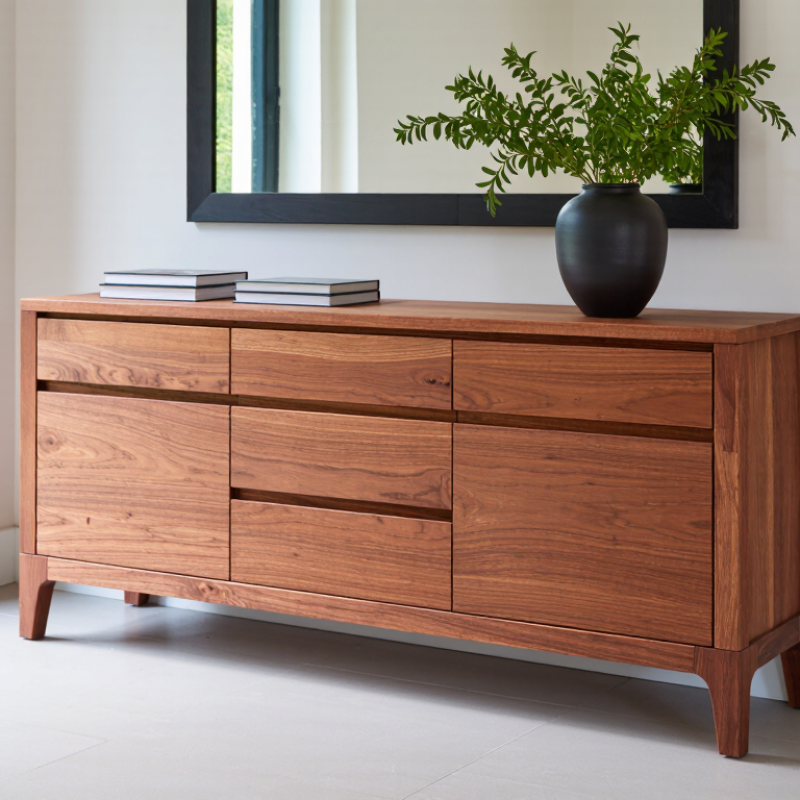
What Defines a High-Quality Solid Teak Console Table in 2026?
A high-quality solid teak console table in 2026 should feel stable before it looks beautiful. When inspecting one, I press gently against the top and check for movement. A well-built table should not wobble on a level floor. That matters.
The wood should be genuinely solid teak, not teak veneer over a cheaper core. Clear grain, moderate density, and naturally oily fibers indicate suitable material. Small knots are acceptable, but deep cracks, uneven filler, or sharp edges deserve attention. Look underneath. Strong joinery, reinforced corners, and properly aligned legs usually reveal better craftsmanship than decoration alone. Drawers should slide smoothly, with consistent gaps and no scraping sounds.
Moisture management also defines quality. Teak tolerates changing indoor humidity, but it is not immune to careless storage. A console table placed beside a radiator may develop surface movement over time. I prefer a breathable finish that preserves the grain and allows simple maintenance. Buyers should also request credible sourcing information and clear care instructions. These details support reliability and responsible purchasing.
In practical use, depth matters. A narrow hallway may need a table under 35 centimeters deep, while a wider entry can support more storage. I once chose a beautiful table with insufficient rear clearance; it looked refined but blocked the doorway. That mistake still influences my measurements. Quality is not only the timber. It is the fit, joinery, finish, documentation, and daily performance.
How to Compare Teak Wood Quality, Construction, and Durability
What Is the Best Solid Teak Console Table for 2026?
The best table begins with verified teak quality, not a dark finish or polished showroom photo. The USDA Forest Products Laboratory reports teak at about 0.66 g/cm³ at 12% moisture content. Its Janka hardness reaches roughly 1,070 lbf, giving it useful resistance to dents. Look for clearly stated heartwood content. Heartwood usually offers better natural decay resistance than pale sapwood. Grain should appear continuous across the top, without repeated veneer-like patterns.
Construction matters just as much. Inspect the underside, where shortcuts often hide. A strong console uses thick rails, reinforced leg joints, and accurately fitted mortise-and-tenon connections. Stainless or corrosion-resistant fasteners reduce staining and joint failure in humid rooms. The USDA Wood Handbook notes that teak has relatively low shrinkage, but no solid wood stays perfectly still. A small seasonal gap is normal. A twisting frame is not.
Durability also depends on moisture control and maintenance. Measure the tabletop with a moisture meter if possible; indoor wood commonly performs best near 6–8% moisture content, depending on local conditions. The International Research Group on Wood Protection emphasizes that durability varies with species, heartwood quality, exposure, and detailing. I would not trust “solid teak” alone. Ask for timber origin, moisture readings, joint details, and finish information. Some flaws are acceptable. Hidden movement deserves a second look.
Which Console Table Sizes and Designs Suit Different Interior Spaces?
A solid teak console table should fit the room before it impresses the eye. In narrow entryways, a 30-to-36-inch depth can restrict movement. I usually choose a table 10 to 14 inches deep there. Keep at least 36 inches of walking space in front. This clearance feels comfortable when coats or bags are present. A 28-to-32-inch height works well beside most doors. Measure the skirting board too. I once ignored it. The table sat unevenly.
For living rooms, a 42-to-60-inch length can anchor a sofa wall without looking crowded. Choose a 12-to-16-inch depth behind a sofa, especially in compact apartments. Open lower shelves add storage, while drawers hide keys and charging cables. In larger rooms, a longer rectangular top creates useful visual balance. Rounded corners soften busy circulation routes. A slim, single-slab design suits minimalist interiors, but it may offer little storage. That trade-off matters.
Dining areas often benefit from a 60-to-72-inch console, provided the wall remains visually quiet. Use it for serving pieces, not as a second cupboard. Solid teak brings natural variation, including knots, darker streaks, and small surface changes. These details are normal, not defects. Check joinery, leg stability, finish quality, and stated wood sourcing before buying. I also prefer adjustable feet on older floors. They are easy to overlook. Yet a beautiful table that rocks soon becomes irritating. Recheck your measurements after delivery; room layouts rarely behave exactly as imagined.
What Is the Best Solid Teak Console Table for 2026?
Recommended console table dimensions by interior space. Widths and depths reflect practical furniture-planning ranges for circulation, storage, and visual proportion.
Narrow hallways generally suit tables around 12–15 inches deep, while living rooms and dining areas can accommodate deeper designs with wider surfaces. Keep at least 30–36 inches of clear circulation space in frequently used walkways.
What Features and Care Requirements Affect Long-Term Value?
A strong solid teak console table begins with construction, not appearance.
Look for thick, kiln-dried boards, tight joints, and a stable apron beneath the top. The USDA Forest Products Laboratory’s Wood Handbook, FPL-GTR-282 (2021), explains that wood continually exchanges moisture with surrounding air. Movement is greatest across the grain. Therefore, a well-built table should allow seasonal movement instead of trapping the top rigidly.
Small details matter.
Choose stainless-steel or corrosion-resistant hardware, especially in humid rooms.
Check that the legs sit firmly and the underside is finished evenly. The Forest Stewardship Council’s 2023 facts and figures report shows the continuing importance of verified forest sourcing and chain-of-custody documentation. It does not guarantee furniture quality, but it improves material traceability. Ask for that documentation before paying a premium.
Care determines long-term value.
Keep the table away from radiators, strong sunlight, and damp walls. Use coasters under cold glasses and wipe spills quickly with a soft, slightly damp cloth. Avoid silicone-heavy polishes and abrasive cleaners. The ITTO’s tropical timber assessments repeatedly identify moisture control and responsible sourcing as practical priorities for durable wood products.
Teak is naturally resilient, yet it is not maintenance-proof. I have seen neglected teak develop uneven color and surface checking. A light sanding and suitable exterior oil may help, but oil is optional indoors. Reapply only when the surface truly looks dry. More treatment is not always better.
How to Select the Best Solid Teak Console Table for Your Needs?
Choosing the best solid teak console table for 2026 starts with your room, not its appearance. Measure the wall, walkway, and door clearance carefully. A table usually needs enough depth for storage without blocking movement. Measure twice.
Inspect the wood closely. Genuine solid teak often shows varied golden-brown tones, visible grain, and small natural knots. Uniform color may indicate heavy finishing, though it does not automatically signal poor quality. Check the underside and edges for veneers, hollow sections, or joined panels. Solid teak is dense, but poor construction can still cause wobbling. Test every drawer and press gently against each corner. Stable joinery matters more than decorative hardware.
Consider how you will use the table. For keys and mail, a narrow design with one drawer may be practical. For lamps or artwork, check the surface depth and weight capacity. Teak naturally contains oils, which can help it resist ordinary indoor humidity. It still needs protection from radiators, direct sunlight, and standing water. Ask whether the finish is sealed, oil-treated, or unfinished. Maintenance instructions should be clear and realistic.
Sustainability also deserves scrutiny. Request information about the wood’s origin and responsible forestry documentation. Vague claims are not enough. I would also inspect the table in daylight, because showroom lighting can hide uneven sanding or repairs. A minor flaw may be acceptable when disclosed, but hidden damage is a reliability concern. Your choice should balance proportions, craftsmanship, care requirements, and verified material quality.
What Is the Best Solid Teak Console Table for 2026? - How to Select the Best Solid Teak Console Table for Your Needs?
The specifications below are practical selection benchmarks for comparing solid teak console tables in 2026.
| Use Case |
Recommended Width |
Recommended Depth |
Recommended Height |
Key Construction Specifications |
Best Finish Choice |
Selection Priority |
| Narrow Entryway |
80–110 cm |
25–32 cm |
75–85 cm |
Solid teak top, stable base, rounded or softened edges, and a depth that preserves a clear walkway. |
Natural penetrating oil or a low-sheen indoor finish. |
Compact footprint, anti-tip safety, and scratch resistance. |
| Living Room Display |
110–160 cm |
30–40 cm |
75–85 cm |
A substantial top, level supports, concealed or carefully executed joinery, and enough clearance for décor. |
Clear matte finish to preserve the natural grain and warm brown tone. |
Proportion, visual balance, surface quality, and usable storage. |
| Behind a Sofa |
140–200 cm |
30–40 cm |
At or slightly below sofa-back height |
A long, rigid frame with central support or reinforced rails to reduce movement across the span. |
Matte oil or hard-wax finish with regular dusting and prompt spill removal. |
Length, stability, cable management, and safe clearance. |
| Dining or Serving Area |
120–180 cm |
35–45 cm |
75–90 cm |
A thick, well-supported top with moisture-resistant joinery and a surface that can be cleaned easily. |
Food-contact suitability should be confirmed when serving food directly. |
Cleanability, edge durability, load rating, and resistance to liquid marks. |
| Covered Patio |
100–160 cm |
30–45 cm |
75–90 cm |
Outdoor-rated solid teak, corrosion-resistant hardware, drainage-friendly design, and clearance from standing water. |
Leave unfinished for natural silver-gray weathering or use an exterior teak protector. |
Weather exposure, hardware durability, drainage, and maintenance requirements. |
| High-Traffic Commercial Space |
120–180 cm |
30–45 cm |
75–90 cm |
Commercial-use load rating, replaceable levelers, reinforced joints, and easy access for cleaning. |
Durable low-sheen protective coating suitable for frequent cleaning. |
Structural strength, repairability, safety, and warranty coverage. |
Quick evaluation checklist:
Confirm that the table is made from solid teak rather than veneer or teak-effect material; measure the available space including walkway clearance; check the stated load capacity; inspect the grain, joints, leg levelers, and underside; and verify whether the finish is intended for indoor or outdoor use.
Conclusion
Choosing the best solid teak console table for 2026 means looking beyond appearance and evaluating wood quality, construction, proportions, and long-term practicality. High-quality teak should have a dense grain, consistent color, strong joinery, and a stable structure that resists everyday wear. Whether placed in an entryway, hallway, living room, or behind a sofa, the table should fit the available space while providing useful surface area without making the room feel crowded. Designs may range from clean-lined and minimalist to more traditional forms, depending on the interior style.
Long-term value also depends on functional details such as storage, adjustable feet, edge finishing, and ease of maintenance. Teak naturally contains protective oils, but regular dusting, prompt spill cleanup, and occasional care can help preserve its appearance. Buyers should compare dimensions, weight, craftsmanship, surface treatment, and maintenance needs before making a decision. The ideal solid teak console table combines durable materials, thoughtful design, and a size that meets both practical requirements and personal preferences.