Workshop in Jepara, Central Java, Indonesia +62 878-4000-0770 [email protected]
0%

China has become an important sourcing destination for Custom teak wood cabinetry, serving residential, hospitality, and commercial interiors worldwide. Yet finding a reliable manufacturer requires more than attractive catalog photos. Buyers should examine material origin, moisture control, joinery, finishing, production capacity, and communication practices.

This guide explores China’s top custom teak wood cabinetry manufacturers through practical evaluation criteria. It considers workshop experience, engineering support, sample quality, and documented quality procedures. Teak selection matters greatly. Well-seasoned boards should show stable grain, consistent moisture levels, and limited movement after installation. A professional factory can explain these details clearly. It should also provide drawings, finish samples, hardware specifications, and realistic production timelines.

Look closely.

Manufacturing evidence is more valuable than broad marketing claims. Factory visits, video inspections, reference projects, and independent testing can help confirm capability. Custom cabinetry often involves difficult corners, uneven walls, concealed appliances, and repeated installation adjustments. Experienced teams anticipate these problems before cutting the first panel. They also protect surfaces carefully, especially when cabinetry travels long distances.

No ranking is perfect. A manufacturer may excel at hotel projects but struggle with smaller residential orders. Another may offer excellent craftsmanship but limited design support. This outline avoids treating price as the only measure. Instead, it compares value, accountability, customization, and after-sales responsiveness. The goal is a dependable decision, not merely a short supplier list. Buyers should verify current certifications, timber documentation, and contract terms before placing an order.
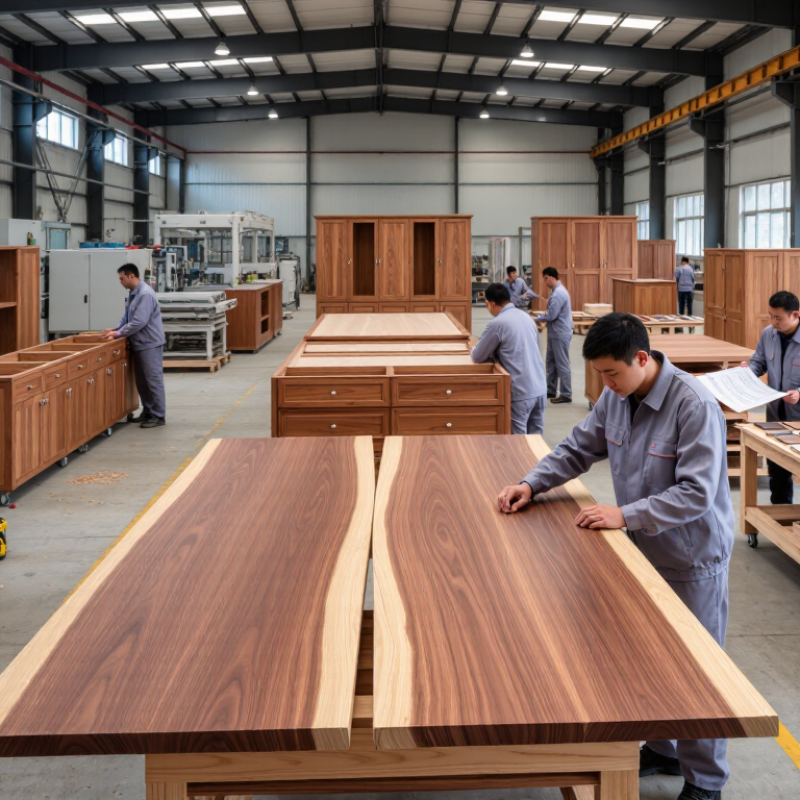
China Top Custom Teak Wood Cabinetry Manufacturers?

What Defines a Top Custom Teak Wood Cabinetry Manufacturer in China

A top custom teak wood cabinetry manufacturer in China combines skilled craftsmanship with disciplined production control. Experience begins with understanding teak’s natural movement, grain variation, and oil content. Proper kiln drying helps reduce warping, while moisture checks should match the installation environment. This matters in humid coastal homes.

Details reveal real expertise. Experienced teams prepare clear shop drawings, full-size samples, and finish boards before production. They can explain why a door needs a specific thickness or why a concealed hinge requires precise clearance. Strong manufacturers use stable joinery, carefully matched veneers, and durable coatings tested for household use. They also inspect color, alignment, edge finishing, and hardware installation at several stages.

Small errors still happen.

Reliability depends on how a factory manages them. A trustworthy manufacturer records material batches, keeps inspection photos, and reports changes before they affect the order. Protective packaging should shield corners and finished surfaces during long-distance transport. Production timelines should include realistic allowances for approval and rework, not attractive promises alone. Certifications and legal sourcing documents can support responsible procurement, but documents should be verified rather than accepted blindly. Even an excellent workshop may need improvement; a slight grain mismatch or delayed sample can expose weaknesses in communication. Open correction, measurable quality standards, and consistent after-sales responses define a top manufacturer more clearly than polished showroom displays.

Key Manufacturing Regions and Production Capabilities in China

China’s teak cabinetry industry is concentrated in three practical manufacturing zones. The Pearl River Delta, especially Guangdong, offers strong custom furniture capacity, CNC machining, finishing, and export logistics. The Yangtze River Delta, including Zhejiang and Jiangsu, is known for engineered production, hardware integration, and stable component supply. Fujian also deserves attention for solid-wood furniture and traditional joinery skills.

CSIL’s World Furniture Outlook 2024 estimates that China produces roughly two-fifths of global furniture output. China Customs reported furniture and parts exports of approximately US$73.5 billion in 2023. These figures show scale, but they do not guarantee teak expertise. A workshop may produce beautiful samples yet struggle with moisture control, grain matching, or large cabinet consistency. That distinction matters. Teak needs careful kiln drying, accurate acclimatization, and durable finishing, especially for humid interiors.

Tips: Ask for moisture readings, timber traceability, corner-joint samples, and finish panels before signing a production order. Request evidence of lawful timber sourcing and documentation required by your destination market. I would also inspect a completed cabinet, not only factory photographs. Some suppliers outsource carving or coating, which can weaken quality control. A regional cluster helps, but it is not a quality certificate. Conversation with the production engineer often reveals more than a polished showroom.

How to Evaluate Teak Quality, Craftsmanship, and Customization Options

Choosing a custom teak cabinet manufacturer requires more than admiring a polished showroom sample. Teak quality starts with species, origin, age, and drying control. Mature teak usually shows tight grain, natural oils, and a warm golden-brown tone. Pale streaks are not automatically defects, but uneven color may indicate mixed timber. The USDA Forest Products Laboratory identifies teak as a moderately heavy hardwood with strong decay resistance. Still, poor kiln drying can cause warping, open joints, or cracked panels.

Craftsmanship becomes visible at the cabinet’s edges. Check consistent gaps, smooth drawer movement, reinforced corners, and concealed hardware. A reliable workshop should explain moisture targets, panel construction, and finishing procedures. The FAO Global Forest Resources Assessment 2020 reported approximately 420 million hectares of forest loss from 1990 to 2020. Therefore, responsible sourcing documents matter, not only appearance. Ask for harvest records, chain-of-custody evidence, and material specifications. I have seen attractive samples fail because their internal cores were ignored.

Tips: Request a full-size door sample. Test its weight, smell, grain direction, and hinge alignment. Confirm whether the quoted price includes crating, installation guidance, and replacement policies. Customization should cover dimensions, internal layouts, handles, finishes, and ventilation details. However, too many finish options can create inconsistency between batches. A written approval sample prevents costly misunderstandings. Better to question the factory early.

Leading Chinese Manufacturers and Their Cabinetry Specialties

China’s custom teak cabinetry industry includes several manufacturer types, each serving a different project need. Large export factories often specialize in hotel, villa, and apartment programs. They usually combine CNC cutting with hand sanding, helping maintain consistent dimensions across repeated cabinet units. Smaller workshops focus on bespoke kitchens, library walls, and unusual room layouts.

Experienced manufacturers normally discuss teak grade, moisture content, panel construction, and finish samples before quoting. A reliable factory should explain whether it uses solid teak, teak veneer, plywood cores, or mixed materials. For humid interiors, stable substrates and sealed edges matter greatly. Some manufacturers also provide shop drawings, hardware schedules, color boards, and pre-shipment inspection photos. These details can prevent costly installation surprises.

Cabinet quality still varies.

A polished showroom may hide weak back panels or uneven drawer gaps. Buyers should request corner samples, hinge-cycle testing, and moisture readings from actual production. Factory visits can reveal sanding dust, storage conditions, and how timber is protected from rain. Teak’s natural oils may affect certain coatings, so finish trials deserve careful attention. One practical limitation is communication: drawings can appear clear while small construction assumptions remain unresolved. Written approvals and measured prototypes reduce that risk.

China Top Custom Teak Wood Cabinetry Manufacturers

Leading Chinese manufacturers commonly differentiate their teak cabinetry capabilities by application, customization depth, and project suitability.

The chart presents a neutral specialty-coverage index from 1 to 10 based on the typical suitability of custom teak cabinetry manufacturers for each application. It is not a ranking of individual companies or brands.

Steps for Selecting and Ordering Custom Teak Wood Cabinetry

Selecting custom teak wood cabinetry starts with the room, not the catalogue. Measure wall length, ceiling height, appliance gaps, and door swings carefully. Small errors become expensive.

Ask each manufacturer for teak origin, moisture-control methods, joinery details, and finish samples. Prefer documented legal sourcing and clear production records. Examine the sample in daylight. The grain should feel consistent, not artificially uniform. Teak naturally includes color variation. That is normal.

Prepare a drawing showing shelves, hinges, drawer depths, ventilation spaces, and handle positions. Confirm whether measurements include installation tolerances. Request a written quotation covering materials, hardware, packaging, delivery, and installation. Avoid vague allowances. They create disputes later. A realistic schedule should include design approval, fabrication, inspection, and transport. Before ordering, approve a final shop drawing and one finish sample. Check every dimension twice. I would still leave a small adjustment allowance, because walls are rarely perfectly straight. Inspect the cabinet before installation, especially corners, drawer movement, surface scratches, and odor from finishing materials. Photographs help document the delivered condition. Ask questions early. A cheaper quote may hide thinner panels or weaker hardware, but higher pricing alone does not prove better craftsmanship. Reliable selection depends on evidence, communication, and careful checking.

China Top Custom Teak Wood Cabinetry Manufacturers? - Steps for Selecting and Ordering Custom Teak Wood Cabinetry

Step Selection or Ordering Stage Key Data Dimension Practical Requirement or Benchmark Required Output
1 Define the project scope Room, cabinet type, quantity, and intended use Record wall cabinets, base cabinets, tall units, islands, bathroom units, storage cabinets, or built-ins. Identify indoor, humid-area, or semi-outdoor use before requesting quotations. Project brief
2 Prepare accurate measurements Overall width, height, depth, wall conditions, and service locations Measure finished floor level, ceiling height, wall length, corners, doors, windows, plumbing, electrical outlets, ventilation, and appliance openings. Confirm all dimensions on site before production. Dimensioned plan
3 Confirm teak material requirements Solid teak, teak veneer, or mixed construction Specify which components must be solid teak and which may use teak veneer over a stable panel. Ask for the teak species, country of harvest, thickness, edge construction, and matching policy for grain and color. Material schedule
4 Verify responsible sourcing Legality, traceability, and chain-of-custody documentation Request harvest legality documents and any applicable third-party certification. Documentation should identify the material source and remain consistent with the timber species and quantity stated in the quotation. Compliance file
5 Set moisture and acclimatization requirements Wood moisture content and installation environment Teak is hygroscopic and changes dimension as humidity changes. Agree on a project-specific moisture target with the supplier and installer; indoor cabinetry commonly requires controlled moisture content rather than wood that is freshly processed or inadequately dried. Moisture standard
6 Choose construction specifications Panel thickness, joinery, back panels, shelves, and hardware State the intended thickness of doors, drawer fronts, shelves, and cabinet sides. A typical furniture specification may use approximately 18–20 mm cabinet components and 6–9 mm back panels, but the final thickness should reflect span, load, and design. Construction drawing
7 Specify movement allowances Expansion gaps, door reveals, and floating panels Solid teak requires construction that allows seasonal movement. Use floating panels or suitable joinery where appropriate, and define door and drawer reveals in the shop drawing. Do not rigidly constrain wide solid-wood panels on all sides. Joinery details
8 Select surface finish Finish type, sheen, color, repairability, and maintenance Choose a finish suitable for the exposure level, such as a clear protective coating, hardwax-type finish, or oil-based system. Approve a sample because teak’s natural oils can affect adhesion and drying of some coatings. Approved finish sample
9 Define functional hardware Hinges, drawer runners, handles, locks, and adjustment range List hardware quantity, opening angle, load rating, soft-close requirement, handle position, and replacement availability. Confirm that hinge and runner specifications match the door and drawer weight. Hardware schedule
10 Compare qualified suppliers Technical capability, sample quality, documentation, and communication Compare suppliers using the same drawings and specifications. Review finished samples, edge quality, panel stability, joinery, finish consistency, packaging method, quality-control process, and ability to provide installation support. Supplier comparison
11 Request a detailed quotation Price basis, inclusions, exclusions, and commercial terms Require a line-item quotation covering cabinetry, hardware, finish, packing, delivery, installation, taxes or duties, replacement parts, sample charges, payment milestones, and validity period. Avoid comparing prices that use different material or hardware specifications. Comparable quote
12 Approve shop drawings and samples Dimensions, grain direction, reveals, hardware positions, and color Approve one complete drawing set and representative samples before production. The approval should identify the accepted teak appearance, finish sheen, edge profile, handle location, appliance clearances, and any permitted natural variation. Signed approval
13 Control pre-shipment quality Dimensional accuracy, finish, operation, and packaging Inspect cabinet dimensions, door alignment, drawer movement, hardware operation, finish defects, sharp edges, moisture condition, labels, and protective packaging. Photograph each item and record corrective actions before dispatch. Inspection report
14 Plan delivery and installation Site access, unloading, acclimatization, and installation sequence Confirm access routes, elevator or stair dimensions, unloading equipment, storage conditions, wall readiness, floor level, and installer responsibility. Store timber cabinetry in a dry, ventilated interior space and protect it from direct moisture. Installation plan
15 Complete handover and care Warranty, maintenance, adjustment, and spare parts Obtain care instructions, finish-repair guidance, hardware adjustment information, warranty terms, spare hardware, and an agreed process for reporting defects or movement after installation. Handover pack
Planning note: Dimensions, moisture targets, construction thicknesses, finish systems, delivery schedules, and warranty terms should be confirmed in the approved technical documents because they vary with climate, room conditions, design, and installation method.

FAQS

What defines a high-quality custom teak cabinetry manufacturer in China?

Skilled teams understand teak’s grain, natural oils, and movement. They use kiln drying and check moisture levels before production. Clear drawings, finish boards, and full-size samples reveal real preparation. Small errors happen. Reliable factories record them and correct them openly.

Which teak materials should buyers clarify before ordering?

Ask whether the cabinets use solid teak, teak veneer, plywood cores, or mixed materials. Confirm panel thickness, edge sealing, and substrate stability. Stable cores matter in humid rooms. Teak naturally varies in color. Perfect uniformity may look artificial.

How can buyers assess cabinet quality before production?

Request corner samples, finish samples, and approved shop drawings. Check drawer gaps, edge finishing, hinge clearances, and panel alignment. Ask for moisture readings from actual production materials. Photographs help. A showroom alone proves little.

Why are moisture checks important for teak cabinetry?

Teak can move when room conditions change. Proper kiln drying helps reduce warping. Moisture readings should match the installation environment. This matters especially in humid coastal homes. Walls still move slightly.

What information should a custom cabinetry quotation include?

The quotation should identify materials, hardware, packaging, delivery, and installation. It should also show realistic allowances for approvals, rework, and transport. Avoid vague material descriptions and open-ended costs. Cheap quotes may hide thinner panels or weaker hardware. High prices do not guarantee excellence.

How should buyers prepare room measurements?

Measure wall length, ceiling height, appliance gaps, and door swings carefully. Mark ventilation spaces, shelf positions, drawer depths, and handle locations. Confirm whether measurements include installation tolerances. Check every dimension twice. Walls are rarely straight.

How can finish quality be checked for teak cabinets?

Examine the finish sample in natural daylight. Look for consistent color without expecting identical grain patterns. Teak oils can affect some coatings, so finish trials are useful. Inspect scratches, corners, odors, and sealed edges before installation. I would still test a hidden area.

What packaging and inspection practices reduce transport damage?

Protective packaging should shield corners and finished surfaces during long-distance delivery. Factories should inspect alignment, hardware, color, and edge finishing at several stages. Request inspection photographs before shipment. Record the delivered condition with your own photographs. Packaging is not decoration.

Conclusion

China has become an important sourcing destination for Custom teak wood cabinetry, offering a combination of skilled woodworking, flexible production, and competitive manufacturing capacity. A top manufacturer is defined by its ability to manage responsibly sourced teak, maintain stable quality standards, provide precise joinery, and deliver consistent results across complex projects. Major production regions often specialize in furniture and architectural woodwork, with capabilities covering design development, CNC machining, hand finishing, panel construction, and complete custom installation support.

When evaluating a supplier, buyers should examine teak’s grain, moisture content, density, durability, and surface treatment, while also reviewing craftsmanship, hardware options, dimensional accuracy, and customization flexibility. The selection process should include confirming technical drawings, material specifications, finishes, packaging, lead times, quality inspections, and after-sales responsibilities. By comparing manufacturers according to production expertise, communication, sample quality, and project management, buyers can confidently order cabinetry that matches their functional needs, interior style, and long-term performance expectations.

Ethan

Ethan

Ethan is a dedicated marketing professional who combines strategic insight, clear communication, and a deep understanding of the company’s products and services. With extensive experience in market research, content development, customer engagement, and digital marketing, he plays an important role......