China’s handcrafted furniture sector combines skilled joinery, plantation timber, and export-oriented manufacturing. This makes China a practical sourcing destination for a Handcrafted teak coffee table. However, supplier quality varies widely.
The global furniture market was valued at approximately USD 647.4 billion in 2022, according to Grand View Research. The report also expects continued growth through 2030. This expansion increases demand for durable, natural-wood furniture. Teak remains attractive because its dense grain, warm color, and natural oil content suit long-term use. Yet appearance alone proves little.
Material evidence matters. The FAO Global Forest Resources Assessment 2020 reported that forests cover about 31% of global land. It also recorded nearly 420 million hectares of forest loss since 1990. Responsible sourcing therefore deserves serious attention. Buyers should request species details, plantation or forest origin, and valid chain-of-custody documentation. FSC certification can support traceability, but certification claims still require verification.
This supplier guide evaluates ten Chinese manufacturers using practical purchasing criteria. These include kiln-drying methods, moisture control, mortise-and-tenon quality, surface finishing, packaging, and export experience. A professional workshop should explain whether its timber reaches furniture-grade moisture levels, often around 8–12% for indoor products. Details matter. Look for clean edges, stable legs, smooth drawer movement, and consistent grain across the tabletop.
The review is not a guarantee. Product samples can outperform mass-production batches. Photographs may hide uneven finishing or repaired knots. That is why factory audits, sample approval, and written specifications remain essential. Some rankings may also change as certifications, capacity, and market conditions develop. Careful verification turns an attractive table into a dependable purchase.
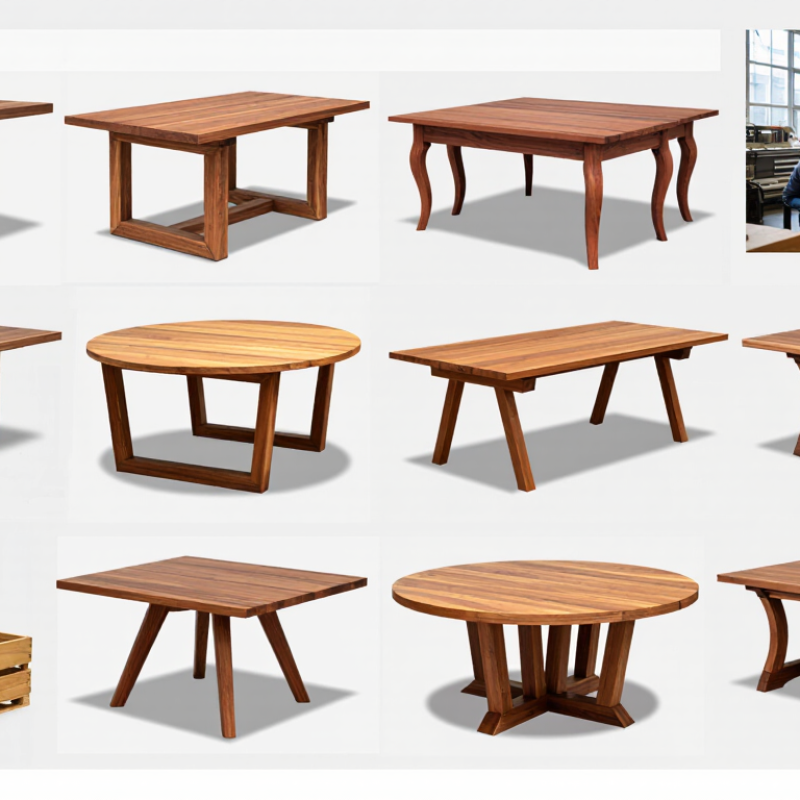
China’s Handcrafted Teak Coffee Table Industry Overview
China Top 10 Handcrafted Teak Coffee Table Suppliers
China’s Handcrafted Teak Coffee Table Industry Overview
China’s handcrafted teak coffee table industry combines traditional woodworking with organized export manufacturing. The leading suppliers often work with solid teak, reclaimed timber, or legally documented plantation wood. Material origin matters. Buyers should request traceability records before approving large orders.
Production usually begins with moisture testing and kiln drying. Skilled workers then select boards for grain, color, and structural stability. Hand-cut joints, rounded edges, and brushed surfaces create visible character. Small variations are normal. They can also reveal inconsistent workshop control.
Many factories support custom dimensions, tabletop shapes, edge profiles, and surface treatments. Some use water-based finishes, while others apply natural oils for a warmer appearance. Experienced buyers should inspect sample pieces under different light. Teak may change tone after finishing.
The top ten suppliers may differ greatly in workshop scale, quality systems, and delivery capacity. A polished catalog proves little. Factory visits, production samples, packaging tests, and third-party inspections provide stronger evidence. I have found that joint alignment and moisture control deserve more attention than decorative details.
Export teams commonly handle carton design, container loading, and furniture documentation. Still, communication can fail during custom projects. Written drawings, tolerance limits, finish references, and repair expectations reduce avoidable disputes. Pricing also requires care, because cheaper timber or thinner components may remain hidden until assembly.
Criteria for Selecting China’s Top Teak Coffee Table Suppliers
China Top 10 Handcrafted Teak Coffee Table Suppliers
Selecting China’s top teak coffee table suppliers requires more than attractive product photos. A reliable supplier should show timber origin, kiln-drying records, moisture readings, and consistent joinery samples.
The FAO’s Global Forest Resources Assessment 2020 estimated that forests cover 31% of the world’s land area, making responsible sourcing a serious purchasing criterion. Ask for valid chain-of-custody documents where applicable. Paperwork matters.
Craft quality should be tested through details. Inspect mortise-and-tenon joints, table-leg alignment, edge sanding, and finish uniformity under natural light. A sample table can reveal uneven grain, hidden knots, or a strong chemical odor. Request independent inspection before shipment.
The International Tropical Timber Organization’s Biennial Review and Assessment of the World Timber Situation highlights the importance of legal and traceable timber trade, especially in tropical wood supply chains.
Production capability also needs evidence. Review factory photographs, equipment lists, monthly capacity, defect rates, and previous export experience. ISO 9001-style quality procedures can improve consistency, but certification alone proves little without records. Confirm packaging tests, carton dimensions, replacement policies, and moisture protection for sea transport. A supplier may promise handcrafted precision, yet rushed sanding can still leave sharp corners. That weakness deserves a second inspection. Suppliers should also provide clear quotations, realistic lead times, and transparent responses when specifications change.
Profiles of Ten Leading Handcrafted Teak Table Suppliers
China Top 10 Handcrafted Teak Coffee Table Suppliers
Profiles of Ten Leading Handcrafted Teak Table Suppliers
The ten profiles focus on workshop skill, timber traceability, finishing quality, and export reliability. According to Grand View Research’s 2024 Furniture Market Size report, the global furniture market reached about USD 766 billion in 2023. That scale increases demand for distinctive, durable tables, but also makes supplier verification more important.
The Java workshop specializes in reclaimed teak and visible grain patterns. The Bali studio produces rounded edges and hand-carved bases. The northern workshop offers kiln-dried slabs for hospitality projects. The coastal supplier combines teak with woven rattan details. The small family workshop focuses on low-volume custom sizes. The export-oriented factory provides moisture testing and reinforced packaging. The plantation-linked supplier emphasizes documented timber origins. The artisan group uses traditional hand sanding and natural oils. The modern workshop blends teak with powder-coated metal frames. The contract supplier develops matching tables for restaurants and resorts.
These profiles are useful, but not perfect. “Handcrafted” can describe careful shaping, limited machine use, or simple marketing language. Buyers should request moisture readings, wood-origin documents, finish samples, and carton photographs. The Forest Stewardship Council’s responsible-sourcing guidance stresses chain-of-custody evidence, not attractive claims alone. A strong supplier should explain drying time, repair procedures, and acceptable color variation. Small cracks may develop naturally. That detail deserves honest discussion. Price remains important, yet the cheapest quote may conceal weaker timber selection or packaging. Supplier performance should be judged through samples, factory communication, and repeat-order evidence.
Comparison of Craftsmanship, Materials, Pricing, and Customization
China Top 10 Handcrafted Teak Coffee Table Suppliers
For a Top 10 comparison, craftsmanship should come before showroom appearance. Inspect mortise-and-tenon joints, sanding marks, edge symmetry, and drawer alignment. Experienced buyers should request close-up videos before sampling. Indoor teak usually performs best around 8–12% moisture content, depending on the destination climate. Kiln-drying records matter more than attractive photographs. FAO’s Global Forest Resources Assessment 2020 records 4.06 billion hectares of global forest, yet responsible sourcing still requires traceable timber documents and clear plantation or reclaimed-wood claims.
Material quality changes the price quickly. Grade-A teak offers fewer knots and more consistent color, while reclaimed teak may show nail holes, darker patches, and uneven grain. Those marks can be beautiful. They can also signal extra filling and labor.
A 2023 global furniture market value of about US$654.7 billion was reported by Grand View Research in 2024, showing strong demand, but not proving every quotation is fair. Compare prices by wood grade, thickness, sanding stages, finish, packaging, and minimum order quantity. Custom dimensions, rounded corners, hidden casters, matte oil, or water-based coating should be priced separately.
Tips: Ask for a moisture report, wood-source statement, finish sample, and carton test. Require one approved prototype. Avoid judging by price alone. I would also challenge “100% solid teak” claims when panels contain visible seams or mixed-color sections. Suppliers may describe these differences poorly, and buyers sometimes overlook them.
How to Choose and Purchase from a Chinese Teak Table Supplier
Choosing a Chinese teak table supplier requires more than comparing online prices. Request the company’s business license, workshop address, export experience, and recent production photos. A video call can reveal useful details, but it cannot replace a physical inspection. Ask how the supplier identifies teak species, measures moisture, and controls wood movement.
Start with a paid sample. Check its dimensions, joinery, surface smoothness, color consistency, and underside construction. Solid teak should feel dense, not hollow or unusually light. Ask for the wood’s origin documents and moisture readings before production. Indoor tables often need different moisture levels from outdoor furniture. Confirm whether the finish is oil, lacquer, or another coating, then request care instructions in writing.
Small details matter. Specify tabletop thickness, leg angle, edge profile, packaging, and acceptable color variation. A clear drawing prevents expensive misunderstandings. Include carton dimensions and gross weight in the quotation. These figures affect shipping costs significantly. Ask whether prices include packaging, inspection, and delivery terms. Do not rely on a beautifully staged photograph. A polished sample can still hide weak joints or uneven sanding. I have seen buyers approve designs too quickly, then discover that handmade variation exceeded their expectations. That mistake is avoidable, although not every imperfection signals poor workmanship. Use an independent inspection before shipment, and keep approval records for every revision. Payment milestones should match measurable production stages.
China Top 10 Handcrafted Teak Coffee Table Suppliers - How to Choose and Purchase from a Chinese Teak Table Supplier
Anonymous supplier benchmark profiles for comparing handcrafted teak coffee table manufacturers in China. Figures are indicative purchasing benchmarks and should be verified directly before ordering.
| Rank |
Anonymous Supplier Profile |
Production Focus |
Typical MOQ |
Sample Lead Time |
Bulk Lead Time |
Common Size Range |
Recommended Teak Moisture |
Customization |
Best Buyer Fit |
Key Verification Point |
| 1 |
Profile 01 |
Solid teak slab tables with hand-shaped edges |
1–5 pcs |
7–14 days |
25–35 days |
80–140 cm diameter |
8–12% |
High |
Boutique retailers |
Wood origin, slab thickness, moisture readings |
| 2 |
Profile 02 |
Minimalist round and oval coffee tables |
10 pcs |
10–15 days |
30–40 days |
90–130 × 45–50 cm |
8–12% |
Medium–High |
Online furniture stores |
Joint construction, leg stability, finish consistency |
| 3 |
Profile 03 |
Rustic live-edge tables made from reclaimed teak |
5–10 pcs |
14–21 days |
35–50 days |
80–150 × 40–60 cm |
10–14% |
Medium |
Sustainable home retailers |
Reclaimed-wood documentation and crack-filling method |
| 4 |
Profile 04 |
Teak veneer-top tables with solid-wood frames |
20 pcs |
7–12 days |
25–35 days |
80–120 × 40–50 cm |
8–12% |
High |
Mid-market importers |
Veneer thickness, core material, edge-banding quality |
| 5 |
Profile 05 |
Indoor–outdoor teak tables with protective coatings |
10–20 pcs |
12–18 days |
35–45 days |
70–140 × 40–70 cm |
10–14% |
Medium |
Hospitality and resort buyers |
Coating durability, drainage design, outdoor-care instructions |
| 6 |
Profile 06 |
Carved-base and sculptural teak coffee tables |
5 pcs |
18–25 days |
40–60 days |
80–120 × 40–55 cm |
8–12% |
High |
Premium interior projects |
Hand-carving accuracy, balance, load-bearing performance |
| 7 |
Profile 07 |
Nest-of-tables and compact apartment furniture |
20–50 pcs |
7–14 days |
25–40 days |
45–100 × 35–55 cm |
8–12% |
Medium |
Apartment and space-saving brands |
Stacking tolerance, packaging protection, dimensional accuracy |
| 8 |
Profile 08 |
Mixed-material teak tables with metal or stone accents |
10 pcs |
14–21 days |
35–50 days |
80–130 × 40–60 cm |
8–12% |
High |
Contemporary furniture retailers |
Metal corrosion protection, stone safety, adhesive performance |
| 9 |
Profile 09 |
Contract-grade tables for hotels, restaurants, and offices |
30–100 pcs |
14–20 days |
40–55 days |
60–120 × 40–60 cm |
10–14% |
Medium |
Project and commercial buyers |
Load testing, carton drop testing, replacement-part policy |
| 10 |
Profile 10 |
Small-batch artisan tables with one-off designs |
1–3 pcs |
21–30 days |
45–65 days |
Custom dimensions |
8–14% |
Very High |
Design studios and private-label buyers |
Prototype approval, design ownership, final inspection procedure |
Purchase checklist: Confirm teak species and origin, kiln-drying records, moisture content, dimensions, surface finish, packaging method, Incoterms, payment terms, inspection standards, and after-sales responsibilities before placing a purchase order.
Conclusion
China’s handcrafted teak coffee table industry combines traditional woodworking skills with modern production capabilities, offering buyers a wide range of styles, sizes, finishes, and price levels. This article presents ten leading types of suppliers without focusing on individual brand names, highlighting the qualities that distinguish reliable manufacturers, including material authenticity, timber sourcing, joinery, surface finishing, quality control, production capacity, and export experience. It also explains how buyers can evaluate supplier credibility through product samples, workshop communication, certifications, customer service, and transparent quotations.
A detailed comparison of craftsmanship, teak quality, pricing, lead times, and customization options helps readers identify the best match for residential, hospitality, or commercial projects. The guide concludes with practical purchasing advice, covering design confirmation, sample approval, packaging, shipping arrangements, payment terms, and after-sales communication. With careful research and clear specifications, buyers can select a dependable Chinese supplier and obtain a durable, attractive Handcrafted teak coffee table that meets both functional and aesthetic requirements.