Workshop in Jepara, Central Java, Indonesia +62 878-4000-0770 [email protected]
0%

Choosing among the top Jepara teak furniture manufacturers requires more than attractive photographs. Global buyers need dependable craftsmanship, consistent materials, and clear export practices. Jepara is widely respected for hand-finished teak furniture, from carved dining tables to carefully joined outdoor seating. Yet reputation alone is not enough.

A reliable Jepara teak furniture manufacturer should explain timber origins, moisture control, kiln-drying methods, and construction standards. Ask for close images of joints, drawer runners, table edges, and surface finishing. These details reveal more than polished showroom pictures. Experienced manufacturers can also discuss packaging, container loading, production timelines, and quality inspections without avoiding difficult questions.

Small details matter.

Look for kiln-dried teak with stable moisture levels. Check whether mortise-and-tenon joints feel precise and secure. Outdoor pieces should use finishes suited to humidity, sunlight, and regular maintenance. Indoor furniture needs different protection and care instructions. Responsible suppliers should provide accurate invoices, product specifications, and legally compliant sourcing information.

However, no supplier is perfect. Handmade production may create slight variations in color, carving, or dimensions. Those differences can add character, but poor communication can turn them into costly problems. Buyers should request samples, approve drawings, and confirm tolerances before production begins. Independent inspections may also be worthwhile for large orders.

This guide introduces leading Jepara manufacturers through practical buying criteria. It considers craftsmanship, communication, material transparency, production capacity, and after-sales support. The goal is not to praise every workshop. It is to help global buyers identify trustworthy partners and recognize weaknesses before money and shipping space are committed.
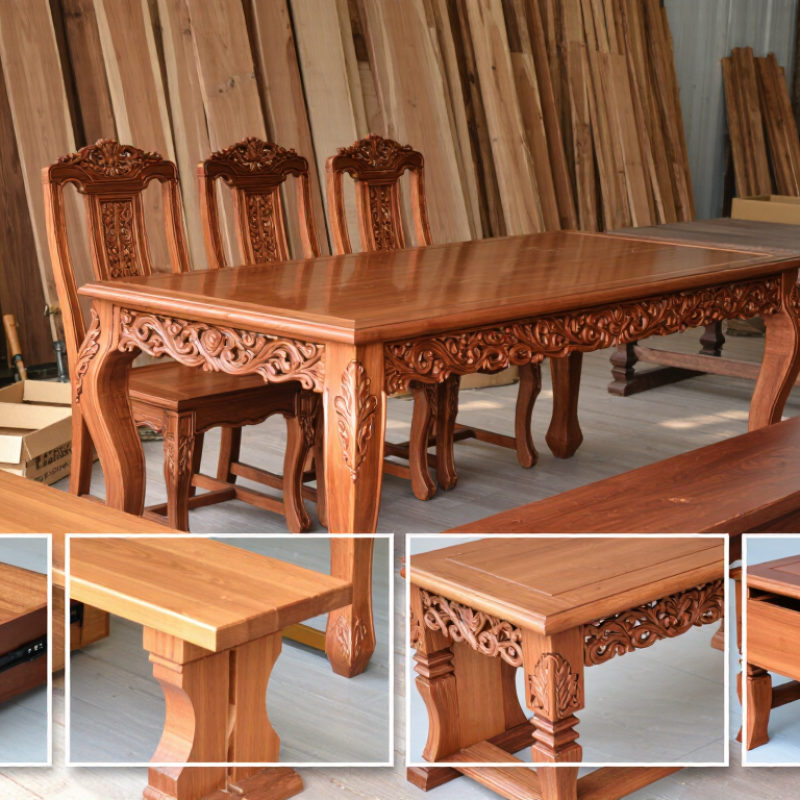
Top Jepara Teak Furniture Manufacturers for Global Buyers

Jepara Teak Furniture: Origins, Reputation, and Global Importance

Jepara, on Indonesia’s Central Java coast, is widely recognized for its deep teak furniture tradition. Its craft history grew through generations of carving, joinery, and coastal trade. Teak became especially valued for its natural oils, dense grain, and resistance to humid weather.

Its craft is highly practical.

Local workshops still use hand tools for curved chair backs, doors, and detailed panels. Skilled makers examine grain direction before cutting each board. They also check moisture levels before assembly, because unstable wood can develop gaps after shipping. These small decisions often separate durable furniture from attractive but unreliable pieces.

For global buyers, Jepara represents more than decorative furniture. The industry supports carvers, finishers, packers, and small family workshops. It also connects Indonesian craftsmanship with hotels, architects, and residential projects worldwide. However, its reputation is not automatically guaranteed. Some products may show uneven sanding, excessive filler, or inconsistent dimensions. The story is not flawless.

Responsible sourcing requires careful questions. Buyers should request timber legality records, moisture-control details, construction drawings, and pre-shipment photographs. Much commercial teak is plantation-grown, but documentation still matters. Sustainable production also involves reducing waste and protecting local skills. Shipping furniture across oceans creates environmental costs, and that issue deserves honest attention. A beautiful table can still have a complicated journey.

How to Identify Leading Teak Furniture Manufacturers in Jepara

Top Jepara Teak Furniture Manufacturers for Global Buyers

How to Identify Leading Teak Furniture Manufacturers in Jepara

Choosing a reliable teak furniture manufacturer in Jepara requires more than attractive showroom photos. Visit the workshop when possible, or request a live video inspection. Look for organized timber storage, safe drying areas, and consistent production methods. Experienced manufacturers can explain teak grades, moisture control, joint construction, and surface finishing in clear language. Vague answers deserve attention.

Ask for kiln-drying records and recent moisture readings. Furniture should suit the climate where it will be used. Request close photographs of mortise-and-tenon joints, table undersides, drawer runners, and chair connections. Small details reveal craftsmanship. A sample order can expose uneven sanding, unstable panels, or careless packaging before a large purchase. It may cost more initially.

Reliable suppliers also provide clear quotations, production schedules, packing details, and realistic replacement policies. Check independent buyer references, not only testimonials selected by the factory. Confirm that timber sourcing and export documents meet applicable requirements in both countries. A professional manufacturer will discuss limitations, defects, and possible delays without hiding behind polished language.

No checklist is perfect. Photos can conceal problems. Even skilled workshops may produce occasional variations because teak is natural wood. That is why written specifications, pre-shipment inspections, and direct communication matter. The strongest suppliers welcome detailed questions and correct mistakes without unnecessary excuses.

Signature Products and Craftsmanship Standards of Jepara Makers

Jepara teak furniture makers are known for solid construction and detailed handwork. Their signature products include dining tables, lounge chairs, bed frames, cabinets, and outdoor seating. Each piece often combines traditional carving with cleaner proportions for modern interiors. Experienced buyers should inspect the timber closely. Mature teak usually shows tight grain, natural variation, and a warm, oily surface.

Craftsmanship standards begin with properly seasoned wood. Moisture control helps reduce cracking, twisting, and joint movement during overseas shipping. Skilled workshops use mortise-and-tenon joints, reinforced corners, and carefully fitted panels. Drawer movement should feel smooth, not loose. Chair frames should remain stable under pressure. These small tests reveal more than attractive photographs.

Finishing quality also deserves careful attention. A consistent surface should feel even, without heavy filler, sharp edges, or cloudy patches. Outdoor pieces need suitable protection against moisture and sunlight, but no finish lasts forever. That point is sometimes overlooked. Not every workshop gets this right. Buyers should request wood specifications, moisture readings, finish samples, packaging details, and production photographs. Clear inspection records improve reliability. Ethical sourcing records also matter, especially when purchasing at commercial scale. Some makers welcome third-party checks, while others rely only on verbal assurances. That difference deserves reflection. A beautiful table is not enough; stable materials, honest communication, and repeatable workmanship determine whether Jepara furniture performs well in global markets.

Quality Control, Timber Certification, and Production Capacity

For global buyers comparing Jepara teak furniture manufacturers, quality control starts with timber, not polishing. The FAO’s Global Forest Resources Assessment 2020 recorded 4.06 billion hectares of forest worldwide. That scale makes traceability essential. Ask for harvest documents, supplier records, and valid chain-of-custody certificates. The FSC Facts & Figures 2023 report listed more than 160 million certified forest hectares and over 50,000 chain-of-custody certificates globally. Certification alone is not enough. Verify that each shipment matches the certificate scope.

Experienced buyers should inspect moisture control, joint strength, sanding quality, and packaging before shipment. Teak should normally reach furniture moisture levels suitable for its destination climate. Many factories target roughly 10–14%, but the correct range depends on the buyer’s market. Request kiln logs, moisture readings, inspection photos, and defect reports. Use an independent pre-shipment inspection when order value is significant. Small details matter. A hidden crack can appear after weeks at sea.

Production capacity requires evidence, not attractive catalogues. Ask for monthly output by product type, kiln capacity, finishing-line hours, workforce shifts, and the last twelve months of delivery performance. FSC data shows the scale of certified supply, but it does not prove factory reliability. That distinction is often missed. A supplier may promise 500 dining tables monthly, yet lack drying space during peak season. Production plans can also change quickly. Buyers should test a sample order, record inspection results, and review corrective actions before expanding volume. No system catches every warped board. That is the uncomfortable part.

Export Services and Selection Criteria for International Buyers

Top Jepara Teak Furniture Manufacturers for Global Buyers

International buyers should evaluate export capability, not only carved details or showroom size. Jepara manufacturers should provide kiln-drying records, moisture readings, timber origin documents, and pre-shipment inspection access. For indoor furniture, many importers request moisture levels near 8–12%, adjusted to the destination climate. A simple sample test can reveal warped panels, uneven joints, or unstable drawer movement.

Traceability deserves serious attention. The FAO’s Global Forest Resources Assessment 2020 reported approximately 420 million hectares of forest loss between 1990 and 2020. Buyers should therefore request legal-sourcing evidence, chain-of-custody records, and clear species identification. ITTO reports repeatedly highlight legality, sustainability, and traceability as decisive issues in tropical timber trade. Paperwork alone is not proof. Review the documents against production photos and shipment quantities.

Export services should include accurate quotations, Incoterms, fumigation or phytosanitary guidance where required, moisture-safe packing, and container loading plans. UNCTAD’s Review of Maritime Transport 2023 states that ships carry over 80% of global merchandise trade by volume, making freight reliability commercially important. Ask how the supplier handles damaged cartons, delayed vessels, and replacement parts.

Details decide.

A polished catalog can still hide weak quality control. I would request a paid prototype before placing a container order. That costs more initially, but it exposes design errors early. Buyers should also compare lead times against realistic production capacity, because attractive promises sometimes collapse during peak seasons.

FAQS

What timber documents should buyers request?

Request harvest records, supplier details, species identification, and valid chain-of-custody documents. Match every shipment to the certificate scope. Paperwork is not proof.

What moisture level is suitable for teak furniture?

Many factories target about 10–14% moisture. Indoor furniture may need around 8–12%. The correct range depends on the destination climate. Ask for kiln logs and moisture readings.

How can buyers check furniture quality before shipment?

Inspect joint strength, sanding, drawer movement, panel stability, and surface defects. A small sample can reveal warped panels or uneven joints. Use independent inspection for valuable orders.

What production information should a factory provide?

Ask for monthly output by product type, kiln capacity, finishing hours, and workforce shifts. Review delivery records from the past twelve months. Catalogues alone prove little.

Why should buyers order a prototype first?

A paid prototype can expose design errors before container production. Check dimensions, joints, finish consistency, and packaging strength. It costs more initially. Still worthwhile.

What export services should furniture manufacturers offer?

Reliable suppliers should provide clear quotations, trade terms, packing plans, and loading details. Ask about vessel delays, damaged cartons, and replacement parts. Small details affect final costs.

How should buyers evaluate timber traceability?

Compare origin documents with production photos, quantities, and shipment records. Check that the timber species matches the order. Do not rely on certificates alone.

How can buyers test promised production capacity?

Start with a sample order and record inspection results. Compare promised output with kiln space, storage capacity, and seasonal schedules. Some promises weaken during peak periods.

Conclusion

Jepara teak furniture has earned global recognition through generations of woodworking traditions, combining durable teak timber with detailed handcrafting and practical design. A leading Jepara teak furniture manufacturer is typically identified by consistent craftsmanship, experienced artisans, reliable communication, and the ability to produce customized collections for residential, hospitality, and commercial projects. Signature products may include dining tables, chairs, beds, cabinets, outdoor furniture, and decorative pieces, all built according to clear quality standards.

For international buyers, careful evaluation should include timber legality and certification, moisture control, finishing quality, production capacity, packaging, and inspection procedures. Reliable manufacturers should also demonstrate stable lead times, transparent quotations, secure export documentation, and experience handling overseas shipments. By comparing craftsmanship, material sourcing, quality control, customization capabilities, and after-sales communication, global buyers can select a Jepara supplier that delivers durable, responsibly made furniture and supports long-term business cooperation.

Emily

Emily

Emily is a dedicated marketing professional with a strong understanding of the company’s products, customers, and industry landscape. With a passion for clear communication and practical solutions, she regularly creates and updates the company’s professional blog content, helping readers better......