
Contract Line
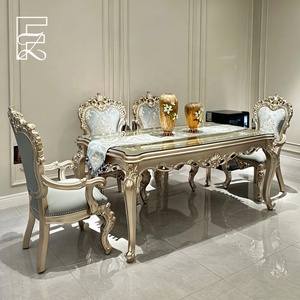
Hand-selected from our active export production lines in Jepara, Central Java. Every frame integrates kiln-dried Indonesian hardwoods, heavy-duty mortise-and-tenon joins, and weather-resilient finishes tailored for high-traffic commercial environments.
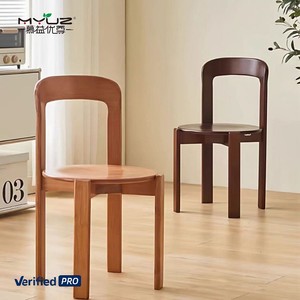
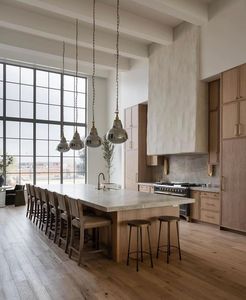
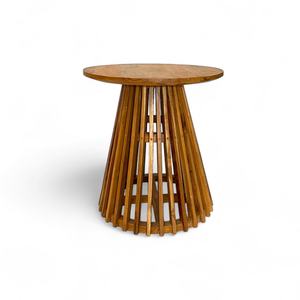
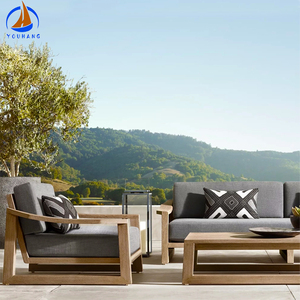
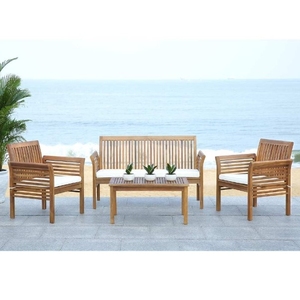
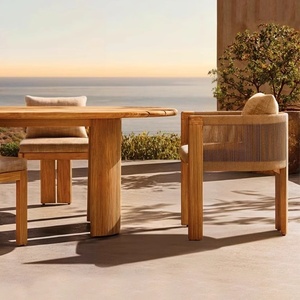
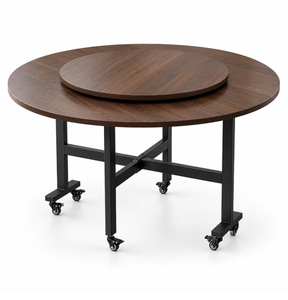
For European and global commercial specifiers, achieving a verifiable CE marking and structural compliance on commercial seating is not merely a formality—it is a legal safeguard against failure in high-traffic hospitality environments. Under European Norms (specifically EN 16139:2013 for non-domestic seating and EN 581-1/2:2015 for outdoor commercial furniture), a solid teak bar stool must withstand rigorous structural tests including static seat loading exceeding 2,000 N, dynamic cyclic fatigue testing of 100,000 to 200,000 cycles, and diagonal corner drop tests without catastrophic tenon shear or micro-fissuring.
As veteran Indonesian exporters rooted in the woodworking heart of Central Java, our workshop bridges ancestral joinery with rigorous Western technical specifications. We do not mass-produce generic residential stools. Instead, each commercial counter-height and bar-height stool is calculated with reinforced perimeter stretchers, integrated 304 or 316-grade stainless steel footrail wear plates, and deep mortise-and-tenon nodes pinned with water-resistant D4 polyurethane structural adhesives. The resulting assemblies completely eliminate the joint looseness, wobbling, and stress racking that typically plague lower-tier contract furniture.
Validated for extreme commercial use in nightspots, high-footfall restaurants, airports, and sports venues with maximum structural stability and load ratings up to 160 kg per station.
Every shipment is covered under Indonesia's national SVLK (Sistem Verifikasi Legalitas Kayu) protocol, fully traced from state-managed Perum Perhutani plantations with verifiable geolocation data.
Computer-monitored dehumidification kilns systematically lower timber equilibrium moisture down to 8%–12%, eliminating wood checking, grain bursting, and dimension distortion across diverse climates.
When procurement officers balance lifecycle cost, amortized replacement intervals, and exterior weathering resistance, the biological properties of Grade-A Tectona grandis (Indonesian Teak) consistently outperform alternative hardwoods. The data below outlines structural tolerances, natural rubber content, and commercial viability under high-cycle contract testing:
| Evaluation Metric | Indonesian Plantation Teak (Perhutani Grade-A) | Plantation Acacia / Eucalyptus | Commercial Red Oak / Ash (Sealed) |
|---|---|---|---|
| Natural Oleoresin Content | High natural oils & tectoquinones; naturally repels water, rot & pests | Very low natural resin; requires pressurized chemical dipping | Negligible oil; prone to deep fiber rot if topcoat seal degrades |
| Janka Hardness Rating | 1,000–1,150 lbf (Optimal resilience without brittle fracturing) | 1,100–1,750 lbf (Brittle grain prone to splitting at fastener points) | 1,200–1,350 lbf (Durable but poor outdoor stability) |
| Dimensional Stability Index | Superior (Radial 2.5%, Tangential 5.8%) | Moderate (Prone to twist & warp under wet-dry cycles) | Poor outdoors (Expands rapidly with humidity shifts) |
| CE EN 581 Outdoor Suitability | Direct Uncovered Outdoor & Marine Use | Covered Terrace Only (Requires Annual Sealer) | Interior Hospitality Use Only |
| Commercial Lifecycle Expectancy | 15 to 25+ Years with minimal surface rejuvenation | 3 to 5 Years in heavy contract hospitality use | 5 to 8 Years (Indoor contract conditions only) |
Commercial furniture procurement has transitioned from transactional, catalogue-based ordering to risk-mitigated supply chain partnerships. As institutional buyers evaluate total cost of ownership (TCO) and carbon disclosure regulations, several technical and stylistic trends are redefining high-volume contract specifications:
With the enforcement of the European Union Deforestation Regulation (EUDR), European importers are strictly held liable for proving zero-deforestation provenance. Standard timber certificates are no longer sufficient on their own. Our manufacturing facility in Jepara integrates supply chain tracing that maps individual teak logs directly back to verified Perum Perhutani sustainable forest plots. Geolocation data, digital cutting permits, and Indonesian V-Legal customs documents are seamlessly consolidated, guaranteeing audit clearance at Rotterdam, Hamburg, or Felixstowe without demurrage delays.
Contemporary hospitality projects demand lightweight architectural silhouettes combined with massive durability. The fastest-growing design trend in bar seating pairs natural matte-brushed teak contoured seats and backrests with powder-coated marine-grade 6061-T6 aluminum or PVD-coated stainless steel chassis. This hybrid topology reduces freight volume (CBM), enhances stackability for hospitality venues, and provides industrial resistance at the critical footrail stress zone.
Glossy polyurethane varnishes have largely been superseded by ultra-matte, water-based polyurethane systems, natural Danish penetrating oils, or breathable silicate treatments. High-end eco-resorts and rooftop lounges increasingly specify chemical-free weather-treatment coats that protect the grain from red wine, oil, and citrus stains while permitting the teak to naturally transition to an elegant silver-grey patina over time.
Ocean freight rates continue to represent a decisive component of landed unit costs. Leading contract buyers now mandate Knock-Down (KD) or Semi-KD joinery engineering that does not sacrifice structural stiffness. Utilizing precision German internal eccentric cam-locks, heavy stainless machine bolts, and counter-sunk threaded brass bushings, our engineering team designs stools that pack up to 40% more units per 40ft High Cube container, dramatically lowering ocean freight cost per seating station.
Founded in 1995 on Jl. Raya Soekarno Hatta KM.5 in Jepara, Teratai Furniture represents thirty years of dedicated family-run wood manufacturing. While mega-factories optimize for monotonous runs of tens of thousands of plastic or veneer pieces, our workshop maintains an intentional scale that serves medium-to-large importers, commercial contract brokers, and upscale interior designers who require custom flexibility without sacrificing industrial quality control.
Our core manufacturing nucleus comprises four master wood joiners, five finishing chemists, and two dedicated QC/QA inspection engineers, supported by an elastic sanding department that scales with container volume.
We routinely manufacture for premier contract importers in the United States, Germany, and New Zealand. Standard production velocity is 4 to 6 weeks per 20ft container, with structured multi-container scheduling.
On multi-container contracts, our transparent protocol requires buyers to review and approve high-resolution photo/video QA documentation for each sealed container before the balance payment is triggered.
Commercial bar stools fall under EN 16139:2013 (Non-domestic seating strength, durability, and safety) and EN 1022:2018 (Determination of stability). Outdoor variations are also evaluated under EN 581-1 and EN 581-2. Compliance requires specific footrail deflection limits, anti-toppling resistance under forward/side pitch, and non-shearing tenons under cyclic loading.
Ocean transit across equatorial and temperate zones subjects timber to severe humidity swings. We stabilize our timber in automated kilns to a verified 8%–12% moisture threshold. Prior to packing, each component is wrapped in micro-perforated breathable foam and heavy corrugated buffer boards, combined with container-grade desiccant poles to absorb condensation spikes during oceanic shipping.
Yes. Custom manufacturing to architectural specification is a core pillar of our business. Send your 2D DWG, 3D STEP/Rhino model, or hand sketch with critical dimensions. Our engineering team prepares shop drawings showing joinery cross-sections, wood grain direction, and hardware specifications for buyer approval prior to prototype milling.
Our standard commercial baseline is one 20ft Full Container Load (FCL), which typically holds 120 to 220 bar stools depending on stacking configuration. However, we welcome mixed container orders combining bar stools, dining chairs, and tables, as well as LCL (Less than Container Load) consolidations when you consolidate cargo with other suppliers in Central Java.
Every legal export shipment includes an Indonesian SVLK V-Legal Certificate issued by an accredited verification body, an EUDR geolocation disclosure packet, an Official Certificate of Origin (Form A/COO), a Phytosanitary Certificate, Bill of Lading, Commercial Invoice, and Detailed Packing List detailing wood species (Tectona grandis) and net cubic meters.
We offer raw finely-sanded (P320 grit) natural teak, natural exterior water-based teak sealers, matte commercial melamine lacquers, and multi-layer opaque polyurethane duco lacquering. For bar stools subject to heavy patron footwear, footrails can be shielded with flush-mounted marine-grade brass or stainless steel protective capping.
Bypass import intermediaries and commission your custom or catalog collection directly with our Jepara workshop. Review technical shop drawings, receive competitive FOB Semarang container pricing, and secure certified SVLK timber for your upcoming hospitality or retail developments.