30+
Years of Solid Woodcraft Legacy (Est. 1995)
8–10%
Target Equilibrium Moisture Content (EMC)
100%
SVLK & FSC Certified Legally Sourced Timber
4–6wks
Standard Export Lead Time per 40ft HQ Container
Technical White Paper · Section 01
1. Global Architecture of Teak Dining Tables: Scientific Engineering & Timber Morphology
In high-end residential, multi-family, and international luxury hospitality developments, specifying solid teak (Tectona grandis) dining tables demands an understanding of timber biology, anisotropic behavior, and mechanical moisture regulation. Teak possesses an extraordinary structural cell composition saturated with natural oleoresins and amorphous silicon dioxide (silica). This specific molecular matrix imbues the wood with unmatched dimensional stability, exceptional tensile resilience against cross-grain shear, and natural immunity to fungal biodegradation and subterranean termite infiltration.
As a leading exporter operating advanced Chinese manufacturing facilities coupled with direct Indonesian supply lines, we engineer dining tables capable of weathering extreme environmental shifts—from sub-zero heating dry cycles in North American penthouses to hyper-humid Mediterranean and Gulf alfresco applications. Achieving this requires rigorous manufacturing discipline: raw timber must undergo low-temperature atmospheric pre-seasoning followed by multi-phase computerized vacuum kiln-drying. We stabilize our timber boards to a calibrated Equilibrium Moisture Content (EMC) of 8% to 10% for temperate export destinations and 10% to 12% for tropical maritime regions, effectively eliminating surface checking, warping, and longitudinal cupping.
Technical Standard Insight: Unlike standard furniture processors who rely on superficial air drying, our facilities implement dual-stage radio frequency vacuum (RFV) drying ovens. This process equalizes the internal hydrostatic core pressure of thick-dimension slab lumber (45mm–90mm table tops) without inducing internal cellular collapse or micro-capillary fracture.
Sub-Chassis Expansion Relief & Climate-Adaptive Joinery
Solid wood exhibits transverse expansion and contraction relative to ambient relative humidity. Fixed mechanical fasteners applied rigidly to wide solid timber panels inevitably result in severe stress fissures or apron deformation. Our engineering protocol mandates slotted oval expansion housings paired with CNC-machined steel Z-clips or brass mechanical dog-bone joint fasteners. This structural architecture permits longitudinal breathing without compromising the absolute planar flat tolerance (calibrated below ±0.5mm across a 3,000mm dining surface).
For trestle, double-pedestal, and monolithic slab configurations, we route hidden underneath stress-relief longitudinal relief kerfs (anti-tension slots) along the underside of the tabletop. These relieve internal tangential stresses while structurally integrating recessed carbon-steel box-section C-channel stiffeners across the lateral grain path, bolted into slotted brass bushings.
Material Specification & Sustainability · Section 02
2. Timber Classification Matrix: Grade-A Heartwood vs. Secondary Growth
International procurement agents often encounter massive discrepancies in market quotations for teak dining tables. This volatility directly correlates with the botanical age, harvest provenance, and grain density of the timber. As a transparent enterprise, our fabrication lines categorize raw materials according to rigorous structural grading conventions:
| Grading Class |
Botanical Provenance |
Grain Density & Heartwood Ratio |
Silica & Natural Resin Content |
Commercial Longevity & Optimal Spec |
| Grade A (First European Quality - FEQ) |
Matured Plantation (40–60+ years) or Sustainable Indonesian Perum Perhutani / Burmese Reserve |
100% Heartwood; ultra-tight straight radial grain; zero sapwood; zero pinholes or knots. |
Maximum natural oil saturation; high micro-silica; impermeable to marine & outdoor decay. |
50+ years interior/exterior lifecycle; flagship commercial hospitality dining, ultra-luxury villas. |
| Grade B (Commercial Select) |
Semi-Mature Managed Plantations (25–35 years) |
75%–90% Heartwood; warm honey-golden hues; subtle grain variances; minimal tight structural knots. |
Moderate to high resin content; requires stabilized polyurethane or biological hard-wax sealants. |
25–40 years; multi-residential developments, upscale restaurant chains, boutique hotels. |
| Grade C / Utility Slat |
Rapid-Rotation Timber Plantations (<15 years) |
<60% Heartwood; extensive light-toned sapwood perimeter; erratic growth rings. |
Low resin saturation; porous vascular channels; highly susceptible to climatic shrinkage. |
5–10 years; low-tier mass-retail consumer items; not approved for commercial contract specifications. |
Every board exported across our dining table collections complies with stringent global chain-of-custody protocols. Through our dual manufacturing hubs, we provide authentic SVLK (Sistem Verifikasi Legalitas Kayu) compliance certificates, complete FSC-STD-40-004 chain-of-custody documentation, and thorough compliance guarantees satisfying the European Union Deforestation Regulation (EUDR) and the United States Lacey Act.
Industrial Scale & Craftsmanship Heritage
3. Why Leading Global Importers Select Our Manufacturing Infrastructure
Headquartered with modern automated processing facilities in China and backed by our specialized master woodcarving and joinery workshops established in 1995 in Jepara, Central Java, our enterprise combines high-volume industrial reliability with artisanal joinery heritage. While commoditized suppliers rely on subcontracted mills with uncontrolled timber moisture, our vertical integration oversees the complete supply trajectory.
Dual-Hub Production Synergy
We combine high-precision German 5-axis CNC router lines and automated finishing tunnels in our primary factory with specialized artisanal hand-joinery workshops. This delivers high-volume scalability alongside intricate bespoke capabilities for one-of-a-kind hotel dining centerpieces.
Two-Tier Quality Control Architecture
We deploy two independent QA/QC inspection squads per shift: Team A evaluates raw lumber moisture content, mortise-and-tenon tolerances, and grain matching before sanding; Team B verifies surface finish flatness, sheen consistency, and container packaging integrity before loading.
Flexible Consolidated Shipping (LCL & FCL)
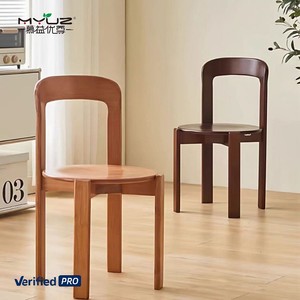
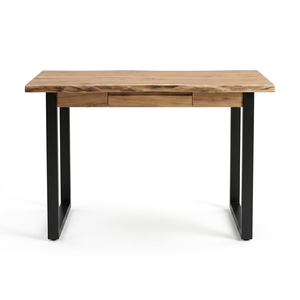
Whether you require a full 40ft High Cube container of standardized restaurant tables or custom mixed-CBM consolidation comprising solid teak tables, matching Rey chairs, credenzas, and live-edge desks, our logistics team manages multi-SKU container stuffing to prevent transit damage.
Comprehensive Finishing Systems: Chemical Architecture
A superior solid wood dining table requires a finish tailored to its commercial application. We offer three distinct surface chemistry technologies:
- Natural Bio-Wax & Pure Botanical Teak Oil: Penetrates the vascular grain without building a plastic film. Preserves the natural tactile feel of the timber while highlighting the golden-brown patina. Recommended for indoor residential collections and dry-climate environments.
- Commercial Two-Component Acrylic Polyurethane (PU): Milled with UV absorbents and anti-scratch silicates. Forms a non-yellowing, waterproof shield resistant to alcohol, hot oils, coffee spills, and commercial-grade sanitizing detergents. Essential for contract restaurant use.
- Micro-Textured Duco Pigmented Lacquer & Deep Melamine: Applied inside dust-free pressurized spray chambers to achieve flawless matte, satin, or high-gloss architectural sheens when modern geometric framing meets natural wood grains.