Precision-machined from responsibly harvested, legally certified hardwood timber. Built to international commercial contract hospitality and luxury residential standards with climate-stabilized moisture ratings.
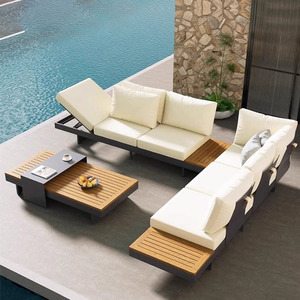
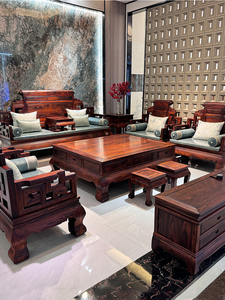
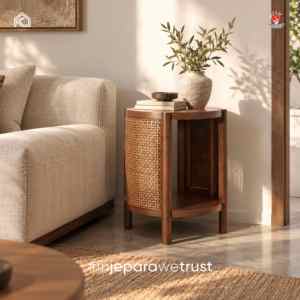
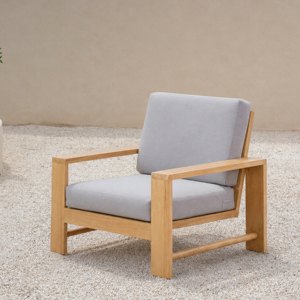
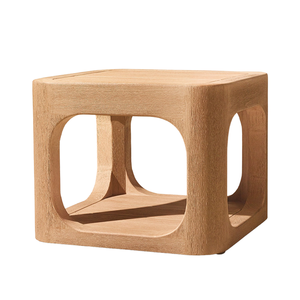
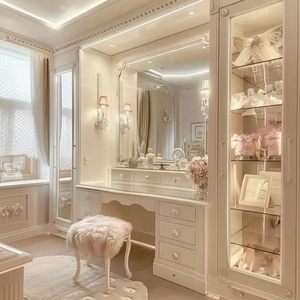
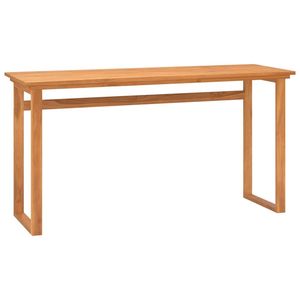
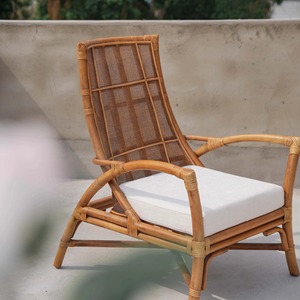
Combining 30+ years of traditional woodworking heritage with advanced computer-controlled kiln dehydration and multi-axis CNC joinery for high-volume contract exports worldwide.
Every board of raw timber processed across our facilities holds full SVLK (Sistem Verifikasi Legalitas Kayu) certification and compliant documentation under the new European Union Deforestation Regulation (EUDR). Importers receive full digital geolocation records and traceability manifests down to individual plantation tracts, eliminating customs delays and regulatory liabilities across North American and European borders.
Solid wood failure in teak tables is predominantly caused by poor cellular moisture balance. Our integrated processing mills utilize specialized computerized steam and vacuum kilns running 21-to-30-day thermal cycles. We lower core moisture content down to an exacting 8%–10% tolerance, effectively neutralizing warp, end-checking, tension fractures, and joint detachment when tables are installed in arid or climate-controlled environments.
Unlike fast-furniture manufacturers who rely on dowels, pocket screws, and synthetic adhesives, our structural teak frames employ traditional deep blind mortise-and-tenon joints combined with high-precision CNC multi-axis milling (+/- 0.5mm tolerance). Secured with structural D4 marine-grade polyurethane adhesives, our dining, conference, and outdoor tables provide multi-decade structural durability under heavy commercial usage.
For B2B volume buyers, hotel procurement managers, and commercial interior contractors, selecting the correct grading standard of teak directly dictates product lifespan, maintenance overhead, and total cost of ownership.
Teak (*Tectona grandis*) stands out as an irreplaceable timber species for outdoor and indoor architectural tables due to its extraordinary biological makeup. Dense heartwood fibers are saturated with natural rubber latex and natural tectonic oils (oleoresins), providing intrinsic hydrophobic properties, native silica resistance against marine borer attacks, and natural fungicidal biocide barriers against wet rot (*Coniophora puteana*) and dry rot.
In high-traffic commercial environments—such as oceanfront hotel terraces, corporate dining facilities, and outdoor resort villas—commercial specifiers must differentiate between plantation-grown sapwood and virgin/mature-stand heartwood. The table below details the engineering specifications of our factory timber grades:
| Evaluation Parameter | Grade A Plantation Heartwood | Grade B Commercial Core | Grade C Secondary Sapwood |
|---|---|---|---|
| Anatomical Source | Center core heartwood of 35-50+ yr mature logs | Outer heartwood zone (20-30 yr timber) | Peripheral sapwood ring (juvenile wood) |
| Natural Oil Content | Maximum saturation (> 1.8% dry weight basis) | Moderate concentration (0.8% - 1.2%) | Minimal (< 0.3%, requires chemical oil dips) |
| Grain Structure & Color | Tight straight-grain; rich golden honey-amber | Slightly swirling grain; lighter fawn brown | Irregular grain; white-cream sapwood streaks |
| Kiln EMC Target | 8% - 10% (Constant RF vacuum monitored) | 10% - 12% (Standard dehumidification) | 12% - 15% (Prone to uneven cellular collapse) |
| Weathering Resistance | 25+ Years unsealed exposed to marine climate | 10 - 15 Years (Requires periodic re-oiling) | 1 - 3 Years (High risk of mildew and decay) |
| Intended Applications | Luxury hotel dining, public plazas, yacht decks | Indoor office desks, residential consoles | Internal framing, low-cost domestic furniture |
| Certification Status | SVLK / FSC 100% Legal | SVLK Certified | SVLK Compliant |
How international furniture brands, global supply chain directors, and commercial developers are adapting their bulk purchasing strategies to meet evolving consumer and environmental demands.
With fluctuating ocean freight spot rates and escalating inland logistics expenses, volume buyers are aggressively abandoning rigid pre-assembled table shipments. Leading wholesale importers now specify knock-down (KD) table bases engineered with embedded stainless steel thread inserts and concealed cam-locking systems. This reduces containerized CBM volume by up to 58%, allowing procurement teams to pack over 180 large dining tables into a single 40ft High Cube container compared to barely 65 assembled units.
Architectural interior designers are transitioning away from sterile, purely industrial steel-and-laminate surfaces in commercial interiors. Current high-demand contracts heavily specify solid teak dining and conference tables integrating natural, live-edge wood slabs, solid teak roots, and tactile wire-brushed finishes paired with powder-coated 316 marine-grade stainless steel, architectural cast concrete, or sintered ultra-compact stone tops.
Institutional hospitality buyers and retail furniture conglomerates across the EU, North America, and Australasia are no longer accepting vague timber origin claims. Modern procurement workflows require verified digital traceability trails—including FSC (Forest Stewardship Council) Chain of Custody, PEFC, and national V-Legal certificates with precise GPS forestry coordinates to fulfill incoming corporate ESG mandates and EUDR enforcement criteria.
Every dining table, accent desk, and outdoor sofa frame undergoes an exhaustive four-tier industrial quality gate to eliminate structural defects prior to ocean dispatch.
Sustainably harvested mature plantation logs undergo ultrasonic density scanning and visual grain mapping. Wood is quarter-sawn to yield optimal structural grain orientation, minimizing radial warpage and seasonal movement.
Rough-cut timber boards enter computer-regulated vacuum kiln chambers for 3 to 4 weeks. Moisture content is lowered from over 45% down to an exact 8%–10% target, followed by a 72-hour moisture stabilization conditioning period.
Automated multi-axis CNC machines cut matching mortise, tenon, and lap joints to sub-millimeter tolerances. Craftsmen perform successive progressive dry-sanding passes from 80-grit up to 400-grit for an ultra-smooth natural tactile finish.
Two dedicated quality inspectors verify flat surfaces, joint squareness, and coating uniformities. Finished goods receive five-ply corrugated edge protection, moisture-absorbing desiccants, and optional fumigated plywood sea crates.
Direct, technical answers regarding factory capabilities, custom drawing conversion, export documentation, container minimums, and commercial payment terms.
We are a direct manufacturing enterprise with our primary production workshop, kiln facilities, and machine halls operating continuously since 1995. We maintain our own specialized in-house production team—including master woodworkers, professional finish applicators, and dedicated full-time QC/QA engineers—supported by scalable sanding and packing crews. Clients deal directly with the factory engineering team, eliminating intermediary trading markups.
Yes. OEM and ODM bespoke contract manufacturing represents over 70% of our export throughput. You can submit technical shop drawings, CAD files, 3D SketchUp models, or detailed dimensioned concept sketches. Our engineering office reviews joint stresses, structural expansibility, and hardware integration, returning detailed production shop drawings and 3D renderings for your final written sign-off before raw timber cutting begins.
Our standard wholesale production baseline is typically one 20ft Full Container Load (FCL), which equates to approximately 28–32 CBM depending on packaging styles. However, we actively accommodate smaller consolidated trial orders (LCL) or half-container runs for commercial hospitality mockups and boutique retailers when total shipping volume makes financial and operational sense. Multi-item mixed container loading is readily accepted.
Standard manufacturing lead time is approximately 4 to 6 weeks for a standard 20ft container and 6 to 8 weeks for a 40ft High Cube container following formal drawing approval and deposit receipt. Lead times reflect the mandatory 21-day kiln drying cycle required to ensure timber equilibrium. For large multi-container resort and hotel projects, we schedule staggered container dispatches every 2 to 3 weeks to match your on-site installation timeline.
We provide multiple industrial finish variations: (1) Raw Sanded Natural Teak (ideal for outdoor exposure where the wood develops a silver-gray patina), (2) Water-based Penetrating Teak Oil & UV-Shield Sealer, (3) Commercial Polyurethane & Acid-Catalyzed Melamine Lacquers (scratch- and heat-resistant for indoor dining/office desks), and (4) Opaque Polyurethane Duco Finishes matched to any custom RAL or Pantone color code.
All raw logs are sourced strictly from government-monitored plantation concessions holding SVLK (Sistem Verifikasi Legalitas Kayu) certification and V-Legal export authorizations. We furnish complete documentation packages—including Certificate of Origin (Form A / Form E), Phytosanitary Fumigation Certificates, SVLK chain-of-custody papers, and commercial shipping invoices—ensuring seamless import clearance across the US, UK, EU, Australian, and Japanese customs authorities.
Ocean freight containers experience extreme relative humidity shifts and thermal cycling (container rain). To protect export shipments, every table component is wrapped in breathable foam padding, heavy-duty edge guards, and vapor-barrier moisture wrap. We install high-absorption calcium chloride industrial desiccant poles (capable of absorbing 300% of their weight in moisture) inside every shipping container to keep relative humidity below the mold threshold.
We openly welcome overseas buyers, third-party inspection agencies (such as SGS, Bureau Veritas, or TÜV), and sourcing agents to visit our manufacturing facilities. Our workshops are open Monday through Sunday (08:00 to 16:00 local time). We encourage on-site inspections during timber selection, pre-assembly joint fitting, and final container staging. We also arrange real-time HD video QC audits for clients unable to travel.
For standard FCL container orders, we typically operate under a standard 30% advance deposit via T/T (Telegraphic Transfer) upon order confirmation to initiate timber allocation and production scheduling, with the remaining 70% balance payable upon submission of comprehensive final QC inspection reports and original Bill of Lading (B/L) copy. Irrevocable Letters of Credit (L/C at sight) are also accepted for large multi-container institutional projects.
Because every B2B order involves customized variables: wood grade (Grade A heartwood vs. Grade B commercial), specific table dimensions, knock-down vs. pre-assembled joinery, choice of custom finishes, hardware grades (304 vs. 316 stainless steel), and seasonal global freight destinations. Publishing generic prices compromises accuracy. We formulate tailored, transparent quotations within 24 hours of receiving your exact bill of quantities or drawings.
