Engineered to strict dimensional tolerances with kiln-dried heartwood, precision mortise-and-tenon joints, and custom architectural finishes for hospitality, residential, and commercial developments.
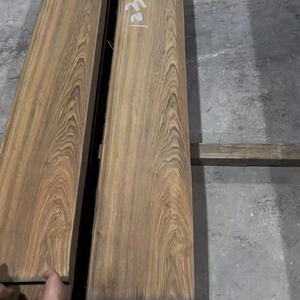
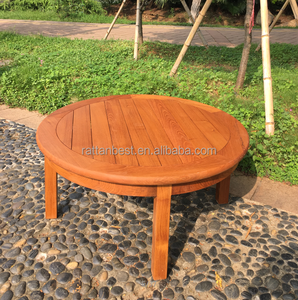
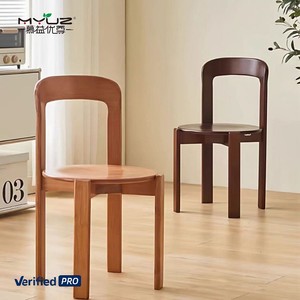
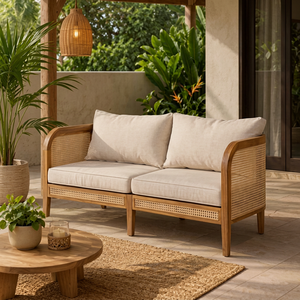
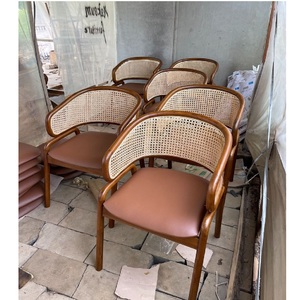
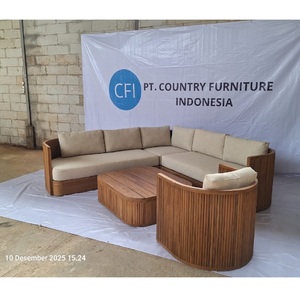
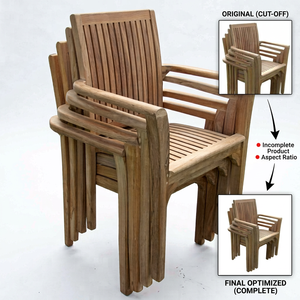
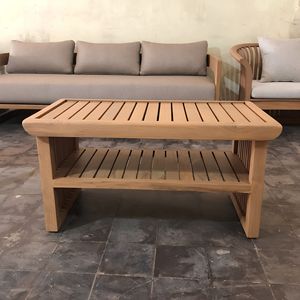
Procuring custom commercial furniture from Southeast Asia requires navigating complex metallurgical, botanical, and international logistics variables. Indonesian Teak (Tectona grandis), sourced sustainably from Central Java’s state-managed Perum Perhutani plantations, possesses unique physical properties that position it as the gold standard for high-traffic hospitality, multi-residential developments, and luxury exterior environments. However, transforming rough-sawn tropical hardwood into millimeter-accurate contract furniture demands stringent engineering protocols, scientifically controlled thermal dynamics, and documented supply chain traceability.
As specialized Indonesian OEM manufacturers and exporters based in Jepara since 1995, our manufacturing ecosystem combines ancestral generational joinery traditions with modern precision machining. For architectural specifiers, contract furniture importers, and commercial procurement directors across North America, Europe, Australia, and the Middle East, the primary challenge is mitigating dimensional failure—such as seasonal checking, radial warping, and glue-line delamination caused by divergent microclimates between the humid tropical manufacturing origin and dry, air-conditioned or seasonally frozen destination markets.
Tropical teak wood naturally holds a green moisture content exceeding 45–60%. For international export compliance, lumber must undergo multi-stage de-humidification and computerized thermal drying in calibrated kilns for 18 to 28 days until the Core Moisture Content stabilizes strictly between 8% and 12%. This equilibrium halts cellular shrinkage along the tangential (approx. 2.5–3.0%) and radial (approx. 1.2–1.5%) axes, ensuring joints, mortises, and cabinet carcases retain dimensional integrity in arid European winters or desert climates.
| Wood Quality Factor | Grade A Perhutani Teak (Prime Heartwood) | Grade B Teak (Semi-Heartwood) | Grade C Teak (Sapwood / Juvenile) |
|---|---|---|---|
| Tree Maturity | 40 to 60+ Years (Controlled State Forest) | 25 to 35 Years (Regenerated Stands) | 10 to 18 Years (Fast-Grown Community Plots) |
| Natural Tectoquinone Content | Maximum (>4.8% dry mass) — complete resistance to termites & rot | Moderate (2.0–3.2%) — requires basic exterior preservation | Negligible (<0.8%) — vulnerable to fungus, beetles, and rot |
| Silica & Natural Oil Matrix | Dense resin channels; hydrophobic, silky tactile sheen | Medium oil saturation; uniform surface finish | Dry, porous grain; prone to fiber raising and graying |
| Grain Symmetry & Density | Tight linear ring structure (approx. 660–720 kg/m³) | Slightly waved; minor live pin-knots (580–640 kg/m³) | Loose, irregular grain with sapwood streaks (<500 kg/m³) |
| Contract Suitability | 5-Star Hotels, Luxury Yachts, Heavy Marine Exterior | Indoor Hospitality, Residential Retail Collections | Low-budget temporary fixtures (unfit for export) |
International furniture brands, FF&E procurement houses, and architectural groups are navigating evolving consumer preferences, volatile ocean freight structures, and aggressive regulatory overhauls. Navigating these macro trends requires understanding how modern Indonesian factories have restructured their custom contract manufacturing models.
With the European Union Deforestation Regulation (EUDR) and the Lacey Act in the United States, commercial importers require full polygon-level geolocation tracking. Indonesian exporters certified under the national SVLK (Sistem Verifikasi Legalitas Kayu) standard provide an ironclad audit trail from the exact forestry concession cut-block to container loading, guaranteeing total immunity against import penalties.
Escalating international ocean freight rates have driven commercial buyers away from oversized, fully assembled crating. Modern OEM manufacturing integrates computerized multi-axis 5-axis CNC router technology to build knockdown (KD) outdoor loungers and dining tables using stainless steel 316 concealed connectors, decreasing shipping CBM by up to 55% while maintaining on-site assembly rigidity.
Architectural interior projects increasingly reject monochromatic wood furniture. The top-performing B2B procurement categories combine solid Indonesian teak with natural hand-woven wicker/rattan (Calamus rotang), sintered stone ceramic tops, marine-grade rope weaving, and charcoal powder-coated aluminum substructures suited for indoor-outdoor architectural continuity.
Traditional furniture exports from Central Java historically centered on ornate hand-carved classical designs. Over the past decade, Indonesian craftsmanship has undergone a transformative renaissance, merging historical carving mastery with Scandinavian minimalism, Japandi aesthetics, and high-performance marine engineering.
Driven by computer-aided 3D modeling and multi-lamination bentwood techniques, teak tables and dining chairs are moving from boxy silhouettes to organic, rounded contours. Hand-shaped bullnose edges, curved armrests, and tapered cylindrical legs celebrate the raw visual grain while optimizing user ergonomics in commercial bistro and dining settings.
Modern luxury developments increasingly demand customized finishes that bypass the artificial high-gloss varnishes of the past. Advanced Italian waterborne polyurethane sealers, nano-ceramic outdoor sealants, and controlled wire-brush wire-weathering produce elegant patinas—such as "Smoke Driftwood," "Weathered Charcoal," or "Muted Scandinavian White Wash"—without sealing off the timber's natural breathability.
Upholstered teak seating now features all-weather reticulated open-cell polyurethane foam (such as Urecel QuickDry) combined with solution-dyed acrylic textiles (Sunbrella, Agora). Internal frames utilize solid mortise joints secured with waterproof Polyurethane D4 glues and Grade 316 A4 stainless steel carriage bolts, eliminating galvanic oxidation in coastal resort environments.
Headquartered directly along the prime woodworking corridor of Jl. Raya Soekarno Hatta in Jepara, Central Java, our family-operated manufacturing facility has served top-tier furniture importers across the United States, New Zealand, Germany, the UK, and beyond since 1995. Unlike commercial trading agencies that broker orders to third parties, our integrated workshop model maintains absolute oversight from raw round-log selection to full container sealing.
Zero intermediary margins. Our core workshop houses 4 master master craftsmen, 5 certified wood finishers, dedicated assembly joiners, and a scalable specialized sanding team that scales dynamically per project container run.
Every board of solid teak and mahogany is legally sourced, fully registered under Indonesian V-Legal documentation. We deliver total peace of mind for EUDR, FLEGT, and Australian Illegal Logging Prohibition compliance.
We work from your architectural CAD files, PDF shop drawings, 3D SketchUp renders, or simple dimensional sketches. Every dimension, profile, finish, and hardware element is customized to your exact brand catalog specifications.
Two senior in-house QA/QC inspectors oversee moisture meter readings, joint rigidity, flush tolerances, and packaging integrity. On multi-container programs, you review high-resolution digital inspection dossiers prior to release.
While standard orders ship in 20ft (approx. 28–32 CBM) or 40ft High Cube containers (65–68 CBM), we support LCL consolidation and half-container trial runs to facilitate new catalog testing and boutique hospitality rollouts.
Commercial transparency: 30% project deposit upon order formalization, with container balance payable only after you review and approve comprehensive pre-shipment QC photographic and dimensional documentation.
Expertise across raw natural sanded teak, marine oiled finishes, protective polyurethane coatings, durable acid-curing melamine, and automotive-grade solid-color pigmented duco lacquers matched to Pantone or RAL codes.
We welcome international procurement teams and sourcing agents. Located at Jl. Raya Soekarno Hatta KM.5 No.95, our facility is open daily from 08:00 to 16:00 WIB for on-site timber audits and live production inspections.
Essential technical, financial, and logistical insights for buyers importing solid teak and hardwood furniture from Jepara, Indonesia.
We are a direct family-owned manufacturing facility located in Jepara, Central Java, established in 1995. When you collaborate with us, you work directly with our workshop leadership, wood technicians, and finish artisans—not a third-party commercial broker or intermediary agent.
Our standard export minimum is one 20ft full container load (FCL), which typically accommodates 28 to 32 CBM (approximately 60 to 180 units depending on product geometry). However, we routinely support LCL (Less than Container Load) shipments and mixed container configurations when consolidating with your other Indonesian suppliers or running prototype hospitality suites.
Climate stability is guaranteed through controlled industrial kiln-drying. We monitor all raw timber using calibrated pinless and pin-type digital resistance moisture meters, ensuring core moisture content is drawn down to 8%–12%. Furthermore, our master joinery incorporates floating panel grooves, elongated screw slots, and traditional mortise-and-tenon construction that accommodates micro-expansion without structural fracture.
Average factory lead time is approximately 4 to 6 weeks per 20ft container once shop drawings and material samples are formally approved. For large-scale multi-container hospitality projects (40ft High Cube containers), we implement staggered production schedules, loading containers every 2 to 3 weeks to align with your destination warehousing schedule.
Every commercial consignment is exported under complete Indonesian SVLK (Sistem Verifikasi Legalitas Kayu) certification and accompanied by an official V-Legal Document issued by the Ministry of Environment and Forestry. We provide full Bills of Lading, Packing Lists, Commercial Invoices, Certificates of Origin (COO Form A / Form D / Form E / Form AK), and Phytosanitary Certificates required for customs clearance worldwide.
Yes. OEM contract manufacturing represents over 75% of our workshop output. You can submit CAD files (.DWG, .DXF), 3D files (.STP, .SKP), Adobe Illustrator vectors, or detailed PDF shop drawings. Our engineering team reviews all structural joinery, submits formal production shop drawings with metric tolerances, and can build initial physical master prototypes for your review.
For standard single or multi-container orders, terms are a 30% initial deposit via telegraphic transfer (T/T) upon order confirmation and proforma issuance. The remaining 70% container balance is due once production is completed, fully inspected by our internal QC team (and any third-party agency such as SGS or Intertek you appoint), and confirmed with your approval of pre-loading photos and documentation.
Connect with our technical furniture engineering team today. Submit your drawings, bill of materials, or collection schedule for an accurate production assessment, timber yield breakdown, and formal commercial quotation within 24–48 hours.
