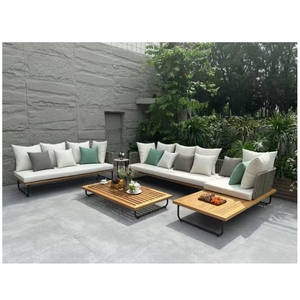
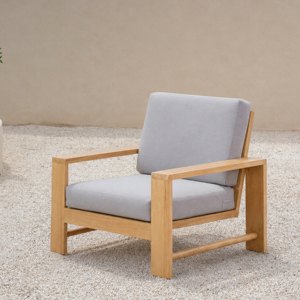
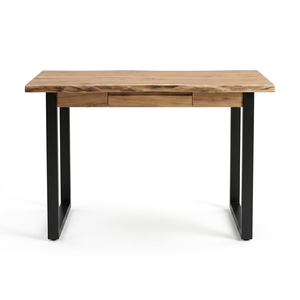
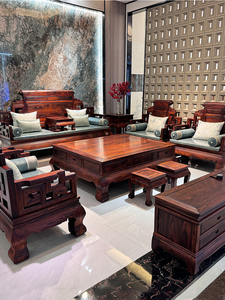
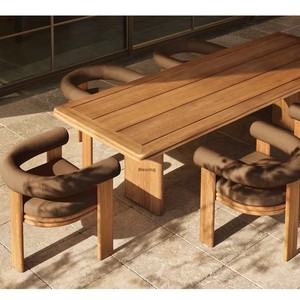
Engineered for premier international commercial developers, residential brands, and wholesale importers requiring rigorous structural stability, dimensional consistency, and refined aesthetic finishes.
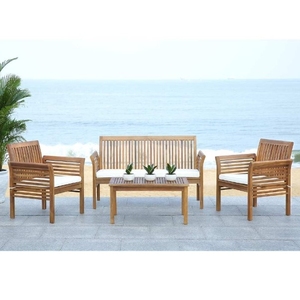
Established in 1995 in Jepara, Central Java—the world-renowned epicenter of Indonesian woodworking—we merge heritage timber mastery with lean manufacturing standards for seamless OEM/ODM contract fulfillment.
Every board originates from legally governed concessions under the Indonesian Timber Legality Assurance System (Sistem Verifikasi Legalitas Kayu), guaranteeing seamless clearing through US Lacey Act and EU Timber Regulation (EUTR/EUDR) audits.
Whether presenting industrial architectural sketches, render briefs, or 3D CAD files, our engineering team refines tenon tolerance, wood expansion allowances, and concealed fasteners without compromising the architect's creative vision.
Unlike trading brokerages, Teratai houses full-time specialized inspectors who monitor moisture equilibrium, joint tensile strength, final surface profiling, and carton drop testing prior to release for shipping container consolidation.
We streamline maritime shipping economics by supporting 20GP, 40HQ FCL container builds, balanced mixed-SKU loadings, or synchronized LCL dispatch to regional consolidation hubs alongside other Central Java supply partners.
Macro shifts in supply chain geopolitics, carbon certification mandates, and hospitality architecture are redefining contract manufacturing specifications worldwide.
Global furniture importers are moving away from self-declared sustainability toward geolocated traceability. Procurement models demand verified tree-harvest polygon data directly tied to SVLK timber batches, completely neutralizing regulatory risks at destination customs.
Commercial buyers are actively bypassing western intermediary trading houses to mitigate markups of 40%–70%. Establishing direct relationships with specialized family-run Indonesian workshops provides full custom engineering control, rapid sampling iterations, and localized supply predictability.
Pure timber silhouettes are evolving into multi-material architectural statements. Procurement briefs increasingly mandate high-grade teak paired with powder-coated marine-grade aluminum, sintered stone countertops, micro-perforated brass accents, and low-VOC marine sealers for outdoor resort durability.
| Evaluation Parameter | Commercial Grade Plantation Teak | Mature Heartwood Teak (Teratai Standard) | Standard Outdoor Alternative (Eucalyptus/Acacia) |
|---|---|---|---|
| Natural Silica & Resin Content | Moderate (Requires synthetic topcoat) | Very High (Natural waterproofing & pest resistance) | Low (Vulnerable to rot and insect infestation) |
| Target Kiln Dry Moisture (MC) | 14% - 18% (Prone to checking) | 8% - 12% (Optimized for western interior climates) | 12% - 16% (Higher shrinkage coefficient) |
| Joinery Structural Longevity | 5 - 8 Years | 25 - 50+ Years (Traditional Mortise & Tenon) | 3 - 5 Years (Dowel and screw binding) |
| Regulatory Audit Compliance | Variable documentation | 100% SVLK / V-Legal Government Certified | Subject to fluctuating regional logging codes |
Contemporary commercial furniture is casting aside bulky, unrefined colonial silhouettes in favor of organic brutalism, seamless minimalism, and indoor-outdoor spatial fluidity.
Architects specify slender chamfered edges, pill-shaped profiles, and understated radiused curves that celebrate teak's rich, golden-brown grain without superfluous visual weight. Perfect for urban boutique hotels and high-end residential apartments.
High-gloss varnishes have been widely superseded by matte, tactile micro-brushed surfaces, zero-sheen water-based polyurethanes, and weathered-gray conversion coatings that mimic natural seaside weathering while retaining core lipid protection.
Sophisticated hospitality programs combine Indonesian Black Acid Wood (Broadleaf Dalbergia) or dense Mahogany with core Teak architectures. This juxtaposes rich, dark wood grain against honey-colored teak surfaces to create striking visual focal points in grand suites and lobbies.
Clear answers regarding contract manufacturing parameters, moisture verification, logistics consolidation, and bespoke prototyping protocols.
Teratai Furniture is a registered family manufacturer located directly on Jl. Raya Soekarno Hatta KM.5 in Jepara, Central Java, operating continuously since 1995. We manage dedicated sawing lines, computer-monitored kiln chambers, precision hand-joinery workshops, and finishing booths. By sourcing through us, overseas clients work directly with the craftsmen who cut and finish the furniture, eliminating agent markups and communication gaps.
The primary culprit behind checking and seam splits in European and North American markets is uneven moisture balancing. We subject all raw timber stock to slow, computerized steam-kiln drying, bringing core moisture down to a stable 8%–12%. Components rest in humidity-controlled balancing bays prior to mortise joinery, ensuring optimal stability through cold, dry northern winters and hot summers alike.
Our standard commercial baseline is one 20ft container (approx. 28–30 CBM), which provides the most favorable maritime freight cost per unit. However, we regularly accommodate LCL trial shipments or multi-supplier consolidations when the cubic volume is commercially viable. Pre-production prototypes take 2–3 weeks depending on design complexity, with container production completed within 4–6 weeks.
Yes. Over 65% of our production runs are OEM/ODM custom pieces built to precise architectural drawings. Send us an initial hand-sketch, dimensional specifications, or full CAD/3D models along with your target finish (natural teak, duco lacquer, wire-brushed weathered, or matte polyurethane). Our production engineering desk evaluates stress points, provides shop drawings, and produces working prototypes for buyer sign-off.
Connect directly with our Jepara workshop engineering team to request factory-direct quotations, technical consultation, sample prototypes, or to plan a factory audit visit.