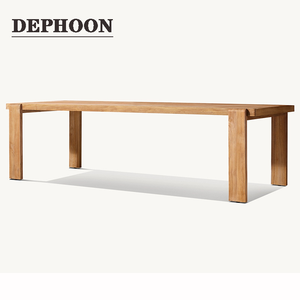
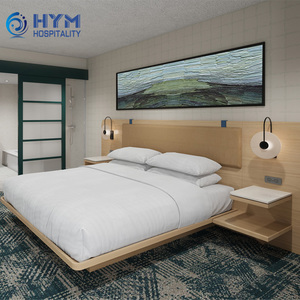
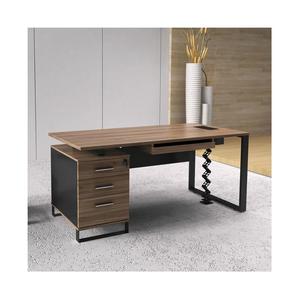
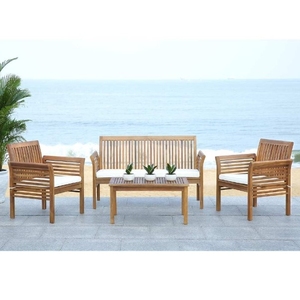
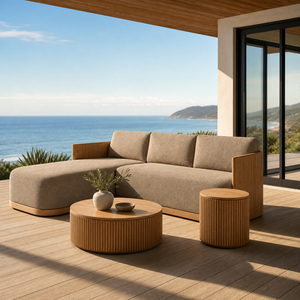
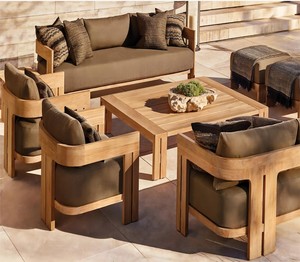
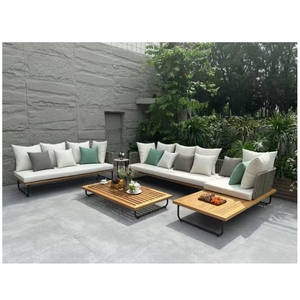
Customized Modern Durable Teak Solid Wood Coffee & Dining Table Outdoor Furniture
- Kiln-Dried SVLK Certified Teak
- Contract Grade UV & Water Repellent
Engineered with sustainable Indonesian Grade-A teak (Tectona grandis), precision tenon joinery, and all-weather resilience to endure rigorous commercial hospitality environments.
Unlike trading intermediaries that mark up products and obscure manufacturing origins, Teratai Furniture operates as a dedicated family artisan workshop in Jepara, Central Java—the epicenter of Indonesian woodworking.
Clients interface directly with master craftsmen, structural engineers, and finishing leads. By eliminating brokers, commercial clients retain full design fidelity, eliminate 25–40% agency premiums, and maintain open communication for bespoke CAD revisions.
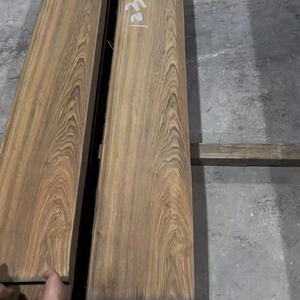
Every board of Tectona grandis processed in our kiln dryers holds full SVLK (Sistem Verifikasi Legalitas Kayu) certification under Indonesia’s rigorous V-Legal export framework, meeting strict import criteria for the United States, Europe, and Australasia.
Quality assurance is embedded at each junction: timber moisture testing post-kiln, dry assembly test-fitting of mortise-and-tenon joints, rigorous pre-stain sanding, and pre-packing visual sign-offs before loading container shipments.
A rigorous examination of material selection, moisture control kinetics, and joinery mechanics required to eliminate warranty failure in commercial dining spaces.
In high-traffic hospitality dining, structural chair legs and stretchers endure multi-axis dynamic loads up to 1,500 N during service cycles. Achieving permanent joint integrity requires exclusive use of Grade A teak heartwood. Heartwood features high concentrations of tectoquinone—a naturally occurring enzymatic terpene that repels subterranean termites, fungal spore colonization, and moisture penetration.
Critical Sourcing Standard: Commercial dining chairs must strictly maintain zero sapwood on ground-contact leg tips and structural dowel housings. Sapwood contains hygroscopic starches that induce dimensional shrinkage, loosening joints over seasonal humidity shifts.
Our workshop applies computer-monitored dehumidification kiln drying over a 21-day gradual ramp down to bring core moisture content to 8%–12%. This prevents end-grain checking, splitting, or warp after delivery to dry climate zones such as North America or the Middle East.
Dining chairs fail primarily along the side seat-rail to back-leg intersection due to cyclical racking loads caused by diners leaning back. To address this failure vector, our factory utilizes CNC-machined true deep-mortise and floating tenon assemblies bonded with waterproof D4 polyurethane adhesive conforming to EN 204 durability classifications.
Where modern aesthetic briefs demand minimalist leg tapers, internal corner bracing blocks with steel threaded inserts are concealed beneath the perimeter sub-frame. This dual-reinforcement strategy ensures chairs exceed ANSI/BIFMA X5.1 and EN 581-2 contract durability thresholds without compromising clean Scandinavian or Mid-Century lines.
Engineering Specification: Tenon depth is maintained at a minimum of 32mm with chamfered lead-in edges, ensuring complete glue envelopment and zero hollow pocket resonance.
Every custom OEM dining chair platform engineered in our Jepara facility is designed to pass internationally accredited physical destructive tests prior to mass batch tooling:
Strategic purchasing insights for retail buyers, hospitality developers, and brand merchandisers seeking defensible product differentiation.
Architects are steering away from monolithic wood chairs in favor of tactile hybrid compositions. High-specification contract orders now pair solid Grade-A teak profiles with UV-resistant Olefin synthetic rope, Danish paper cord, French cane webbing, and powder-coated matte black architectural aluminum subframes.
Hospitality operators increasingly request "transitional seating"—dining chairs refined enough for fine indoor dining, yet sufficiently weatherproofed to migrate to open-air terraces. This demands microporous, matte water-based polyurethane finishes that protect the timber without developing an artificial plastic sheen.
With the implementation of the EU Deforestation Regulation (EUDR), tier-1 retail brands and European commercial developers require complete geolocation data mapping down to the individual forest concession. Direct workshop sourcing ensures clear documentation tracing back to Perum Perhutani legal plantations.
Given volatility in ocean container freight rates, brands are demanding intelligent knock-down (KD) chair engineering. Our factory develops proprietary hidden interlocking brackets that reduce individual carton volume by up to 55%, expanding 40ft High Cube container stuffing capacity from 220 to 520 units.
Essential operational, regulatory, and logistics intelligence for purchasing agents and interior design project leaders.
We are a direct family-owned workshop and exporter located on Jl. Raya Soekarno Hatta KM.5, Jepara, Central Java, Indonesia, operating continuously since 1995. When partnering with us, you work directly with our master woodworkers, draftspeople, and finishing leads. We welcome scheduled client visits to inspect raw log selection, kiln-drying chambers, and finishing lines in person.
Our standard production baseline is one 20-foot general purpose container (FCL), which typically holds 120–180 fully assembled dining chairs depending on geometry. However, because we operate an agile workshop team, we readily accommodate mixed-container orders (combining dining chairs, dining tables, and consoles) as well as consolidated LCL trial orders for commercial mock-ups.
All timber processed in our Jepara facility is SVLK (Sistem Verifikasi Legalitas Kayu) certified under Indonesia's national timber legality assurance system, formally recognized by the European Union under FLEGT licensing mechanisms. We supply V-Legal documents, phytosanitary certificates, Certificates of Origin (COO), and bill of lading sets for smooth customs processing across global ports.
We provide four standardized finishing systems: (1) Natural Sanded Silky Smooth with zero topcoat, allowing natural oils to patina into an organic silvery hue; (2) Water-Based Nano UV Sealers that preserve original honey amber tones; (3) Multi-Stage Polyurethane Melamine Lacquers for heavy-use indoor commercial settings; and (4) Opaque Duco PU Enamel coatings matched to your custom RAL/Pantone references.
Custom prototype samples require 10–14 working days from finalized 2D/3D CAD shop drawings. Full container volume production (20ft or 40ft FCL) averages 4 to 6 weeks. For multi-container phased hotel rollouts, schedules are organized on staggered shipping cadences to align with on-site general contractor installation timelines.
Export packaging features five-ply double-corrugated heavy cartons, high-density polyethylene edge-protectors, closed-cell foam leg wrapping, and non-woven breathable dust sleeves. In addition, container interiors receive desiccant silica poles to manage ambient moisture shifts during trans-equatorial maritime freight, preventing mold growth or finish fogging.