Precision-milled from sustainable Tectona grandis and seasoned specifically to withstand Riyadh's extreme diurnal temperature fluctuations (0°C to 50°C) and sub-10% relative humidity.
Specifying timber products for the Central Province of Saudi Arabia requires an understanding of extreme hygrometric stress. Unlike temperate or coastal Mediterranean environments where equilibrium moisture content (EMC) hovers consistently around 12% to 15%, Riyadh experiences some of the lowest atmospheric vapor pressure values in global urbanization. Ambient summer temperatures regularly exceed 48°C (118°F), accompanied by relative humidity (RH) plunges below 8% to 10% during daytime hours, followed by rapid radiative cooling at night.
When mass-manufactured timber from standard commercial operations is imported into Riyadh, longitudinal surface checking, end-grain splitting, and catastrophic joint shearing often occur within 90 days. This failure is driven by the severe differential shrinkage gradient across the wood's radial and tangential axes when moisture escapes too rapidly from cellular walls.
Indonesian plantation teak (*Tectona grandis*) harvested under certified SVLK frameworks from Central Java presents an intrinsically superior cellular anatomy for these exact stressors. Characterized by high natural concentrations of extractive tectoquinones, caoutchouc (natural rubber latex), and dense silica deposits within the xylem parenchyma, authentic mature teak maintains a remarkably low volumetric shrinkage coefficient (approximately 5.3% from green to oven-dry, compared to European Oak at 12.6% or American Walnut at 10.2%). The high oil content functions as an internal hydraulic buffer, effectively throttling moisture exchange rates and mitigating the shock of intense dry heat.
Direct export from Jepara to Riyadh requires our proprietary Arid-Zone Seasoning Protocol. Conventional export timber is dried down to 12%–14% moisture content—a baseline suitable for Northern Europe or coastal East Asia, but unstable in Riyadh. Our factory employs computerized, slow-cycle vacuum steam and dehumidification kilns over a 28-to-35 day schedule, slowly ramping thermal gradients to bring the timber's core EMC down to a stable 6% to 8% without inducing honeycomb cracking or case-hardening.
By bringing timber down to equilibrium prior to final five-axis CNC dimensioning and hand joinery, internal cellular tensions are neutralized. Each floating mortise-and-tenon interface is calibrated with 1.5mm dry-climate expansion tolerances, bedded with polyurethane D4 moisture-curing binders that flex microscopically during extreme seasonal thermocycling.
Engineered for high-profile master plans, architectural residences, and demanding public spaces throughout Saudi Arabia's capital.
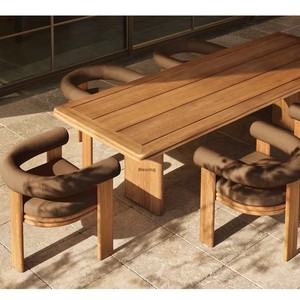
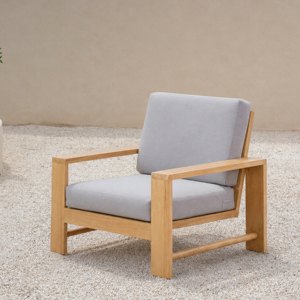
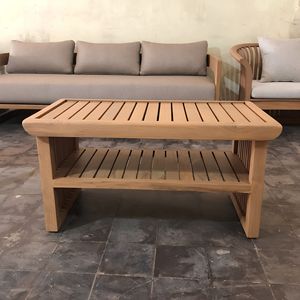
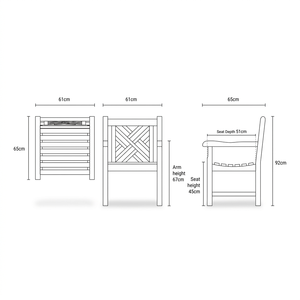
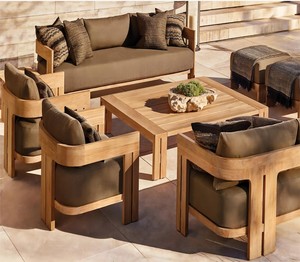
From private compounds in Al Hada and Al Malqa to contemporary villas in Al Nakheel, bespoke outdoor teak daybeds, deep-seating modular sofas, and traditional slatted dining tables provide a luxurious, tactile counterpoint to cut Riyadh limestone and rammed-earth inspired walls. Our oil-rich teak resists ambient dust abrasion during shamal dust storms and remains cool to the touch even under blistering mid-day solar radiation.
Riyadh’s fine dining and diplomatic hospitality demand furniture that satisfies both rigid safety mandates and refined European-Scandinavian design aesthetics. Our heavy-profile bistro arrangements, minimalist pergolas, and solid-slab banquettes endure constant sanitization and intense UV exposure without bleaching chalky or warping, delivering an enduring low-depreciation investment for commercial operators.
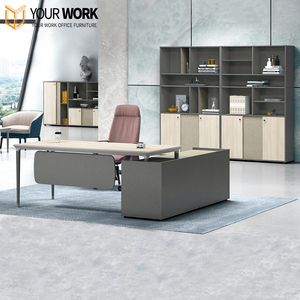
Supporting the ambitious master developments flanking the capital, including Diriyah Gate, King Salman Park, and New Murabba. Teratai manufactures custom indoor and transitional furniture—including bespoke executive desking, acoustic slatted cabinetry, and hand-joined timber headboards—guaranteeing compliance with rigorous SABER import standards and project-specific aesthetic charters.
Key drivers shaping architectural furniture specifications among KSA interior design practices and general contractors.
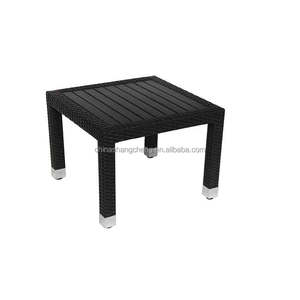
The previous reliance on petrochemical-derived wicker and cheap aluminum extrusions is rapidly waning in Saudi Arabia. Driven by high-end design firms, there is an aggressive shift toward organic biophilic materiality. Solid Indonesian teak—patinating gracefully to a distinguished silver-grey or enriched with natural penetrating pigmented oils—aligns directly with the earthy, authentic palette demanded by modern Saudi regionalist architecture.
Commercial developers and interior designers in Riyadh are increasingly bypassing traditional European and regional distribution middlemen. Dealing directly with original manufacturers in Jepara provides transparent chain-of-custody documentation, complete freedom over custom dimensional shop-drawings, and substantial cost advantages for large containerized multi-unit residential or hospitality consignments.
With Saudi Arabia’s stringent import clearance mechanisms via the SABER platform, institutional buyers require absolute documentation traceability. Teratai operates under full Indonesian SVLK (Sistem Verifikasi Legalitas Kayu) certification, ensuring that every cubic meter of timber is legally sourced from sustainable state-managed Perum Perhutani plantations, guaranteeing seamless customs validation at Riyadh Dry Port.
Headquartered on Jl. Raya Soekarno Hatta in Jepara, Central Java—the epicenter of Indonesian timber mastery—Teratai Furniture blends three decades of ancestral woodcraft with rigorous international export engineering.
Founded in 1995, we maintain dedicated workshops staffed with multi-generational master carvers, joiners, and finishers who treat wood grain orientation with technical reverence.
Unlike broker firms, our in-house QA inspectors evaluate structural moisture levels, joint tension, and hand-sanded micro-tolerances before flat-pack or fully assembled container loading.
Architects and procurement directors simply provide CAD layouts, Revit files, or sketches; our drafting department delivers verified production blueprints within 48 business hours.
We facilitate complete 20ft and 40ft High Cube container loads, as well as consolidated LCL shipments, with smooth transit to King Abdulaziz Port Dammam or direct intermodal transfer to Riyadh Dry Port.
Choice of ultra-matte raw grain, penetrating bio-based microporous teak oils, industrial polyurethane barriers, or architectural Duco pigmented lacquers matched precisely to RAL color specifications.
Full legalization documents including Certificate of Origin, V-Legal Timber certification, fumigation documentation (AFAS standard), and SASO product conformity facilitation.
Addressing critical technical considerations regarding shipping, maintenance, climate resilience, and customs clearance.
Genuine Grade-A plantation teak (*Tectona grandis*) performs exceptionally well due to its dense silica structure and natural oils, which remain stable up to high temperatures. Unlike plastics which become brittle or steel which conducts extreme surface heat, teak maintains structural integrity and remains tactilely comfortable. When kiln-dried to our 6%–8% target EMC, structural cracking is virtually eliminated.
Custom manufacturing takes approximately 4 to 6 weeks depending on volume and carving intricacy. Sea freight transit from Tanjung Emas Port (Semarang, Central Java) to King Abdulaziz Port in Dammam averages 18 to 24 days. Intermodal customs transit to Riyadh Dry Port or direct bonded trucking takes an additional 3 to 5 business days, making total turnaround roughly 7 to 9 weeks.
Yes. Custom bespoke manufacturing makes up over 70% of our total volume. We regularly work directly from AutoCAD DWG, SketchUp, Revit, or simple hand-rendered concept elevations provided by local interior designers and architectural consultants. We review joinery details and supply detailed production cut-sheets for client sign-off before manufacturing begins.
Every commercial invoice is backed by an SVLK V-Legal verification certificate, an official Indonesian Chamber of Commerce Certificate of Origin (COO), an international phytosanitary certificate, and standard non-toxic ISPM-15 fumigation documentation. We routinely coordinate with your chosen customs broker in Riyadh to issue the necessary shipment conformity certificates via SABER.
In Riyadh, fine silica sand dust can accumulate within crevices. We recommend annual dry-brushing followed by a low-pressure water rinse. If you prefer the timber to retain its golden-honey tone rather than naturally oxidizing into a sophisticated silvery-grey patina, an application of breathable UV-stabilized penetrating teak oil every 12 to 18 months is recommended.
Standard terms for container orders are a 30% project commitment deposit upon sign-off of CAD drawings and material finishes. The 70% balance is payable only after our dedicated in-house QC team completes multi-angle photographic and video documentation reports, which are reviewed and officially approved by your procurement team prior to container sealing.
