
Contract Suite
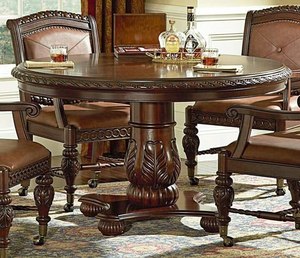
Engineered for high-frequency European hospitality, architectural dining projects, and retail showroom distributions across Hamburg, Munich, Frankfurt, and Berlin.
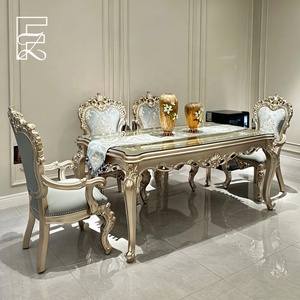
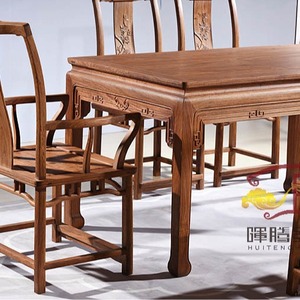
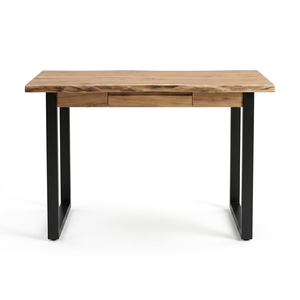
Navigating the supply chain for commercial and high-end residential dining seating between East Asian manufacturing hubs and the Federal Republic of Germany (Bundesrepublik Deutschland) demands a rigorous synthesis of mechanical structural engineering, environmental traceability, and material acclimatization. German procurement directors, furniture wholesalers (Möbelgroßhändler), and contract interior specifiers operate under some of the world's most unforgiving compliance frameworks. Sourcing dining chairs is not merely a transaction of aesthetics; it is an exercise in mitigating long-term structural liability under the German Civil Code (BGB § 437) and ensuring absolute chemical neutrality under European chemical safety standards.
Our manufacturing ecosystem, rooted in specialized timber processing since 1995, bridges the technical gap between Asian industrial scale and German engineering expectations. Unlike conventional trading intermediaries that re-label generic stock, our manufacturing facilities operate dedicated processing lines for Indonesian Teak (Tectona grandis) and certified Mahogany (Swietenia macrophylla). By directly managing harvest origin, moisture equilibrium controls, joint tolerance milling, and low-emission finishing, we eliminate systemic failure modes such as seasonal joint separation, veneer delamination, and compliance impoundment at the ports of Hamburg and Bremerhaven.
To satisfy the rigorous verification protocols of testing institutions such as TÜV Rheinland and LGA Bayern, commercial dining chairs must demonstrate measurable resistance against static fatigue, dynamic drop impacts, and horizontal shear forces. The table below outlines our structural baseline against typical market alternatives.
| Engineering Attribute | Our Factory Specification (German Standard) | Standard Commercial Import | Impact on German Importer Liability |
|---|---|---|---|
| Timber Acclimatization | Controlled Kiln-Drying to 8%–10% equilibrium moisture content (EMC) via computerized steam cycles. | Unregulated air-drying or rapid drying yielding 14%–18% moisture gradients. | Eliminates longitudinal checking, cracking, and joint loosening in dry, central-heated German homes (Fußbodenheizung). |
| Primary Joinery System | True deep mortise-and-tenon (Zapfenverbindung) reinforced with hardwood dowels and D4 moisture-resistant PVAc glue. | Pivoted screw brackets, loose knock-down dowels, or staple-fastened corner blocks. | Full compliance with DIN EN 1728 / DIN EN 12520 cyclical fatigue testing; prevents wobble and frame failure. |
| Finish & Chemical Safety | Polyurethane/Duco finishes testing zero for heavy metals; low-VOC lacquers compliant with REACH Annex XVII. | Solvent-rich nitrocellulose lacquers with elevated formaldehyde and phthalate migration. | Eliminates risk of customs impoundment under the German Food, Feed, and Commodities Act (LFGB) and REACH. |
| Timber Traceability | Dual SVLK (Indonesian Timber Legality) & full geolocation verification compliant with EUDR Regulation (EU) 2023/1115. | Fragmented chain-of-custody documentation prone to third-party verification rejection. | Guarantees unhindered clearance through the German Federal Office for Agriculture and Food (BLE). |
The commercial landscape of Germany presents varied situational stresses for seating furniture. Seating designed for high-density metropolitan spaces in Berlin or Cologne requires distinct spatial engineering compared to contract furnishings intended for Bavarian gastronomy or corporate headquarters in Frankfurt.
Compact footprints require ergonomic seat depths of 430–460mm, enabling efficient turnover and acoustic deadening through upholstered solid-wood backs. Designed to withstand intensive sanitization routines and abrasive detergent contact.
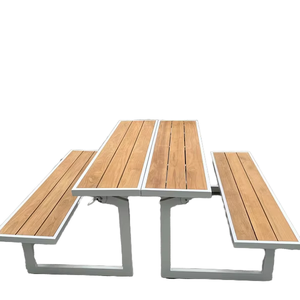
Engineered using marine-grade Indonesian Teak with natural silica oil content. Paired with 304/316 stainless steel or architectural powder-coated aluminum to resist frost heave, torrential summer storms, and winter storage cycles.
Minimalist, Bauhaus-inspired profiles crafted from sustainably managed mahogany and teak. Calibrated for long dwell-times (3+ hours) with high-density flame-retardant foam cushions meeting German fire standard DIN 4102-1 (B1/B2).
Designed for upscale multi-family urban developments (Wohnungsbau). Focuses on clean Scandinavian-German lines, live-edge organic dining slabs, and hand-finished natural grain surfaces that harmonize with underfloor heating systems.
The German furniture market is undergoing an unprecedented structural transition driven by stringent environmental directives and changing urban demographics. Sourcing directors can no longer rely on volume-driven procurement models without accounting for the following macro trajectories:
1. Deforestation-Free Regulation (EUDR) Integration: The implementation of Regulation (EU) 2023/1115 mandates absolute due diligence showing that timber products do not originate from deforested lands after December 31, 2020. Our operations provide precise geographic polygon mapping for timber concessions, guaranteeing that every dining chair shipped to Hamburg can withstand real-time scrutiny by the Bundesanstalt für Landwirtschaft und Ernährung (BLE).
2. The Demand for Hybrid Material Longevity: Commercial specifiers are moving away from disposable composite furniture toward repairable, circular solid wood. A chair must allow for field-refinishing, disassembly of upholstery pads, and localized re-sanding. Our solid mahogany and teak dining frames offer an operational lifecycle exceeding 15 years in high-traffic settings, directly lowering the Total Cost of Ownership (TCO) for German hotel chains and franchise operators.
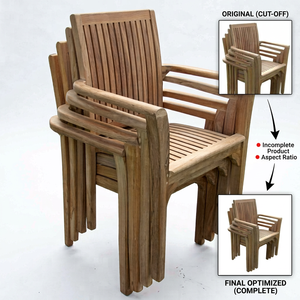
3. Micro-Hospitality and Compact Urban Dining: With commercial rent in prime metropolitan areas such as Munich and Hamburg continually rising, dining layouts demand high spatial efficiency. We have expanded our engineering capabilities to produce chairs that optimize stacking geometry (up to 6 units vertical without frame abrasion) while preserving the premium tactile luxury of natural solid timber.
Our manufacturing identity is built upon an intentional balance between artisanal joinery and mechanized production control. Having served international procurement pipelines across the United States, New Zealand, and Germany for three decades, we have systematized the contract manufacturing workflow to eliminate buyer friction:
By eliminating trading intermediaries, commission agents, and tertiary consolidators, German partners capture substantial margin advantages while working directly with the craftsmen and production engineers accountable for product integrity.
From initial design sketches to full production-ready CAD drawings, we engineer custom profiles according to your specific ergonomics, load thresholds, and aesthetic mood boards. Rapid physical prototyping is executed prior to batch production.
Our dedicated quality assurance teams evaluate every piece across two distinct phases: post-assembly structural stability and pre-packaging finish uniformity. For multi-container orders, buyers receive comprehensive photographic and dimensional inspection dossiers prior to balance clearance.
Practical insights into shipping, compliance documentation, quality control protocols, and financial terms.
Indoor heating in Germany frequently drops indoor relative humidity below 35%. To prevent dimensional shrinkage and joint rupture, all our timber undergoes computer-controlled kiln cycles reducing moisture levels to 8%–10% EMC. Joints are bonded with elastic D4 PVAc adhesives capable of accommodating minor micro-movements without catastrophic structural bond failure.
Every consignment is supported by official V-Legal / SVLK certificates issued via Indonesia’s timber verification system, validated through the SILK database. In compliance with EUDR guidelines, we furnish supply-chain geolocation identifiers tracing raw logs back to managed plantation concessions, preventing customs seizures at Hamburg or Rotterdam.
While standard FCL production optimizes container freight economy (typically one 20ft or 40ft HQ container, accommodating 180 to 450 chairs depending on knock-down or assembled configurations), we accommodate LCL trial orders when cubic meter (CBM) volumes align with your scheduled consolidated forwarder.
Yes. For commercial and contract environments subjected to severe usage (hospitals, schools, high-turnover restaurants), we reinforce standard frames with interior corner cleats, through-tenons, and heavy-duty steel insert nuts capable of withstanding dynamic testing exceeding 200,000 cycles.
For initial projects, our standard commercial framework is a 30% production deposit, with the remaining 70% balance disbursed strictly upon buyer approval of comprehensive, high-resolution photographic and video QC audits prior to container sealing and bill of lading release. Irrevocable Letters of Credit (L/C at sight) are supported for qualified volume orders.
Export shipping across tropical-to-temperate climate transitions poses severe moisture risks. Chairs are wrapped in non-woven breathable film, protected at critical strike points with 5-ply rigid edge guards, cushioned with shock-absorbing foam, and packed into heavy-duty double-wall corrugated cartons (275 lb burst test) fortified with silica gel desiccant bags.
Access our comprehensive collection of solid teak and mahogany dining furniture, complete technical engineering schematics, and volume wholesale price structures engineered for the German market.
Get Catalog