Tested for extreme coastal UV index, equatorial humidity, and heavy commercial footfall across high-traffic resorts, corporate lounges, and open-air varandas gourmet.
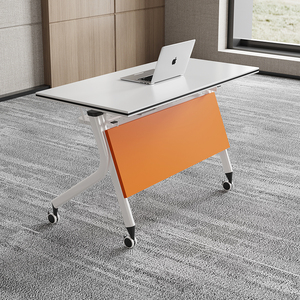
Multi-functional convertible workstation fabricated from kiln-dried solid teak. Engineered for boutique hotel suites, executive home offices, and flexible corporate co-working spaces in São Paulo.
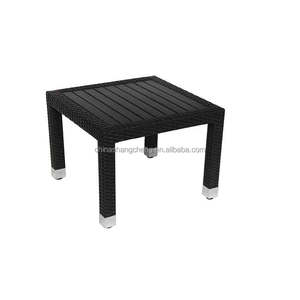
Commercial bistro dining table combining high-grade teak surfaces with anodized rust-proof metal framing. Withstands aggressive coastal air along Rio de Janeiro and Bahia shorelines.
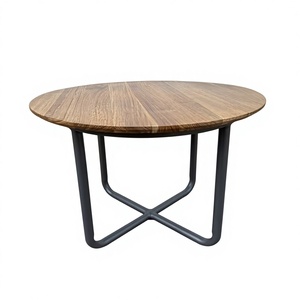
Heavy-duty commercial side table designed for high-salinity pool decks, resort beach clubs, and alfresco dining lounges. Treated with marine-grade waterproof sealant.
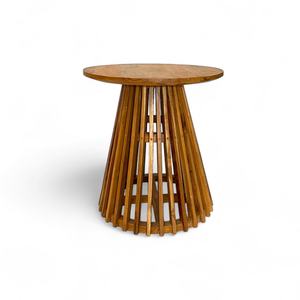
Minimalist organic architecture blending Scandinavian functional lines with organic Indonesian timber grain. Ideal for Brazilian interior design firms prioritizing biophilic organic luxury.
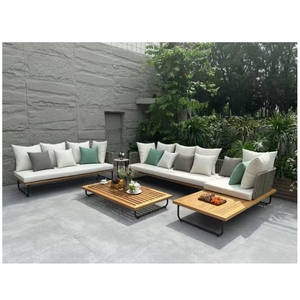
Contract deep-seating modular system crafted from Grade-A mature plantation teakwood. Integrates quick-dry commercial foam cushions formulated for tropical rainfall resistance.
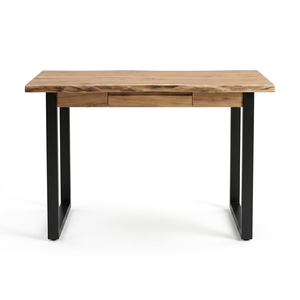
Artisanal live-edge timber console table with integrated drawer storage and matte industrial black metal legs. High-demand fixture for premium boutique hotels and high-end residential towers.
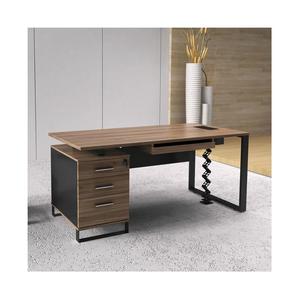
Engineered straight workstation featuring scratch-resistant teak melamine composite tops and powder-coated architectural steel framing. Built for institutional reliability in corporate headquarters.
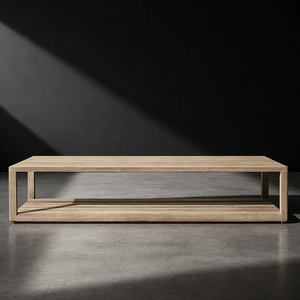
Solid mortise-and-tenon teak cocktail table designed with slatted drain tops to prevent water pooling. Essential anchor piece for open-air hotel reception foyers and resort cabanas.
Family-owned precision timber factory established in 1995 in Jepara, Central Java.
Moisture content calibrated to eliminate warp across Brazil's divergent humidities.
Fully compliant with international timber trade rules, IBAMA, and MAPA guidelines.
Rapid contract manufacturing turnaround with container-level staging and QC.
The commercial real estate and hospitality landscape across Brazil—spanning the metropolitan business hubs of São Paulo and Rio de Janeiro, the coastal retreats of Trancoso and Angra dos Reis, and the luxury multi-family developments throughout the South—has undergone a structural transformation. Architectural specifications now demand materials that simultaneously fulfill three uncompromising criteria: intrinsic bio-durability against tropical weathering, traceable ESG and timber legality compliance, and structural lifecycle superiority that lowers operational replacement costs.
While Brazil possesses an expansive domestic timber trade centered on Amazonian hardwoods (such as Cumaru, Ipê, and Jatobá), commercial developers and luxury procurement directors increasingly import Indonesian plantation teak (Tectona grandis) directly from specialized workshops in Jepara, Central Java. The structural advantages are definitive: mature Indonesian teak boasts an exceptional concentration of natural tectoquinone oils and natural silica content. This distinctive biochemical profile makes Indonesian teak impervious to termite attacks, fungal rot, and saltwater crystallization (maresia) without requiring pressure-treated toxic chemical baths.
For Brazilian architects, general contractors, and corporate fit-out specialists, partnering with a direct-from-source manufacturer eliminates multilayered import intermediaries. Teratai Home operates as an agile, vertically integrated manufacturer in Jepara. With 30 years of export experience supplying Tier-1 commercial projects globally, we bridge the gap between bespoke architectural drawings and reliable FCL/LCL maritime shipments landing at the Port of Santos, Port of Paranaguá, and Port of Salvador.
A frequent pitfall faced by Brazilian commercial buyers procuring generic Asian furniture is timber movement and surface checking caused by climate shock. Brazil encompasses distinct biomes ranging from the super-humid tropical coastal climates of the Northeast and Rio de Janeiro (relative humidity frequently exceeding 85%) to the intense dry seasons of the Central-West and inland São Paulo (relative humidity dropping below 25%).
To prevent structural failures, joint separation, and warping, our factory enforces a rigorous four-stage timber stabilization protocol engineered specifically for South American geographic parameters:
Every raw teak plank undergoes controlled de-humidification in computer-regulated kilns over a 21-day curve, stabilizing internal timber moisture content strictly between 10% and 12%. This prevents contraction in air-conditioned interiors and expansion along humid coastlines.
We avoid rigid glued doweled fasteners that crack under thermal movement. Our master woodworkers use precision deep mortise-and-tenon joints engineered with floating micro-tolerances, allowing natural wood expansion during Brazil’s rainy season without splitting.
Standard 304 stainless steel and zinc hardware degrade rapidly in coastal Brazil due to salty sea mist (maresia). All internal brackets, expansion screws, and table alignment dowels on our commercial furniture are specified in non-corrosive marine-grade AISI 316.
| Performance Characteristic | Jepara Plantation Teak (Teratai Standard) | Domestic Cumaru / Ipê | Commercial Synthetic Wicker / Polywood |
|---|---|---|---|
| Volumetric Shrinkage Ratio | Exceptionally Low (Radial 2.5%, Tangential 5.8%) | High (Radial 5.3%, Tangential 7.7% - prone to warp) | Thermal expansion deformation under direct UV |
| Natural Tectoquinone Oil Content | Very High (Impermeable to wood-boring insects) | Moderate (Requires chemical sealers) | None (Polymer composition) |
| Resistance to Coastal "Maresia" | Impervious (Silica protects surface grain) | Good, but blackens rapidly without high maintenance | Micro-cracks appear under combined salt + UV |
| Weight / Structural Flexibility | 650 - 750 kg/m³ (Ideal strength-to-weight ratio) | 1,050 - 1,150 kg/m³ (Excessively heavy for hospitality) | Varies (Prone to joint looseness over time) |
| Commercial Lifecycle Expectancy | 25 to 50+ Years (Natural silver patina option) | 15 to 25 Years (High surface cracking risk) | 3 to 7 Years (Polymer degradation) |
From corporate boardrooms in the financial district of Avenida Faria Lima to ultra-luxury eco-resorts on the beaches of Bahia, our contract teak furniture is designed to integrate seamlessly into high-prestige environments:
Open-air bungalows, cabanas, and beach clubs in destinations like Trancoso, Itacaré, and Porto de Galinhas. Pieces remain exposed year-round to sun and sea spray without rotting or splintering.
Biophilic executive boardrooms, co-working breakout zones, and cafeteria terraces across São Paulo's business centers. Creates a warm, natural organic luxury aesthetic that elevates workplace wellbeing.
Waterfront dining venues, yacht club pavilions, and coastal boutique hotels. Teak tables and deep-seating lounges resist harsh coastal weathering while developing an elegant silver patina over time.
Semi-outdoor covered barbecue, dining, and social balconies that represent a signature hallmark of modern Brazilian luxury residential towers. Combines compact flexibility with premium artisan finishes.
The commercial design sector in Brazil is characterized by distinct procurement evolutions. Recognizing these shifts allows Brazilian project developers and commercial purchasing officers to specify with precision:
In Brazilian luxury architecture, the transition between interior living areas and exterior verandahs has disappeared. Commercial designers are specifying unified furniture series that transition seamlessly between enclosed air-conditioned spaces and open-air entertainment decks. Solid teakwood is uniquely qualified for this hybrid role, offering refined interior aesthetics alongside outdoor weather resistance.
With Brazilian federal institutions like IBAMA and international certification bodies strictly enforcing timber provenance, reputable developers cannot risk using unverified native Amazonian species subject to regulatory scrutiny. Teratai Home operates exclusively with SVLK (Sistem Verifikasi Legalitas Kayu) certified timber, verified under Indonesia's rigorous national legality verification system. Every export container arrives with certified V-Legal paperwork, streamlining clearance with Brazilian customs and agricultural authorities.
Brazilian architecture, with its deep modernist heritage from Oscar Niemeyer and Lina Bo Bardi, has embraced the warmth of organic modernism and Japandi minimalism. Architects are rejecting sterile synthetic outdoor composites in favor of clean slatted lines, rounded cylindrical legs, and warm, tactile, natural timber surfaces.
Unlike commercial trading brokers in Jakarta or Surabaya who outsource orders to dispersed cottage carvers without centralized quality control, Teratai Home is an authentic family workshop operating continuously in Jepara since 1995. We offer commercial contract clients direct factory access, end-to-end design adaptability, and comprehensive export oversight.
Every board originates from state-managed Perum Perhutani teak plantations. Transparent timber tracking safeguards your enterprise against supply chain liability and legal hurdles.
Two dedicated quality assurance inspectors oversee dry-fitting, sanding tolerances (up to 400 grit), structural moisture testing, and hardware alignment prior to flat-pack export crating.
Standard lead times of 4 to 6 weeks for a 20ft container. Staged quality inspections allow commercial clients to verify container photos and timber moisture logs before dispatch to the port.
Importing commercial wooden furniture into Brazil requires meticulous documentation to avoid demurrage costs and clearance delays through Receita Federal. As an experienced exporter, Teratai Home works with Brazilian freight forwarders (Despachantes Aduaneiros) to provide comprehensive document sets:
Wooden furniture commonly enters Brazil under NCM 9403.60.00 (Other wooden furniture) or NCM 9403.50.00 (Wooden furniture for bedrooms). We provide precise commercial invoices and packing lists specifying wood density, finish, and dry volume for smooth calculation of II, IPI, PIS, COFINS, and state ICMS.
The Brazilian Ministry of Agriculture, Livestock and Supply (MAPA) enforces strict standards regarding imported solid wood. Every shipment from our Jepara workshop is accompanied by an official Phytosanitary Certificate and undergoes certified ISPM-15 fumigation (or heat treatment) prior to container sealing.
Containers are loaded at our facility in Jepara and trucked directly to Tanjung Emas Port in Semarang or Tanjung Perak in Surabaya. Transshipment via Singapore or Port Klang connects directly to regular ocean routes bound for Santos (SP), Paranaguá (PR), or Itajaí (SC) with an average ocean transit time of 32 to 42 days.
Direct answers concerning lead times, bespoke engineering, shipping options, and compliance.
Yes. Over 60% of our commercial factory throughput is strictly made-to-order based on technical specifications provided by interior architects, hospitality consultants, and project developers. You can provide 2D elevations, 3D renderings, or dimensional shop drawings. Our master craftsmen create technical joinery plans for your final review and sign-off prior to sawdust cutting.
Our standard commercial production is optimized around 20-foot and 40-foot full container loads (FCL). However, we welcome mixed container orders combining tables, seating, consoles, and bedroom suites within a single shipment. For pilot boutique projects or specialized residential fit-outs, we can ship Less-than-Container Load (LCL) consolidated shipments through Tanjung Emas, Semarang.
Mature plantation Indonesian teak contains high concentrations of natural oils (tectoquinones) and silica crystals within its cellular matrix. Unlike domestic softwoods or porous hardwoods that absorb salty airborne moisture and split, solid teak remains water-repellent and dimensionally stable. When paired with our marine-grade 316 stainless steel joinery fittings, our furniture lasts for decades in seaside environments like Búzios, Florianópolis, or Salvador.
For every export shipment destined for Brazil, we provide a complete, verified export documentation dossier: Commercial Invoice and Packing List, V-Legal / SVLK Timber Legality Verification Certificate, Certificate of Origin (Form B / COO), and an official Phytosanitary Certificate issued after certified fumigation under international plant quarantine protocols.
Typical production lead time is 4 to 6 weeks for a standard 20-foot container once technical shop drawings and finishes are approved. Commercial payment terms are staged for mutual security: a 30% production commencement deposit, with the remaining 70% balance payable upon quality control completion and photo/video verification before container sealing and bill of lading release.
Yes. We maintain an open-door policy for commercial partners, purchasing teams, and certified third-party inspection firms (such as SGS, Bureau Veritas, or independent QA agents). Our workshop is located at Jl. Raya Soekarno Hatta KM.5 No.95 in Jepara, Central Java, and is open daily from 08:00 to 16:00 WIB. We welcome advance appointments to review raw timber selection, kiln-drying operations, and joinery dry-fitting in person.
Partner directly with Jepara's premier contract furniture workshop. Whether you are developing a coastal resort in Bahia, specifying a corporate fit-out in São Paulo, or curating a boutique residential collection, our engineering team is ready to review your schedules, drawings, and CBM requirements.
