
Commercial OEM
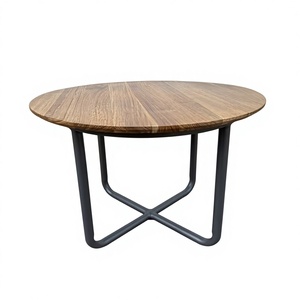
Weather-Resistant Teak
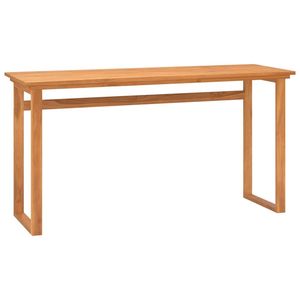
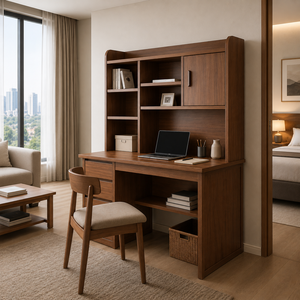
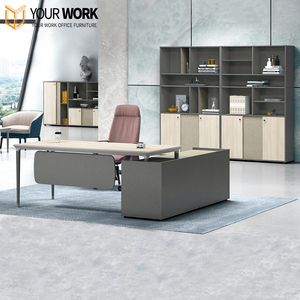
From monolithic floating platforms and modular slat foundations to matching commercial office desks and guest house storage consoles, explore our baseline production benchmarks.
Sourcing premium solid timber bed frames for the New Zealand contract market demands a rigorous understanding of the local hygrothermal dynamics. Unlike continental landmasses, New Zealand exhibits distinct coastal marine humidity patterns coupled with widespread residential reliance on intermittent heat pumps, wood burners, and HRV ventilation systems. In coastal locations such as Auckland’s North Shore or the Bay of Plenty, ambient indoor relative humidity can swing between 75% in mid-winter to 45% during intense dry spells. Conversely, alpine zones throughout Queenstown and Central Otago subject solid wood joinery to near-desert sub-zero indoor air in winter.
Generic timber imports frequently succumb to checking, longitudinal warping, or mortise blowout under these stresses. As a specialist OEM manufacturer based in Jepara, Indonesia, our engineering protocols treat timber stability as an exact science. Tectona grandis (Indonesian Teak) possesses an extraordinary volumetric shrinkage coefficient of merely 5.3% from green to oven-dry, fundamentally outclassing Radiata Pine, American White Oak, or European Beech.
We recalibrate de-humidification cycles to achieve an 8%–11% equilibrium moisture content (EMC), deliberately calibrated for New Zealand residential standards (NZS 3602) to prevent shrinkage cracks under split-system air conditioning.
Mature Jepara plantation teak contains dense natural rubber resins and silica deposits. These natural oils resist coastal saltwater corrosion, mold, and dust-mite infestation without toxic chemical pressure-treating.
Our OEM bed frames feature internal mechanical expansion slots and reinforced steel brackets, enabling controlled microscopic expansion and contraction across the headboard grain without joint fatigue.
The commercial and luxury residential sectors across Aotearoa are experiencing a significant shift in procurement priorities. Commercial specifiers, interior architects, boutique lodge developers, and premium retailers are moving away from disposable flat-pack veneer models toward low-carbon, biophilic, and generational-durability solid hardwoods.
| NZ Procurement Sector | Typical Bed Configuration | Structural Specification | Target Regional Application |
|---|---|---|---|
| Boutique Luxury Lodges | Super King Low-Profile Platform | Concealed central beam, continuous headboard slab, acoustic dampening | Queenstown, Wanaka, Taupo, Bay of Islands |
| Urban Architectural Apartments | Gas-Lift Hydraulic & Drawer Storage | Integrated finger-jointed teak casing, heavy-duty soft-close runners | Auckland CBD, Ponsonby, Wellington Waterfront |
| High-End Retail Wholesalers | Classic Japanese & Mid-Century Slat Beds | Tapered solid turned legs, knockdown KD assembly hardware | Christchurch, Tauranga, Napier, Hamilton |
| Wellness & Eco Resorts | Japanese Low Zen Floating Bases | Zero-VOC natural plant oil finishes, zero-metal joint options | Coromandel Peninsula, Nelson, Golden Bay |
Key Trend 1: Biophilic Design & Tactile Minimalism. New Zealand homeowners increasingly favor organic aesthetics that blend indoor living with natural bush and coastal landscapes. Unfinished-touch matte finishes, warm honey tones, and rounded organic edges in solid teak serve as an essential textural element in high-end architect-designed homes.
Key Trend 2: Rigorous Chain-of-Custody Compliance. With the strict enforcement of New Zealand’s biosecurity borders managed by the Ministry for Primary Industries (MPI) and the legal timber scrutiny aligned with global Lacey Act and EUDR frameworks, institutional purchasers require unquestionable wood provenance. Every batch leaving our workshop is certified through Indonesia's national Sistem Verifikasi Legalitas Kayu (SVLK), guaranteeing 100% legal harvest from sustainable Perum Perhutani forest plantations.
Key Trend 3: Custom Sizing for Australasian Mattresses. Standard New Zealand mattress dimensions differ considerably from North American or European sizing. Our OEM facility crafts frames precision-milled to true NZ bedding measurements: Single (91x188cm), King Single (107x203cm), Queen (153x203cm), King (167x203cm), Super King (183x203cm), and California King (203x203cm).
Headquartered on Jl. Raya Soekarno Hatta KM.5 in Jepara, Central Java—Indonesia’s epicenter for generational woodworking expertise—Teratai Furniture has continuously operated as a family-owned artisan workshop since 1995. While mega-factories prioritize high-volume, generic catalogs with rigid minimum orders, our workshop infrastructure is tailored to deliver uncompromising bespoke agility.
Direct in-house team consisting of 4 seasoned joinery craftsmen, 5 dedicated hand-finishers, and 2 independent QC/QA supervisors. We maintain hand-scraped tolerances that automated mass lines simply cannot replicate.
We solve the importer's greatest hurdle: inventory lockup. In addition to full 20ft and 40ft containerloads, we accept flexible mixed-CBM orders and consolidate Less-than-Container Loads (LCL) alongside your existing Indonesian suppliers.
Fully compliant with New Zealand Ministry for Primary Industries (MPI) phytosanitary standards. Timber undergoes certified thermal sterilization and ISPM-15 certified packing to breeze through Port of Auckland and Tauranga customs clearance.
Clear, unhedged answers regarding commercial payment terms, logistics to Kiwi ports, phytosanitary requirements, and technical bed frame construction.
Yes, absolutely. We regularly fabricate frames built precisely around standard New Zealand mattress tolerances. We accommodate the specific internal mattress well clearances (e.g., Queen 1530x2030mm, King 1670x2030mm, Super King 1830x2030mm, and California King 2030x2030mm) plus 15mm dynamic perimeter clearance for linens and duvet tuck-in.
New Zealand's Ministry for Primary Industries enforces some of the world's strictest timber import regulations to prevent hitchhiker pests like the Brown Marmorated Stink Bug (BMSB) and wood-boring insects. Every container dispatched from our Jepara factory undergoes accredited kiln-drying verification, accompanied by authorized phytosanitary certificates, certified sulfuryl fluoride or heat treatment (ISPM 15 compliant packing), and SVLK timber provenance documentation.
While our standard economic unit is a 20ft Full Container Load (FCL, approx. 28-30 CBM), we actively welcome smaller boutique orders when the overall CBM justifies sea freight shipping. We can load half-containers or dispatch via LCL consolidation out of the Semarang Port (Tanjung Emas) directly to Auckland, Lyttelton (Christchurch), or Wellington.
We engineer solid plantation teak or kiln-dried mahogany slatted foundation systems, featuring a central longitudinal load-bearing spine with dual vertical support posts. Slats are milled to a robust 20mm-24mm thickness and spaced no more than 60mm apart, providing rigid, non-flexing planar support required by luxury hybrid pocket-spring and heavy natural latex mattresses.
For standard contract orders, production commences upon receipt of a 30% project deposit. Prior to dispatch, complete photographic and video QC audits are submitted to your procurement director for review. Once your quality inspector approves the batch, the remaining balance is cleared before sealed container loading and Bill of Lading (B/L) release.
New Zealand experiences exceptionally high seasonal ultraviolet levels. For natural-look bed frames, we utilize multi-coat, non-yellowing, deep-penetrating polyurethane-modified oils or matte catalyzed conversion coatings. These preserve teak’s tactile grain while sealing pores against oxidation and sun-bleaching near expansive floor-to-ceiling windows.
Whether you require a bespoke prototype built from technical CAD drawings, hospitality guestroom suites for an upcoming resort build, or regular container shipments for your retail store network, partner directly with our master woodworking workshop in Jepara.
Contact Us