Addressing import legality, technical moisture tolerances, freight logistics, and custom commercial adaptations when importing solid teak from Indonesia into the United Kingdom.
1. How does Teratai ensure compliance with UK Timber Regulations (UKTR) and post-Brexit customs?
+
All our export shipments are registered and validated through Indonesia's Sistem Verifikasi Legalitas Kayu (SVLK), operating under V-Legal documentation. The UK Timber Regulations (UKTR), enforced by the Office for Product Safety and Standards (OPSS), mandate verifiable proof that timber products originate from legally harvested forests with negligible risk of illegal logging. We issue complete chain-of-custody documentation, export declarations, and V-Legal certificates, enabling rapid customs clearance at UK ports such as Felixstowe, Southampton, and London Gateway without risk of impoundment.
2. Why is an 8%–12% Equilibrium Moisture Content (EMC) essential for furniture exported to the UK?
+
Tropical wood dried casually in tropical climates often retains 18% to 24% moisture. If shipped to the UK, central heating during damp British winters dries indoor air dramatically, while frosty outdoor conditions create high external vapour stress. Wood with excessive residual water shrinks rapidly, leading to severe end-checking, warped table planks, and bursting joint glue. Our specialized dehumidification and steam kiln drying chambers systematically lower internal cellular moisture to an 8%–12% target before dimensioning, guaranteeing lifetime structural equilibrium in British homes and terraces.
3. What is the typical transit duration and freight process from Jepara to UK ports?
+
Once production (typically 4–6 weeks per 20ft container) and your QA milestone sign-off are completed, containers are trucked to Tanjung Emas Port in Semarang (approximately two hours from our workshop). Feeder vessels transport cargo to transshipment hubs (Singapore or Jakarta) before main-line ocean vessels transit to Felixstowe, Southampton, or Tilbury. Ocean voyage time ranges from 28 to 35 days. We quote on FOB (Semarang), CIF (UK Port), or assist your UK-based freight forwarder with complete export packing lists, Bills of Lading, and phytosanitary certificates.
4. Can UK commercial hospitality clients specify Crib 5 (BS 5852) compliant upholstery?
+
Yes. For contract hospitality installations across hotels, pubs, restaurants, and commercial roof bars, UK law requires compliant fire-retardant furnishings. We source certified fire-retardant barrier fabrics, Crib 5 compliant foam treatments, and genuine British or imported solution-dyed acrylics. Alternatively, we regularly construct bare-frame orders or provide technical fabric customer-supplied material (COM) integration according to your project's architectural tender documents.
5. How does solid plantation teak compare against Iroko, Oak, or Cast Aluminum for British gardens?
+
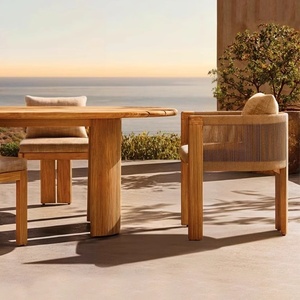
While European Oak is prestigious, its natural tannins bleed when exposed to heavy rainfall, staining pale stone or outdoor porcelain tiling. Iroko can show unpredictable grain movement unless dried meticulously. Cast aluminum, while durable, lacks the biophilic warmth, organic luxury, and bespoke customization potential of solid hardwood. Mature Grade-A Indonesian Teak boasts the highest concentration of natural tectoquinone resins and rubber polymers of any commercial hardwood, repelling water penetration, preventing fungal rot, and offering generational longevity with zero chemical treatments.
6. What are the commercial payment and inspection milestones for bespoke overseas orders?
+
Standard commercial terms for custom and project orders involve a 30% deposit upon proforma invoice sign-off to allocate timber stock and initiate CAD drawings. During milling, joinery, and sanding, our QC team provides scheduled progress photography. Prior to crating and container loading, a comprehensive inspection report (including moisture meter verification, dimensional check sheets, and high-resolution video) is submitted. The final balance is paid upon QC sign-off prior to container dispatch or against the original Bill of Lading.