
Space Optimizer
Engineered for stability across temperate and humid micro-climates, our made-to-order dining tables pair centuries-old Asian-Indonesian woodworking mastery with bespoke South American architectural profiles.
Analyzing import mechanics, maritime humidity resilience, and structural joinery protocols for high-end residential estates in Carrasco, luxury coastal retreats in Punta del Este, and boutique developments in Montevideo.
Uruguay presents one of South America's most stable and high-purchasing-power furniture markets. Driven by affluent suburban developments in Canelones (La Tahona, Carmel), historical renovations in Montevideo (Pocitos, Punta Carretas), and elite seasonal architectural projects in Maldonado (Punta del Este, José Ignacio), client demand leans toward authentic, generational hardwoods.
Uruguay's domestic forestry sector is heavily skewed toward softwoods (Pinus taeda) and pulp-grade Eucalyptus grandis, resulting in a pronounced deficit of indigenous, high-density decorative hardwoods. Importers face high regional costs when sourcing from Brazilian or Paraguayan suppliers due to volatile logistics and fragmented quality assurance.
The Río de la Plata basin exposes residential interiors to relative humidity swings oscillating between 55% in dry summer spells and exceeding 85% during winter sea mist. Solid mahogany dining tables manufactured without calibrated kiln-drying schedules risk catastrophic warping, surface checking, and joint delamination.
| Wood Species & Origin | Janka Hardness (lbf) | Dimensional Stability (Shrinkage Vol. %) | Moisture Resistance & Durability | Machinability & Joinery Precision | Ideal Uruguayan Application |
|---|---|---|---|---|---|
| Indonesian Plantation Mahogany (Swietenia macrophylla) | 900 – 1,020 | 7.8% (Exceptionally Low) | Natural insect & rot resilience; low checking in high maritime salinity | Superior crisp mortise-and-tenon cuts, zero splintering, flawless finishing | Carrasco family dining rooms, luxury boutique hotels, coastal penthouses |
| Regional Eucalyptus Grandis (Uruguay / Argentina) | 1,000 – 1,100 | 13.5% (High volumetric shift) | Prone to surface cracking, warping under sudden indoor heating shifts | Tough grain, frequent tool blunting, coarse pore structure requires heavy grain filling | Secondary furniture, construction framing, industrial-grade rustic pieces |
| Local/Brazilian Pine (Pinus taeda / elliottii) | 420 – 540 | 11.8% (Moderate-High) | Soft; vulnerable to denting, humidity absorption, and fungal staining | Rapid machining but prone to tear-out; weak tenon pull-out strength | Low-budget mass-market tables, temporary furnishing, rental turnovers |
| Lapacho / Brazilian Walnut (Handroanthus spp.) | 3,680 | 13.0% (Moderate) | Extreme outdoor decay resistance, heavy and dense | Extremely difficult to carve or mill, prone to screw breakage, excessively heavy | Exterior architectural decking, heavy pergola beams, exterior benches |
From Montevideo's classical Haussmann-influenced interiors to the avant-garde open-plan estancias of Garzón and Carmelo, here is how our mahogany collections resolve specific structural and lifestyle requirements.
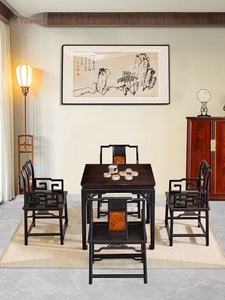
Historic residences and expansive single-family estates in Montevideo's Carrasco and Pocitos neighborhoods prioritize formal dining environments that respect classical proportions. These homes feature high ceilings (3.2m+), parquet flooring, and ornate millwork where undersized, minimalist tables appear lost.
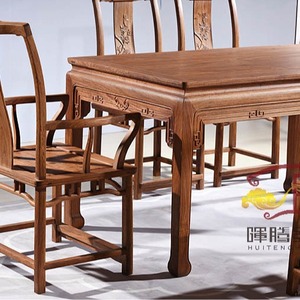
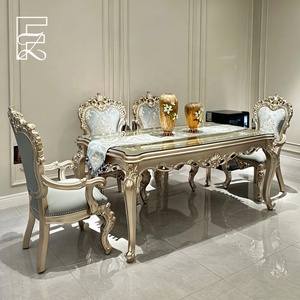
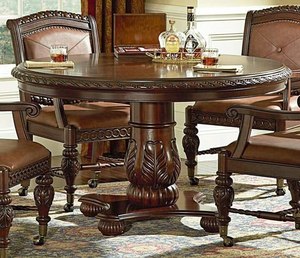
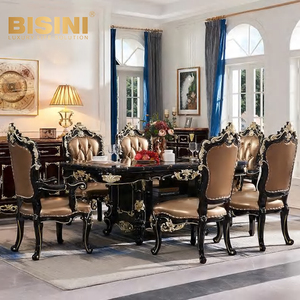
Factory Resolution: The French Luxury Solid Mahogany Rectangular Dining Table provides the monumental footprint required. Featuring hand-carved cabriole legs, reinforced aprons, and multi-layered satin lacquers, it anchors 10 to 12 seats, withstanding decades of family festive gatherings without structural sagging.
Uruguay's premiere Atlantic ocean coastline presents an intense architectural duality: floor-to-ceiling glass pavilions exposed to intense salt spray, high ambient humidity, and seamless transitions between indoor living rooms and covered *parrilla* terrace zones.
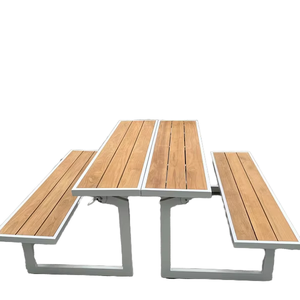
Factory Resolution: Our Aluminum Contemporary Bistro & Dining Table with Mahogany Slats and hybrid solid wood collections bridge this gap. Anodized aluminum prevents galvanic coastal corrosion, while kiln-stabilized, oil-saturated mahogany slats resist UV graying and saltwater degradation.
New urban developments in Cordón, Buceo, and Parque Rodó feature open-concept floor plans demanding multi-functional spatial management. In these urban dwellings, the dining table doubles as a daytime executive workstation and an evening social centerpiece.
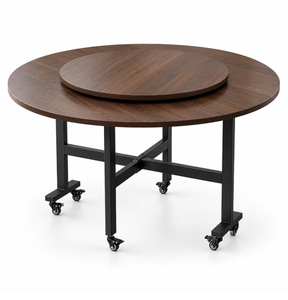
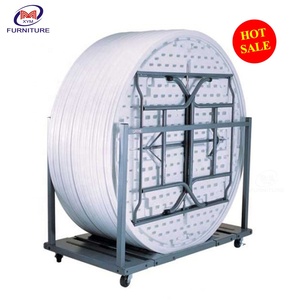
Factory Resolution: The Modern Foldable Round Dining Table with Drop Leaf and Lazy Susan addresses micro-living without sacrificing the prestige of genuine hardwood. Its smooth drop-leaf hinge mechanics and lockable caster wheels allow it to transform effortlessly from a breakfast console to a full-sized banquet table.
Forward-thinking importers and interior contractors in Uruguay are adapting to structural changes in buyer values and international supply-chain regulations.
In Uruguay, dining is inextricably linked to the traditional *sobremesa* and *asado* culture—gatherings lasting 4 to 6 hours with heavy cast-iron serving cookware (braseros), wine decanters, and substantial banquet platters. Retail buyers demand tables tested for dynamic load capacities exceeding 180 kg without center deflection, requiring specialized hidden under-top transverse steel stiffeners or traditional wood cross-bracing.
Uruguayan architects (notably influenced by the clean stone and concrete aesthetics of modern Latin American regionalism) are rejecting high-sheen synthetic varnishes. The dominant design specification has swung toward "tactile honesty": 5% ultra-matte polyurethane topcoats, plant-based hardwax oils, and brushed open-pore mahogany surfaces that maintain the warm organic touch of timber.
With Uruguayan commercial entities adhering closer to international ESG standards, leading interior designers require documentation proving timber legality. Indonesian SVLK certification (equivalent to EU FLEGT standards) provides full traceability, ensuring commercial buyers avoid import bottlenecks associated with undocumented South American tropical timber.
Operating continuously since 1995 from Jl. Raya Soekarno Hatta KM.5 in Jepara—the historic epicenter of Indonesian woodworking—Teratai Furniture combines artisanal handcraft with rigorous international export standards.
We are not a trading intermediary; we are a family-owned manufacturing workshop. For three decades, our factory has fabricated custom solid teak and mahogany collections for demanding B2B importers across the United States, New Zealand, and Germany, and now direct to South America.
Our workshop team features 4 master cabinetmakers, 5 specialized finish technicians, and 2 dedicated QC/QA inspectors, supported by an elastic sanding team. Every tenon, dovetail joint, and lacquer run is inspected and photo-documented prior to packing.
We understand the cash-flow realities of boutique design firms and high-end retailers in Uruguay. While a full 20ft container (approx. 28-30 CBM) offers the best freight efficiency, we readily accept LCL consolidation orders and half-container programs with mixed SKUs and finishes.
Every plank of mahogany passes through computer-monitored kiln chambers. Moisture readings are verified with calibrated pinless resistance meters across three board depths, ensuring timber is delivered at the exact 10%–12% equilibrium moisture content required for the Rio de la Plata maritime basin.
Send our design engineering team a CAD file, architectural rendering, or hand sketch with target dimensions. We deliver complete shop drawings, wood cut-lists, and stain matching samples within 48 to 72 hours, facilitating seamless collaboration with Uruguayan interior designers.
All timber processed in our Jepara facility is 100% verified under Indonesia's national SVLK (Sistem Verifikasi Legalitas Kayu) protocol. We supply full V-Legal certificates, commercial proforma documentation, packing lists, and certified bills of lading for smooth clearance at Puerto de Montevideo.
Actionable answers covering import logistics, customs tariffs, timber stability, and payment structures for Uruguayan retail buyers and project specifiers.
Ocean freight from Semarang or Surabaya to Montevideo typically takes 40 to 50 days, crossing equatorial and temperate oceanic zones. To prevent mold formation or condensation-induced warping inside the sealed shipping container, we wrap every dining table in breathable foam, edge protectors, heavy 5-ply corrugated cardboard, and insert industrial container desiccant poles (dry bags) to control relative humidity levels below 60% during the voyage.
Yes. Over 60% of our workshop output is made-to-order bespoke furniture. You can share technical DWG/PDF drawings or basic concept sketches. We adjust tabletop thicknesses, leg tapers, internal expansion grooves, and mortise-and-tenon dimensions to meet your specific commercial brief. We confirm all technical drawings in writing before raw timber cutting begins.
Our standard production workflow is calibrated for one 20ft container (approx. 28 CBM), which allows you to mix 15 to 25 dining tables across different finishes, models, and complementary chair sets. However, for initial showroom sampling or boutique residential projects, we accept LCL (Less than Container Load) orders or consolidated shipping alongside other Jepara suppliers when volume justifies freight economics.
Timber movement is fundamentally governed by Equilibrium Moisture Content (EMC). We do not air-dry timber intended for export. All Indonesian mahogany is dried inside computerized kilns to 10%–12% moisture content. Furthermore, we construct tabletops with sliding dovetails, breadboard ends with slotted screws, and figure-eight desktop clips, allowing the wood to naturally expand across its width without splitting along the glue seams.
Every shipment is accompanied by a certified Bill of Lading (B/L), Commercial Invoice, Packing List, Certificate of Origin (Form B or General COO), Phytosanitary Inspection Certificate issued by Indonesian Agricultural Quarantine Agency, and the SVLK V-Legal document. This complete documentation package ensures hassle-free classification under Mercosur tariff lines and prevents demurrage at the container terminal.
For standard container orders, terms are structured with a 30% initial deposit upon formal sign-off of shop drawings and production scheduling. The remaining 70% balance is payable only after our in-house QC inspectors complete detailed inspections—supported by high-resolution photography and video documentation of finished pieces, joinery details, and moisture meter readings—immediately prior to container door sealing.
Connect directly with master woodworking craftsmen and export directors at our Jepara workshop. Request our comprehensive commercial dining table catalog, technical joinery drawings, and tailored container pricing for the Uruguayan market.
Get Catalog