
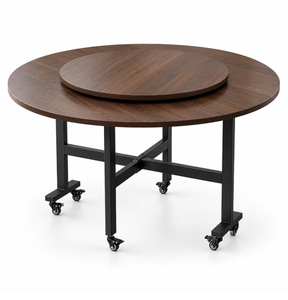
Engineered in Jepara from 100% legal SVLK-certified plantation timbers. Tailored specifically for commercial hospitality, residential developments, and luxury exterior living spaces across Canada.
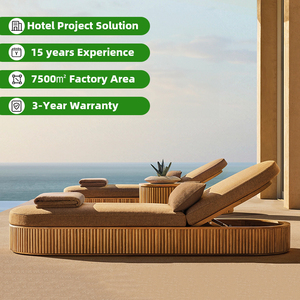
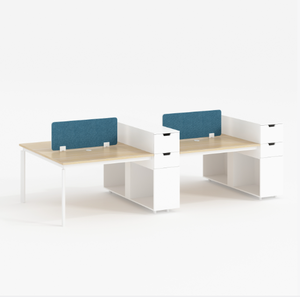
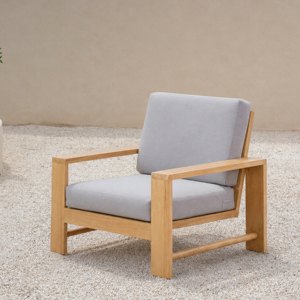
Canadian commercial furniture procurement has reached an inflection point. Escalating land costs, freight variability across major trans-Pacific channels into the ports of Metro Vancouver and Montreal, and tightening retail margins have forced commercial design houses, boutique hospitality chains, and independent outdoor retailers to bypass domestic wholesale distribution layers. Sourcing natural teak (Tectona grandis) directly from the woodworking epicenter of Jepara, Central Java, Indonesia provides Canadian buyers with two unassailable competitive advantages: comprehensive architectural customization down to the exact millimetre and an uninflated cost-per-cubic-meter (CBM) foundation.
Historically, the North American luxury furniture channel routed Indonesian teak via domestic warehousing distributors located throughout the Pacific Northwest or Eastern seaboard, applying 120% to 240% wholesale compounding margins. By establishing a direct manufacturing pipeline with Teratai Furniture—an artisan family workshop operating continuously since 1995—Canadian commercial procurers reclaim operational control over timber grade selection, joinery tolerances, moisture management regimes, and proprietary design protection.
Furthermore, Canada’s strict legislative framework regarding international flora imports—enforced under the Wild Animal and Plant Protection and Regulation of International and Interprovincial Trade Act (WAPPRIITA)—demands absolute legal integrity. Every consignment shipped from our Jepara workshop is backed by certified SVLK (Sistem Verifikasi Legalitas Kayu) V-Legal export documentation, ensuring smooth CBSA (Canada Border Services Agency) customs release without the costly impound risks associated with untracked timber brokers.
No single furniture-making challenge matches the climatic severity of the Canadian interior. While standard outdoor furniture manufacturers engineer purely for UV resistance and rainfall, furniture deployed in Canadian urban centers such as Calgary, Edmonton, Winnipeg, Montreal, and Ottawa must survive repeated thermal shocks ranging from +35°C in midsummer down to -38°C during polar vortex incursions, accompanied by intense ambient humidity fluctuations.
Standard domestic softwoods (such as Western Red Cedar or Eastern White Pine) and porous hardwoods (like White Ash or Oak) absorb elevated levels of ambient water vapor during autumn precipitation. When the mercury drops precipitously below 0°C, trapped interstitial cell moisture expands by 9% in volume, exerting internal mechanical pressures that crack joinery mortises, shatter dowels, and delaminate surface fibers. Grade-A mature Indonesian teak (*Tectona grandis*) operates under fundamentally superior physics:
| Physical Property / Attribute | Grade-A Indonesian Teak (Heartwood) | Domestic White Oak / Ash | Commercial Cast Aluminum / Iron |
|---|---|---|---|
| Natural Tectoquinone Oil Content | Ultra-High (Self-lubricating cellular pore matrix; natural hydrophobic barrier) | Negligible (Requires constant topical chemical impregnation) | None (Vulnerable to galvanic corrosion and paint peeling) |
| Dimensional Stability (Shrinkage Coeff.) | Radial 2.5%, Tangential 5.8% (Exceptional resistance to warping) | Radial 4.8%, Tangential 9.5% (High checking risk during heating season) | High linear thermal expansion; joints loosen under extreme freeze |
| Response to Sub-Zero Freeze-Thaw (-30°C) | Zero structural delamination; hydrophobic pores reject liquid ingress | Cell wall shearing along grain lines if topcoat breaches | Structural embrittlement; weld joints crack under thermal contraction |
| Tactile Thermal Conductivity | Low (Does not freeze solid to the touch; comfortable year-round) | Moderate (Subject to surface frost and grain lifting) | Extremely High (Rapid heat sink; impossible to touch without frostbite risk) |
The Indoor Heating Vacuum: 8% to 10% Kiln-Drying Precision
For indoor teak architectural furniture—such as our extendable workstations, credenzas, and space-saving dining consoles—Canadian forced-air central heating creates an intensely aggressive desiccation environment. Relative humidity inside a Toronto condominium or Montreal penthouse during January frequently plummets below 18%.
Furniture kiln-dried to standard tropical export baselines (14%–16% moisture content) will rapidly dump cellular water within months of indoor exposure, resulting in catastrophic table-top splitting and structural shrinkage. Teratai Furniture employs a specialized multi-stage dehumidification and vacuum kiln-drying schedule in Jepara, stabilizing lumber targeted for Canadian indoor applications down to an exact 8% to 10% Equilibrium Moisture Content (EMC). This scientific stabilization preserves timber integrity across decades of Canadian indoor winter heating cycles.
From Vancouver Island’s temperate rainforest microclimates to the Muskoka lakefront estates and high-altitude mountain resorts of Alberta, discover how our custom-engineered teak thrives across localized Canadian settings.
Vancouver, Victoria, and the Gulf Islands experience continuous maritime precipitation, salt-laden sea air, and moss-fostering dampness. Our Grade-A heartwood teak sun loungers and dining sets are impervious to salt spray and rot. Untreated, they naturally patinate into a stately silver-gray sheen that complements modern West Coast Modernist architecture without demanding chemical sealant reapplication.
Condo developments in Downtown Toronto and Montreal demand furniture optimized for tight footprint efficiency and structural stability against intense wind loads on upper-floor balconies. The Modern Foldable Round Dining Table with Lazy Susan and modular teak-frame club chairs provide effortless spatial conversion, nested footprint storage, and sufficient mass to withstand rooftop micro-drafts without displacement.
Cottage country living in Ontario and Quebec combines summer waterside entertaining with unheated, freeze-prone boathouse winters. Our handcrafted teak outdoor chairs and solid root tables feature open-slat hydraulic drainage and marine-grade epoxy joinery that withstands damp spring thaws, continuous UV lake reflections, and deep -30°C winter hibernation.
High alpine resort installations suffer extreme solar radiation index (high UV) paired with acute winter chill. Unlike composite plastics that crack or powder under intensive mountain UV, natural teakwood absorbs solar energy gracefully. Its dense silica composition shields internal grain fibrils, guaranteeing commercial-grade safety and longevity for outdoor dining terraces.
High-traffic bistros and luxury seafood restaurants across Old Quebec, Halifax Harbour, and Prince Edward Island require seating infrastructure that repels wine spills, kitchen oils, and harsh Atlantic gales. Our solid teak bistro sets and heavy single-sofa club chairs offer non-tip stability, wipe-clean natural durability, and rapid seasonal turnover practicality.
Architectural specifications in Canada’s urban cores have decisively moved beyond synthetic resins and uniform, throwaway fast-furniture. Leading Canadian interior designers and landscape architects are embracing three transformative philosophies:
1. Biophilic Hybridization & Material Juxtaposition
Modern Canadian interiors heavily feature biophilic concepts—bringing raw, authentic natural timber into dialogue with architectural concrete, blackened aluminum, and bronze accents. We increasingly manufacture bespoke pieces pairing live-edge solid teak root formations with tempered Canadian safety glass tops, alongside minimalist dining frames featuring precision-recessed matte-black anodized aluminum sub-structures.
2. The Expansion of Covered Loggias and Four-Season Solariums
With residential square footage at a premium in urban hubs, Canadian homeowners are investing heavily in heated covered patios, three-season solariums, and lanai extensions. This creates an intermediate microclimate: sheltered from driving snow, but subject to broad temperature swings. Grade-A teak is the singular wood capable of transitioning seamlessly across these blurred indoor-outdoor transitions without thermal shock deterioration.
3. The Circular Economy & Institutional ESG Mandates
Commercial hospitality operators (hotel groups, golf clubs, corporate headquarters) across Toronto, Calgary, and Vancouver are strictly held to LEED v4.1 sustainability criteria. Sourcing durable plantation teak that endures for 30 to 50 years eliminates the high carbon footprint of biennial synthetic furniture replacement cycles, directly reinforcing institutional ESG commitments.
Operating since 1995 on Jl. Raya Soekarno Hatta in Jepara, Central Java, our family-owned workshop strikes the ideal balance between master artisan joinery and structured export volume control.
No broker commissions, no intermediary markups. Our core workshop team—comprising 4 master joiners, 5 specialized finish technicians, 2 dedicated QA/QC managers, and a scalable sanding guild—works directly with your design briefs and technical drawings.
Send us a hand sketch, architectural rendering, or complete CAD elevations. We review joinery feasibility, execute prototypes, and construct furniture to your exact custom metric or imperial dimensions, complete with custom hardware matching.
Every dining chair mortise, console drawer glide, and lounger adjustment notch is hand-inspected and documented with high-resolution photography before packaging. On multi-container orders, you review and approve each container’s QC file prior to final balance release.
While 20ft and 40ft High Cube containers represent our standard freight baseline, we gladly accommodate LCL (Less-than-Container Load) consignments or half-containers for boutique architectural projects or supplier consolidation runs in Semarang/Surabaya.
Ocean transit from Indonesia to Canadian ports encounters severe oceanic humidity. We pack every piece in heavy-gauge breathable foam, multi-layer corner guards, and high-absorption silica desiccant arrays to prevent moisture sweat or container rain during crossing.
We provide official Indonesian SVLK legal timber certification, phytosanitary fumigation certificates, commercial invoices, and packing lists harmonized under Canadian HS tariff classifications for frictionless clearance through Canada Border Services Agency (CBSA).
Direct answers concerning customs, tariffs, freeze-thaw tolerances, ocean transit times, and factory-direct commercial terms.
Production in our Jepara workshop typically averages 4 to 6 weeks per 20ft container. Once loaded at Tanjung Emas Port (Semarang), ocean transit to Metro Vancouver / Prince Rupert takes approximately 24 to 28 days on standard trans-Pacific routes. Ocean transit to Eastern Canada (Port of Montreal or Port of Halifax) ranges from 34 to 42 days via the Suez or Panama routes. In total, Canadian buyers should budget 8 to 11 weeks from drawing sign-off to port arrival.
Under Canada’s Customs Tariff schedule (Chapter 94 for furniture), wooden furniture manufactured in Indonesia entering under standard MFN (Most-Favoured-Nation) tariff treatment typically carries a 0% customs duty rate (duty-free), though standard federal GST (5%) and applicable provincial taxes (HST/PST) apply upon customs entry. We supply the requisite SVLK V-Legal verification, commercial invoice, bill of lading, and official ISPM 15 fumigation documentation.
While high-grade mature teak (Grade-A heartwood) can physically remain outside year-round due to its dense silica and oily resin matrix, Canadian winter conditions introduce heavy snow pack and ice damming. We advise commercial clients to either store pieces under covered terraces, elevate chair feet slightly off standing puddles, or shield surfaces with heavy-duty breathable canvas covers. Never seal wet teak in non-breathable vinyl, which traps thaw moisture.
We specifically segregate timber batches destined for Canadian indoor installations. These pieces undergo an extended computer-monitored kiln-drying cycle until core moisture levels stabilize between 8% and 10% EMC. Additionally, our craftsmen use slotted screw cleats and floating breadboard end joinery rather than rigid glue-blocks, allowing the natural solid wood to expand and contract microscopically without surface rupture.
Our most cost-efficient commercial tier is a 20ft Full Container Load (FCL), which holds roughly 28 to 32 CBM of mixed furniture designs. However, for interior designers, boutique restaurants, or trial collections, we regularly accommodate LCL (Less-than-Container Load) consignments starting at 5 to 10 CBM, or consolidate your goods with other vetted Jepara cargo forwarders.
Yes. We regularly build hybrid pieces combining solid Indonesian teak with 304/316 marine-grade stainless steel hardware (impervious to road salt and ocean humidity), powder-coated architectural aluminum extrusions, and synthetic all-weather woven rope. For upholstered cushions, we can fit high-density reticulated quick-dry outdoor foam ready to receive performance fabrics.
Connect directly with our master craftsmen and international export engineering team in Jepara. Submit your project drawings, collection bill of materials, or spatial layout specifications for a transparent, factory-direct quotation tailored to the Canadian commercial marketplace.