Workshop in Jepara, Central Java, Indonesia +62 878-4000-0770 [email protected]
Precision Jepara Woodworking for Chubu Specifiers

Solid Teak Console Manufacturer & Suppliers for the Nagoya Market

SVLK-Certified Architectural Joinery, Tailored Moisture Equilibrium (8%–10%), and B2B Custom Engineering for Japanese Hospitality, Retail, and Residential Interiors

B2B Production Portfolio

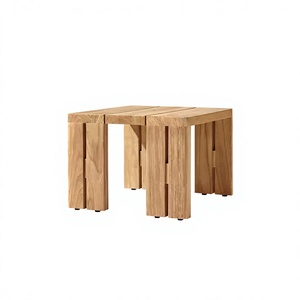
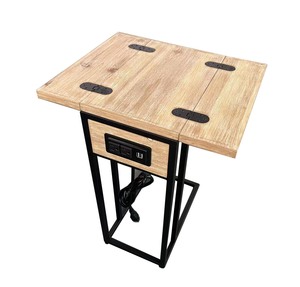
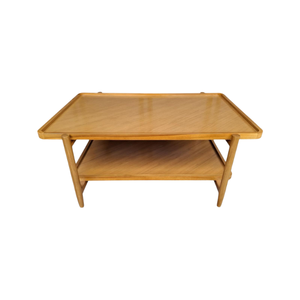
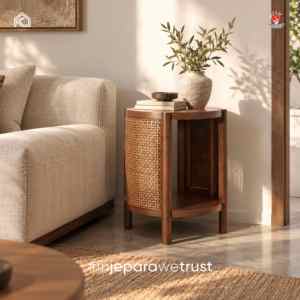
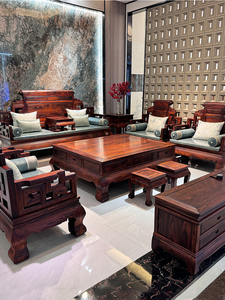
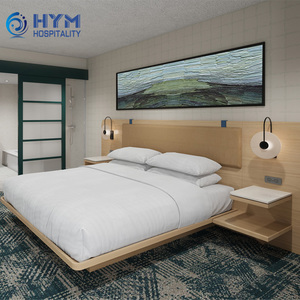
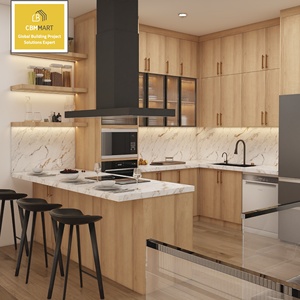
Featured Solid Wood Consoles, Tables & Joinery Collections

Engineered from responsibly harvested Indonesian hardwoods and high-performance oak, our architectural pieces combine traditional joinery with modern Japanese spatial ergonomics. Direct factory dispatch from Jepara to the Port of Nagoya.

Contact Us
Strategic Procurement Insight

Engineering Solid Teak Consoles for the Greater Nagoya & Chubu Market

Navigating the Chubu economic hub's demanding architectural standards requires an intricate harmony of raw timber provenance, precision moisture control, and Japanese spatial minimalism.

Architectural Compactness & Modular Grids

Nagoya's urban developments—from luxury high-rises around Nagoya Station (Meieki) to upscale residential enclaves in Yagoto and Kakuozan—operate on rigorous architectural modules (such as the standard 910mm / 1820mm grid). Standard Western console tables with 450mm–550mm depths disrupt circulation in Japanese corridors and genkan entrance foyers. Our Indonesian production unit manufactures tailored narrow-profile consoles (260mm to 350mm depth) with floating wall cleat options that optimize spatial efficiency without sacrificing structural integrity.

Direct Maritime Logistics via Nagoya Port

The Port of Nagoya consistently handles the highest cargo throughput in Japan, serving the industrial powerhouse of Aichi Prefecture. Importers, commercial fit-out contractors, and FF&E procurement specialists benefit from direct sea routes from Tanjung Emas (Semarang, Central Java) to Nagoya. By bypassing expensive domestic cross-docking from Yokohama or Osaka, our clients achieve freight efficiencies of 18%–24%, seamless customs clearance, and reduced risk of cargo handling damage.

Clean Wood Act & SVLK Legal Certification

Japan’s Act on Promoting the Use and Distribution of Legally-Harvested Wood (Clean Wood Act) places strict due diligence obligations on registered Japanese wood operators. Teratai Furniture builds solely with 100% SVLK-certified (Sistem Verifikasi Legalitas Kayu) teak and mahogany from monitored state plantations (Perum Perhutani). Complete chain-of-custody documentation, V-Legal export permits, and botanical declarations are provided with every bill of lading for unhindered Ministry compliance.

30+
Years Jepara Woodworking Heritage (Est. 1995)
8–10%
Equilibrium Moisture Content for Japan Climate
100%
SVLK & Clean Wood Act Timber Traceability
18–22 Days
Average Ocean Transit (Semarang to Port of Nagoya)

Information Gain: Why Solid Teak Overcomes Japan's Dual-Season Stress

Aichi Prefecture experiences severe microclimatic shifts: blistering humid summers with relative humidity (RH) exceeding 80% to 85%, followed by dry, heated winters with indoor RH plummeting below 30% due to floor heating (Yuka Danbo) and HVAC systems. Ordinary imported hardwoods experience severe cupping, surface checking, and joint failure under this thermal stress. Solid teak (Tectona grandis) contains high concentrations of natural tectoquinones and natural rubber oils, giving it a remarkably low volumetric shrinkage coefficient (around 5.3% from green to oven-dry). When kiln-dried correctly to 8%–10% MC, our solid teak consoles remain dimensionally stable throughout Nagoya's climatic cycle.

Contextual Architectural Fit

Localized Application Scenarios across Nagoya's Built Environment

How our bespoke solid teak console tables and accompanying architectural furniture integrate into residential, commercial, and traditional hospitality topologies across Aichi Prefecture.

1. Traditional & Modern Genkan Entrances

In Japanese homes and modern "mansion" apartments, the genkan serves as the vital ceremonial transition zone between outside and inside. Our low-depth (280mm–320mm) solid teak console tables provide a warm, organic focal point adjacent to the shikidai (step-up wooden threshold). They serve as functional display platforms for ikebana arrangements, seasonal ceramics, or key-trays, engineered with floating rear rebates to accommodate baseboard wall-flush alignment without unsightly gaps.

2. Penthouse LDK Spatial Dividers

Nagoya’s upscale urban condominiums in Sakae, Shirakabe, and Meieki favor open-plan Living-Dining-Kitchen (LDK) layouts. Back-of-sofa solid teak consoles delineate living zones from dining areas while maintaining unobstructed sightlines. Featuring hand-planed chamfered edges, soft rounded corners (safe for multi-generational families), and matte organic oil finishes, these pieces reflect soft ambient light without the cold glare of synthetic laminates.

3. Ryokan Modernization & Onsen Corridors

Boutique hot-spring inns across Aichi, Inuyama, and neighboring Gifu Prefecture (Gero, Takayama) are extensively renovating VIP guest suites to blend traditional tatami aesthetics with elevated Western hospitality. Solid teak consoles installed in anterooms and private engawa verandas withstand ambient geothermal moisture and humidity fluctuations far better than indigenous softwoods like cedar, providing a maintenance-free lifetime asset.

4. Commercial Boutique & Automotive Salons

Nagoya is the capital of Japan’s manufacturing and automotive elite. Premium automotive dealerships, luxury corporate reception lobbies in the Midland Square tower, and high-end fashion boutiques along Hisaya Odori utilize our bespoke 9-drawer consoles and slab-top teak credenzas as reception accent counters, VIP beverage bars, and tactile merchandising display stages that convey enduring craftsmanship and executive permanence.

Material Science & Engineering

Hardwood Material Performance in Chubu Climate Conditions

A direct technical comparison highlighting why SVLK-certified Indonesian plantation teak is the optimal investment for Nagoya specifiers compared to conventional furniture timbers.

Performance Attribute Jepara Solid Teak (Tectona grandis) American White Oak (Quercus alba) Japanese Cedar / Sugi (Cryptomeria) Commercial MDF / Teak Veneer
Equilibrium Moisture Stability Superior (5.3% Volumetric)
High natural silica & tectoquinone oil prevent swelling/shrinking.
Moderate (12.6% Volumetric)
Requires strict climate control; prone to cupping under radiant floor heating.
Low-Moderate (8.8% Volumetric)
Prone to seasonal shrinkage, grain splitting, and surface checking.
Poor (High Risk)
Delaminates or swells irreparably if exposed to persistent moisture cycles.
Janka Hardness & Durability 1,000 – 1,155 lbf
Optimal balance: highly impact-resistant without brittle workability.
1,360 lbf
High density, but difficult to hand-carve and prone to iron staining.
350 lbf
Extremely soft; easily dented by household items or commercial luggage.
Surface dependent
Edge bands easily chip and cannot be restored through hand sanding.
Termite & Rot Resistance Class 1 (Highest Rating)
Naturally immune to subterranean termites and fungal spores.
Class 2–3 (Moderate)
Vulnerable to humidity-induced rot without biocidal sealing.
Class 3 (Moderate)
Heartwood resists rot, but sapwood is highly susceptible to decay.
None
Glue binders attract pests; binder dissolves upon sustained water ingress.
Seismic & Joint Flexibility High flexural modulus; absorbs micro-vibrations without cracking at tenons. Stiff; high shear stress can shear glue lines during seismic ground resonance. Pliable, but low screw-holding strength for anchoring wall cleats. Brittle; catastrophic failure at dowel fasteners during earth tremors.
Finishing Tactility Velvety natural patina; self-healing with mineral wax; requires minimal lacquer. Open grain; requires heavy grain filling or multi-coat polyurethane. Absorptive; uneven stain intake; requires frequent re-coating. Synthetic plastic feel; cannot achieve true biophilic wabi-sabi patina.
Contact Us
Workshop Heritage Since 1995

Why Japanese Sourcing Partners Work Directly With Teratai Jepara

Unlike large commodity factories that impose thousands-unit minimums, our family-run workshop on Jl. Raya Soekarno Hatta in Jepara is deliberately structured for precision, bespoke dimensional adjustments, and uncompromised quality assurance.

Master Artisans & Scaled Sanding

Our core in-house team includes four master joiners, five finishing experts, and two dedicated QC/QA officers, supplemented by an experienced sanding team that scales dynamically with project scope. This craft-focused structure allows us to inspect mortise-and-tenon tolerances, dovetail drawer fits, and under-panel grain matching at a level of scrutiny that high-speed automated factories simply cannot maintain.

Built Directly to CAD Drawings

Whether you furnish an entire boutique hotel in Sakae or develop a custom retail collection for an Aichi interior brand, send us a technical sketch, DWG/DXF files, or dimensional renders. We tailor table widths, corridor clearances, integrated wire-management raceways, and secret drawer compartments with millimeter precision before cutting the first plank.

Flexible Container & LCL Consolidation

We accommodate both trial consignments and multi-container schedules. While a standard 20ft Full Container Load (FCL) runs at 4–6 weeks production time, we regularly support Less-than-Container Load (LCL) consolidation or half-container loading when consolidating shipments across Central Java suppliers for direct delivery to Nagoya Port.

Rigorous 2-Stage Pre-Pack QC

Every console table undergoes assembly dry-fitting, drawer slide tension testing, calibrated digital moisture testing (confirming 8%–10% MC), and surface sheen inspection under 5000K daylight simulation lamps. On multi-container hospitality projects, you receive photo and video QC inspection logs for sign-off prior to container loading and container door sealing.

30-Year Global Export Track Record

For three decades, Teratai has continuously shipped containerized fine furniture to demanding commercial buyers across Germany, the United States, New Zealand, and Scandinavia. We understand international marine packing, anti-humidity desiccant placement, edge foam wrapping, and drop-tested five-layer export master cartons.

Sustainable Perhutani Plantation Teak

Our raw teak logs are sourced exclusively from responsibly managed, government-certified Perum Perhutani teak plantations in Java. These slow-growth trees (aged 30 to 50+ years) yield tight grain rings, golden-brown honey tones, and rich natural oil content, avoiding the spongy pale sapwood of hurried agro-forestry teak.

Design Movements & Industry Trends

Current Trends Influencing Console Procurement in Nagoya

Analyzing consumer preferences, commercial developer requirements, and interior design directions across the Tokai regional market.

The Japandi Fusion: Wabi-Sabi Meets Tropical Teak

Japanese designers are shifting from cold Scandinavian blonde woods toward richer, warmer tones that resonate with ancient Japanese wabi-sabi and mingei (folk craft) philosophies. The deep golden amber and natural black mineral streaks of Indonesian teak bring depth and tactile warmth to minimalist white plaster, exposed concrete, and tatami rooms. Our natural raw-touch oil finishes preserve the tactile open-pore sensation demanded by high-end residential stylists.

Earthquake-Conscious Joinery & Anti-Topple Engineering

Located in the Tokai seismic vulnerability zone, Nagoya commercial clients and homeowners place extraordinary emphasis on furniture stability. Tall, top-heavy consoles pose hazards during tremors. We engineer low centers of gravity, wider base splay geometry, and provide concealed, pre-drilled rear mounting brackets for heavy-duty seismic wall straps or L-brackets that fasten directly to Japanese drywall stud frames.

Biophilic Wellness & Zero-VOC Finishes

Modern Japanese corporate and medical developers in Nagoya actively specify biophilic interior elements to reduce workplace stress. Solid wood surfaces that omit harsh formaldehyde binders comply with Japan's rigorous Sick Building Syndrome regulations. Teratai provides water-based low-VOC topcoats, pure vegetable oils, and natural beeswax finishes that meet and exceed Japanese indoor air quality expectations.

Procurement & Logistics Q&A

Frequently Asked Questions by Nagoya Importers & Contractors

Straightforward answers regarding technical specifications, port logistics, minimums, moisture conditioning, and legal compliance.

How do you prevent solid teak consoles from cracking under Japanese winter heating?
All timber undergoes a rigorous multi-stage kiln-drying process in our Jepara facility, bringing core moisture content down to 8%–10% (standard Indonesian domestic furniture is dried only to 14%–16%, which splits in Japan). Furthermore, our joinery utilizes slotted screw cleats, floating tabletop tongue-and-groove fastenings, and perimeter expansion allowances of 2mm–3mm, allowing the wood to naturally breathe during seasonal humidity swings without joint failure.
What are the ocean freight options and lead times to the Port of Nagoya?
Containers are drayed directly from our Jepara workshop to Tanjung Emas Port in Semarang (approximately 2.5 hours by road). Direct feeder vessels connect via Singapore or Kaohsiung directly to the Port of Nagoya. Ocean transit time typically ranges between 16 and 22 days. Total turnaround time from final CAD sign-off to container discharge at Nagoya Port is approximately 7 to 9 weeks for a 20ft container.
What documentation do you provide for Japan's Clean Wood Act compliance?
We provide full SVLK V-Legal export permits endorsed by the Indonesian Ministry of Environment and Forestry, official Bills of Lading, Certificate of Origin (Form DEA for tariff benefits under the Indonesia-Japan Economic Partnership Agreement / IJPA), commercial invoices, detailed packing lists, and wood species botanical declarations (Tectona grandis). This documentation provides complete legality verification for Type 1 and Type 2 registered wood businesses in Japan.
Can we order custom console dimensions to match Japanese apartment plans?
Yes. Custom made-to-order manufacturing is our core strength. You are not confined to fixed catalog measurements. We routinely produce compact console depths (e.g., 250mm, 280mm, 320mm) and specific lengths (e.g., 900mm, 1200mm, 1500mm) with custom drawer configurations, specific wire grommets, or specialized floor-clearance heights to accommodate Japanese baseboard heating units and vacuum robots.
What is your Minimum Order Quantity (MOQ) for Nagoya commercial projects?
Our standard commercial order is one 20ft Full Container Load (approx. 28 to 30 CBM), which can be composed of mixed SKUs (consoles, dining chairs, coffee tables, beds). However, for boutique hotels, mock-up rooms, or architectural custom projects, we welcome partial containers or LCL shipments when the volume makes commercial freight sense.
What surface finish options are available for Japanese hospitality projects?
We offer three primary finishes: 1) Natural Hand-Rubbed Oil/Wax (matte biophilic texture celebrating grain figure), 2) Low-Sheen Polyurethane / Melamine (scratch-resistant, non-yellowing, resistant to water glass rings, ideal for commercial lobbies), and 3) Duco Lacquer (opaque colored finishes, matched to RAL or DIC color standards). All topcoats can be specified in low-VOC formulations.
Transparent B2B Engagement

Step-by-Step Custom Procurement Protocol

From initial drawing submission to final container arrival at your Nagoya warehouse.

01

Specification Brief

Submit your CAD drawings, hand sketches, or desired collection codes with required dimensions, wood species, finish expectations, and target quantities.

02

Engineering Review

Direct consultation with our workshop joiners regarding wood movement allowances, joint optimization, hardware choices, and packing density.

03

Formal Quotation

You receive a line-item proforma invoice indicating FOB Semarang or CIF Nagoya Port pricing, production schedule (4–6 weeks per 20ft), and packaging specs.

04

QC & Ocean Dispatch

Two dedicated QC inspectors vet moisture content, sanding, and assembly. High-resolution photo/video logs approved before container sealing.

Direct Indonesian Workshop Access

Initiate Your Solid Teak Furniture Consultation for Nagoya

Whether you are outfitting a luxury hotel in Sakae, curating a boutique residential development in Aichi, or sourcing reliable private-label container furniture, speak directly with our Jepara workshop masters today. We discuss your technical specifications in detail and provide swift written quotations.

Contact Us