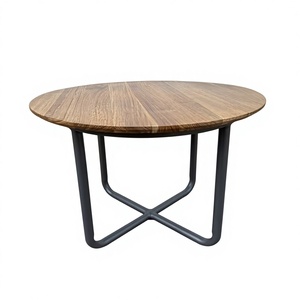
Manufactured in our central Jepara facilities with kiln-dried legal timber, engineered joinery, and bespoke finishing for high-traffic Chilean residential and commercial environments.
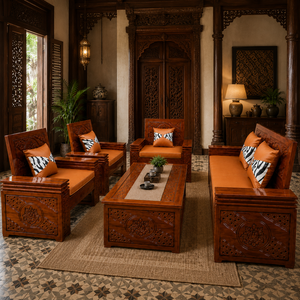
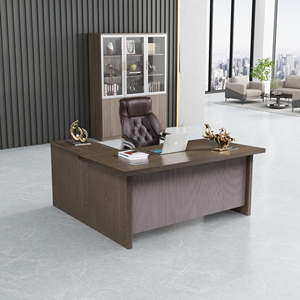
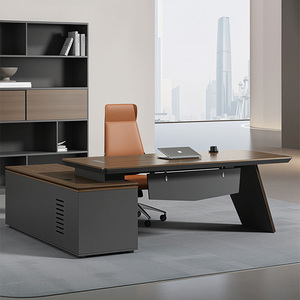
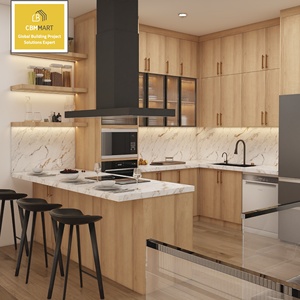
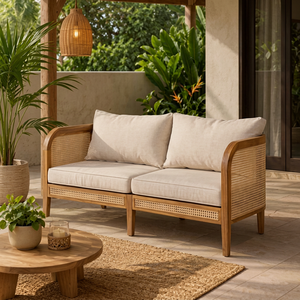
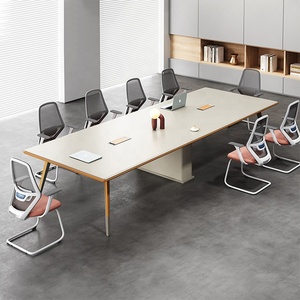
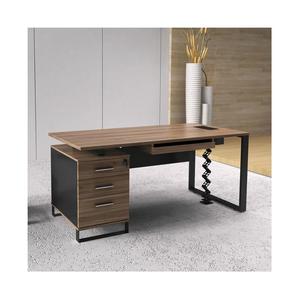
Rooted in Central Java's premier artisanal enclave since 1995, our specialized workshop pairs generational mortise-and-tenon woodworking with strict structural engineering.
Chile's diverse climates—from the hyper-arid Atacama Desert to the high humidity of Los Lagos—demand precise timber conditioning. Our timber undergoes 18–24 days of computerized kiln drying down to an 8%–10% moisture threshold, preventing warping, end-checking, or joint delamination during trans-equatorial ocean transit.
Every commercial teak dining chair is assembled with interlocking deep mortise-and-tenon joinery, secured with marine-grade waterproof polyurethane D4 bonding agents and reinforced hardwood dowels. We never rely on superficial pocket screws or fragile staples for primary load-bearing members.
We comply fully with Indonesia’s Sistem Verifikasi Legalitas Kayu (SVLK) and provide full V-Legal timber chain-of-custody documentation. We guarantee seamless customs clearance with Chile’s Servicio Agrícola y Ganadero (SAG) through mandatory ISPM 15 fumigation and bark-free debarking verification.
An authoritative analysis on timber physics, trade policy advantages under IC-CEPA, and architectural ergonomics for Latin America's southern cone.
Chile represents one of the most geographically and climatically extreme territories in the world. Ranging from latitude 17°S in the northern deserts down to 56°S in subpolar Patagonia, the thermal and hygroscopic demands placed on architectural wood furniture are severe. In Santiago and the Central Valley (Region Metropolitana), the Mediterranean climate features scorching dry summers where ambient relative humidity (RH) routinely falls below 25%, followed by damp, cold winter periods. Under conventional furniture joinery, such dramatic equilibrium moisture content (EMC) swings cause radial shrinkage, surface crazing, and joint separation.
Indonesian Perhutani-plantation teak (*Tectona grandis*) provides unmatched structural defense against these conditions. Possessing dense silica deposits and natural tectoquinones (organic hydrophobic oils), kiln-dried Indonesian teak displays an exceptionally low volumetric shrinkage coefficient (radial ~2.5%, tangential ~5.8%). Unlike southern beech (*Nothofagus dombeyi* / Coihue) or radiata pine commonly found in local Chilean mills, genuine mature teak will not split or deform when moved between air-conditioned interiors and sun-drenched terraces.
Critical Engineering Insight: Dining chairs engineered for Chilean hospitality installations feature floating seat pan mortises that allow 1.5mm lateral seasonal expansion without transferring stress to the corner blocks or perimeter leg aprons.
Commercial dining culture in Chile places supreme cultural emphasis on the *sobremesa*—the prolonged ritual of conversation, coffee, and wine that continues for hours following lunch or dinner. Conventional contract dining chairs, engineered around 45-minute turnover cycles with shallow seat pans and aggressive 90-degree backsplats, are ill-suited for Chilean dining patterns.
Our bespoke engineering team customizes dining chair ergonomics for the Chilean contract market:
For Chilean direct importers, procurement directors, and architecture studios, sourcing directly from Teratai Furniture in Jepara carries substantial economic advantages under the Indonesia-Chile Comprehensive Economic Partnership Agreement (IC-CEPA). Signed to deepen bilateral South-South trade, IC-CEPA provides immediate preferential or zero-tariff treatment (0% Ad-Valorem) on Indonesian wooden furniture imports entering under HS Code 9401.69 (Other seats with wooden frames) and 9403.60 (Other wooden furniture).
Compared to sourcing through European middlemen or non-preferential suppliers that face standard 6% Chilean MFN import duties, procuring factory-direct with our certified Form IC-CEPA Certificate of Origin translates directly into a 6% to 12% bottom-line landed cost advantage. In addition, our factory team coordinates all phytosanitary and export manifest documentation to allow rapid release at the major ports of Valparaíso and San Antonio.
Engineered to excel in demanding environments—from Santiago’s luxury towers to coastal oceanfront retreats and alpine southern lodges.
In neighborhoods like Las Condes, Vitacura, and Lo Barnechea, contemporary architecture favors expansive indoor-outdoor dining areas connected by floor-to-ceiling sliding glass walls. Our teak dining chairs feature natural polyurethane finishes that prevent UV yellowing while withstanding the intense dry summer solar radiation typical of the Mapocho valley basin.
Along Zapallar, Cachagua, Maitencillo, and Viña del Mar, marine salt mist, heavy oceanic fog (*camanchaca*), and humidity wreck havoc on iron hardware and poorly sealed hardwoods. We equip coastal dining chairs with marine-grade 304/316 stainless-steel inner mechanical fasteners and natural oils that resist salt crystallization.
Around Puerto Varas, Pucón, and Torres del Paine, eco-tourism projects prioritize warm biophilic luxury paired with exceptional resistance to continuous rainfall and sub-zero freeze-thaw cycles. Teak’s high resin density naturally resists fungal rot, moss growth, and damp degradation without requiring heavy chemical pressure treatments.
Essential insights covering Chilean customs regulations, shipping routes to San Antonio / Valparaíso, timber legality, and payment security.
Analyzing current architectural specifications in Chilean interior design, corporate workspaces, and luxury hospitality developments.
The stark cold minimalism prevalent in Chile during the 2010s has pivoted decisively toward textured, natural organic palettes. Architects across Vitacura and Providencia are specifying natural matte-finished teak paired with woven Danish cord, natural rattan webbing, and exposed mortise tenon joints that showcase true tactile authenticity and longevity.
Chilean corporate headquarters, executive boardroom suites in El Golf, and vineyard tasting rooms throughout the Colchagua Valley increasingly prioritize LEED-certified sustainable noble woods. Natural teak satisfies corporate biophilic design metrics while providing a generational lifecycle that synthetic furniture cannot match.
Modern Chilean architectural design seamlessly dissolves the boundary between the internal dining hall and the covered outdoor *quincho* (barbecue veranda). Designers demand dining chairs durable enough to sit adjacent to a smoking parrilla terrace yet sufficiently refined to serve as formal interior seating.