Precision-engineered in Jepara from sustainably harvested teak and premium hardwood. Each piece is adapted to custom dimensions, bespoke finishes, and rigorous European moisture specifications.
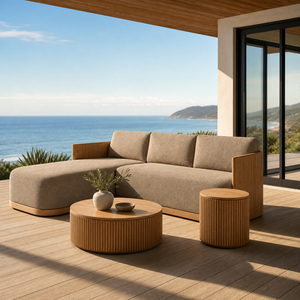
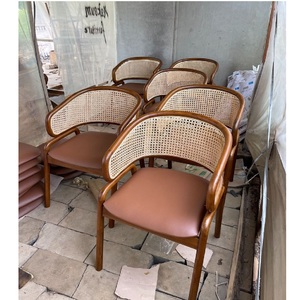
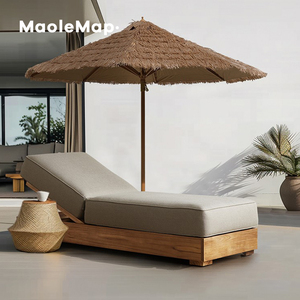
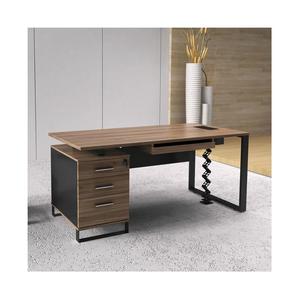
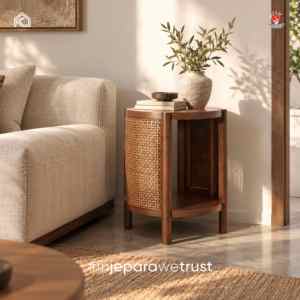
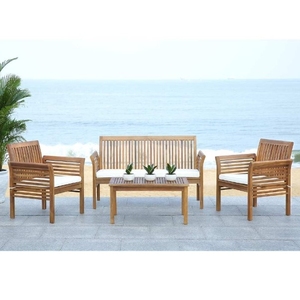
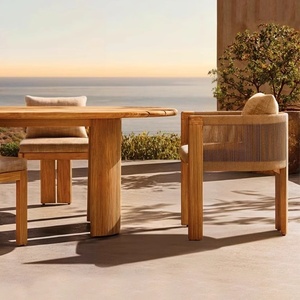
Austria's luxury furniture and commercial interior sector represents one of the most discerning and legally regulated contract environments within the European Union. Importers, high-end interior architects, and hospitality FF&E (Furniture, Fixtures, and Equipment) contractors across Vienna, Graz, Linz, Salzburg, and Innsbruck operate under strict demands for material longevity, thermal stability, and strict ecological accountability.
As premier teak sideboard cabinet manufacturers and direct exporters in Jepara, Indonesia, our production methodologies directly resolve the structural challenges unique to the Alpine climate and the bureaucratic scrutiny of Austrian regulatory bodies. While tropical teak (*Tectona grandis*) is globally coveted for its rich natural silica content, dense ring formation, and timeless honey-brown patina, exporting teak storage cabinets into Central Europe necessitates precision engineering that far surpasses ordinary standard domestic specifications.
The primary point of failure for imported solid tropical hardwood in Austria is not external moisture or rot; it is the severe internal desiccation caused by modern Austrian district heating (Fernwärme) and high-efficiency radiant underfloor systems. During Alpine winters, external ambient temperatures frequently remain below zero degrees Celsius, while residential and commercial indoor relative humidity (RH) plummets to 25%–35%.
Standard Indonesian furniture dried merely to 14%–16% moisture content will inevitably undergo violent tangential and radial shrinkage when placed inside an apartment in Vienna's *Innere Stadt* or a ski chalet in *Kitzbühel*. This results in cracked sideboard tops, warped sliding doors, binding dovetail drawers, and fractured mortise joints. Teratai Home executes a specialized kiln-drying protocol:
Austrian commercial purchasers face stringent legal liabilities under the newly enforced European Union Deforestation Regulation (EUDR) and the Austrian Federal Forest Office (Bundesamt für Wald - BFW). Sourcing from unverified trading companies or informal workshops creates severe import risks, potential cargo impoundment at European borders, and heavy commercial fines.
Our workshop in Jepara, Central Java, operates with comprehensive SVLK (Sistem Verifikasi Legalitas Kayu) certification under Indonesian law, fully documented through V-Legal customs export licensing. Every teak log utilized in our sideboards is procured through Perum Perhutani—the Indonesian state forestry enterprise managing sustainable plantations established during the 19th century. We provide Austrian corporate buyers with verifiable geolocation coordinates, lot-level traceability certificates, and harvest concessions required to seamlessly generate Due Diligence Statements (DDS) for European customs clearance.
From neoclassical urban apartments to high-altitude Alpine hospitality retreats, solid teak sideboards and storage consoles bridge historical richness with modern minimalist utility.
Viennese *Altbau* residences are characterized by soaring 3.8-meter ceilings, ornate ceiling stuccowork, and traditional herringbone oak flooring (*Fischgrätparkett*). In these expansive spaces, generic compact cabinetry gets lost. Our bespoke teak sideboards—featuring 4-door configurations, horizontal fluting, and lengths up to 240cm—provide warm organic counterpoints to white plaster walls while housing audiovisual systems with ventilated rear cable routing.
Vienna Urban ArchitectureAlpine boutique hotels in regions like Lech, Kitzbühel, and Zell am See demand furniture that merges modern tactile luxury with rustic resistance. Our solid teak credenzas and accent buffets resist the rigorous wear-and-tear of high-turnover hospitality. Finished in ultra-matte water-based polyurethane or breathable hard-wax oils, our teak surfaces endure damp snow gear exposure, hot drink services, and frequent sanitizing without clouding or surface failure.
Alpine Contract HospitalityContemporary *Heuriger* restaurants and winery tasting rooms throughout Lower Austria and Southern Styria require heavy-duty serving sideboards and glassware storage credenzas. Teak's inherent resistance to red wine tannins and chemical spills makes it vastly superior to veneered chipboard. Built with industrial concealed soft-close Blum hinges and reinforced drawer runners, these units withstand demanding commercial service cycles.
Gastronomy & Retail Fit-OutHow shifting consumer values, ecological standards, and supply chain rationalization are transforming Austrian furniture procurement.
Austrian consumers are actively rejecting disposable flat-pack MDF furniture in favor of repairable, lifetime-investment solid hardwoods. Organic wire-brushed finishes that expose the raw tactile grain of mature plantation teak align with Austria's cultural reverence for authentic timber craft (*Holzhandwerk*).
Circular Wood CultureOpen-concept residential layouts in modern Graz and Linz developments often suffer from reverberation. Sideboard credenzas incorporating three-dimensional fluted teak slats serve a dual function: striking aesthetic presence and practical acoustic diffusion that softens ambient sound in glass-heavy spaces.
Functional ArchitectureAustrian buyers increasingly bypass Northern European ports (Hamburg/Rotterdam) in favor of the Port of Koper in Slovenia. Ocean shipments from Indonesia transiting the Suez/Mediterranean into Koper reach southern Austrian logistics hubs (Villach/Graz) 8–10 days faster, sharply reducing overland carbon footprints.
Intermodal EfficiencyRather than committing to single-SKU mass production, Austrian interior studios and independent retail networks prefer consolidated 20ft or 40ft containers that integrate matching sideboards, console tables, dining sets, and accent chairs fabricated under unified workshop quality control.
Flexible B2B SourcingAn objective technical comparison showing why standard mass-market Indonesian furniture fails European audits and how our controlled workshop engineering protects your commercial reputation.
| Technical Parameter | Generic Indonesian Supplier / Broker | Teratai Jepara Austrian-Spec Engineering | Significance for Austrian Importers |
|---|---|---|---|
| Timber Moisture Content (MC) | 14% - 18% (Air dried or short kiln cycle) | 8% - 10% Controlled Kiln-Dried | Zero shrinkage cracking, warping, or drawer jamming in winter heating environments. |
| EUDR & Legal Traceability | Third-party generic paperwork; indeterminate felling concessions | 100% Perum Perhutani SVLK + Geolocation | Exempt from border confiscations and audits by the Austrian Bundesamt für Wald. |
| Joinery Engineering | Pocket screws, dowels, or direct edge glue without movement relief | Slotted Z-Fasteners & Deep Mortise-Tenon | Allows natural transverse timber expansion without splitting cabinetry frames. |
| Hardware & Mechanics | Unbranded local friction slides, zinc screws | Austrian Blum Soft-Close or Heavy Ball-Bearing | Seamless acoustic operation meeting high-end Western European luxury standards. |
| Finishing Chemistry | High-VOC nitrocellulose or standard gloss spray lacquer | EN 71-3 Safe Low-VOC Matte Polyurethane & Natural Oils | Complies with European chemical safety regulations; deep organic matte aesthetic. |
| Transit Packaging | Single-wall corrugated paper wrap; unpadded corners | 5-Ply Master Carton, Foam Edge Blocks & Crates | Eliminates micro-abrasion during intermodal sea-to-rail transit from Koper to Vienna. |
Operating continuously since 1995 on Jl. Raya Soekarno Hatta KM.5 No.95 in Jepara, Central Java, Teratai Furniture offers a deliberate counterweight to anonymous high-volume manufacturing conglomerates. In an industry where large factories demand rigid 500-piece production minimums per design, our boutique family workshop specializes in high-complexity, tailored B2B furniture projects for importers, interior design studios, and commercial project managers across Europe, North America, and Australasia.
We are the true manufacturer, not an export intermediary or trading commission agent. Our core workshop team includes four master woodcarvers/joiners, five precision finishers, two full-time QA/QC inspectors, and an elastic sanding guild that scales systematically with project container volumes.
Whether you supply a rough architectural sketch, an inspirational photographic brief, or detailed shop drawings with millimeters-precise tolerances, our drafting team produces technical joinery schematics within 48 hours for your approval prior to lumber cutting.
On multi-container commercial procurement contracts, each container undergoes full mock-up assembly, laser dimensional checking, moisture meter testing, and high-resolution photo/video logging. You review and release QC approval prior to final balance payment and port drayage.
Direct technical answers regarding import tariffs, customs documentation, logistics routes, and moisture stability guarantees.
We execute strict industrial kiln drying to reach an 8% to 10% moisture content benchmark specifically tailored for Austrian central heating systems (*Fernwärme*). In addition, our cabinet construction employs slotted expansion cleating, floating panel grooves, and rear ventilation channels, which allow the wood to breathe without causing surface cracks or door misalignments.
Every shipment is covered by official Indonesian SVLK / V-Legal export licenses, which serve as proof of harvest legality. For EUDR compliance, we provide supply-chain traceability dossiers containing forest plot GPS coordinates, felling permits from Perum Perhutani, chain-of-custody documentation, and official commercial invoices aligned with Austrian customs import declarations.
Containers are loaded at our Jepara workshop, transported to the Port of Tanjung Emas in Semarang, and shipped via Mediterranean ocean carriers directly to the Port of Koper (Slovenia) or Trieste (Italy). From Koper, bonded intermodal rail or direct road trucking delivers cargo to Graz, Klagenfurt, Vienna, or Linz within 24–48 hours of port clearance, saving approximately 10 days compared to northern routes via Hamburg.
Yes. As an authentic artisan workshop, we actively encourage mixed-item container loading. You can combine solid teak sideboards, fluted consoles, outdoor lounge chairs, and dining furniture within a single 20ft FCL (approx. 28-30 CBM) or 40ft HC (approx. 65-68 CBM), allowing boutique retailers and interior contractors to diversify showroom inventory without overextending capital.
For standard FCL orders, terms typically involve a 30% production deposit upon technical drawing approval and proforma confirmation, with the 70% balance payable upon submission of comprehensive pre-shipment QC photographic reports and container loading documentation. For multi-container contracts, rolling milestone payments per individual container apply.
Absolutely. Over 70% of our output is bespoke (*Made to Order*). We can build from your CAD files or adapt any piece in our catalog to custom dimensions, bespoke door configurations, integrated European soft-close hinges (e.g., Blum/Hettich), and specialized branded metal badge insets or buyer-specified packaging barcodes.
Whether you are outfitting a luxury hotel project in the Tyrolean Alps, sourcing custom residential sideboards for a Vienna showroom, or consolidating mixed-container commercial shipments, our workshop delivers direct factory pricing, verified SVLK compliance, and master-crafted timber stability.
Contact Us