Discover our engineered solid teak and companion hardwood products manufactured specifically to endure harsh coastal salinization, tropical rains, and commercial hospitality turnover across Peru.
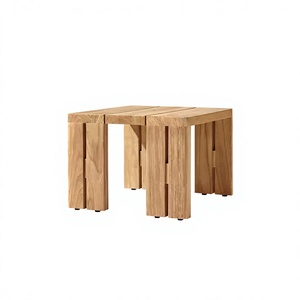
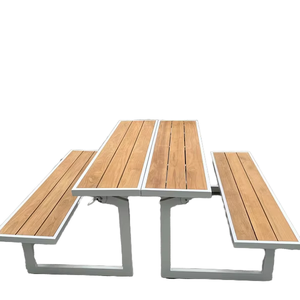
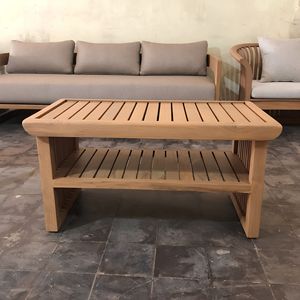
Understanding environmental stressors, macro-economic luxury development trends, and the strategic rationale for direct-from-factory Indonesian teak importation into Callao.
The commercial landscape for luxury outdoor furniture in the Republic of Peru has transitioned from standard residential procurement to high-specification, architect-driven resort architecture. As private developments in coastal regions like Punta Hermosa, Asia, and Máncora flourish alongside boutique eco-lodges in the Sacred Valley (Urubamba) and Paracas, procurement officers and hoteliers face severe climatic hurdles. The choice of outdoor lounging infrastructure is no longer merely aesthetic; it is an engineering calculation balancing UV radiation indices, saline atmospheric oxidation, and maintenance life-cycles.
Historically, the Peruvian market relied on domestic Amazonian hardwoods such as Cumaru (Dipteryx odorata) or Ipe, or turned to commercial-grade powder-coated aluminum from regional distributors. However, commercial operators have encountered systemic failures with these materials. High resin tension in local hardwoods leads to severe dimensional instability and checking under extreme thermal fluctuations, while synthetic rattans and lower-tier metals succumb to coastal humidity and high solar irradiance. Genuine Tectona grandis (Indonesian Teak), sourced directly from certified Jepara workshops, has emerged as the definitive gold standard for Peruvian luxury leisure developments.
Teak wood harvested from Central Java possesses a high natural rubber and silica content paired with organic tectoquinones. These biochemical compounds make kiln-dried Grade-A teak naturally hydrophobic, impervious to marine moisture, and naturally repellent to rot, termites, and fungal decay. In beachfront installations along the Pacific coast of Peru, where oceanic salt spray interacts with aggressive daytime sunshine, Indonesian teak sun loungers weather into a graceful silver-grey patina rather than structurally deteriorating.
For Peruvian importers, procurement directors, and interior design firms, the challenge lies in eliminating intermediaries. Purchasing via European or North American distributors adds an untenable markup of 40% to 65% on CIF Callao rates. By establishing direct contracts with dedicated Jepara manufacturing facilities like Teratai Home, commercial buyers secure technical bespoke dimensioning, SVLK timber verification for Peruvian customs (SUNAT), and dedicated multi-tier quality control prior to maritime container loading.
How our engineered joinery, moisture-controlled kiln drying, and marine-grade fittings adapt seamlessly across Peru's four most demanding geographical zones.
The Lima metropolitan coastline (Miraflores, Barranco, San Isidro) and summer enclaves along the Panamericana Sur (Asia District, San Bartolo) endure persistent oceanic fog (la garúa) and relative humidity hovering between 85% and 98%. Ordinary furniture hardware corrodes rapidly. Our export-grade teak sun loungers are assembled with 316 Marine-Grade stainless steel hardware and kiln-dried to 10%–12% moisture content, eliminating mold formation, warping, and hardware seizure in humid salt air.
In Máncora, Vichayito, and Punta Sal (Piura and Tumbes departments), outdoor sun loungers must withstand uninterrupted, high-intensity equatorial UV radiation and sudden tropical downpours. Conventional synthetic weaves crack under this photolytic stress within 18 months. Our solid teak loungers utilize deep-mortise-and-tenon joints secured with waterproof Polyurethane D4 structural adhesives that expand and contract smoothly without joint cleavage under intense thermal cycles.
In luxury eco-retreats throughout Urubamba, Ollantaytambo, and Cusco, furniture operates at elevations exceeding 2,800 meters. The environment presents sharp diurnal temperature swings (from 22°C daytime sun to near-freezing nighttime conditions) combined with low atmospheric moisture. Standard kiln drying fails here, causing severe surface splintering. Our dedicated conditioning cycles ensure uniform core-to-surface moisture equilibrium, safeguarding loungers from structural splitting.
An authoritative analysis of evolving consumer preferences, eco-certification requirements, and architectural paradigms in the Peruvian market.
Over the past decade, Peru's architectural sector has aligned closely with the "Japandi" and "Tropical Brutalism" movements, popular among Lima's premier architectural practices. Projects featured in leading publications like Arkinka showcase raw exposed concrete, volcanic stone facades, and expansive natural hardwood elements. Teak sun loungers serve as the primary tactile bridge between crisp geometric architecture and natural poolside landscapes.
Furthermore, hospitality operators in Peru are increasingly seeking international sustainable building certifications such as LEED and EDGE. The historic practice of procuring unverified timber from uncontrolled rainforest sources has become a substantial regulatory and reputational liability. Peruvian customs and environmental authorities (SERFOR) actively audit timber imports. Consequently, Indonesian SVLK-certified (Sistem Verifikasi Legalitas Kayu) timber provides complete legal traceability, guaranteeing institutional buyers compliance with zero deforestation mandates.
The third distinct shift is towards custom modularity. Standardized retail catalog dimensions rarely suit bespoke oceanfront villas or boutique rooftop pool lounges in Miraflores. Importers require flexible manufacturing partners capable of building directly to CAD drawings—modifying slatted backrest angles, integrating hidden wheels for effortless repositioning, and providing custom recess channels for quick-dry Batyline or Sunbrella foam cushions.
Operating continuously since 1995, Teratai Furniture bridges three decades of Central Javanese woodworking mastery with modern export logistics.
We do not lock buyers into rigid catalogs. Whether you provide technical DWG files, architectural sketches, or physical specifications, our master craftsmen construct sun loungers to your exact dimensional constraints, custom finishes, and wood grades.
Every board of solid teak and plantation mahogany utilized in our factory carries SVLK verification under Indonesia's national timber tracking system. This legal assurance expedites seamless customs release at the Port of Callao without regulatory bottlenecks.
Our workshop team features dedicated QC/QA inspectors evaluating joinery tension, grain consistency, sanding grit smoothness (up to 400 grit for outdoor pieces), and finish adhesion before any piece enters export protective crating.
From single-project LCL consignments and consolidated 20ft containers to multi-container 40ft High Cube shipments for major resort rollouts, we provide scheduled staged container loading with comprehensive packing photo documentation.
Critical commercial answers covering ocean freight to Callao, Peruvian customs documentation, minimum orders, and anti-corrosion hardware specifications.
Direct transpacific maritime container shipments departing from Tanjung Emas Port (Semarang, Central Java) to the Port of Callao (Lima) typically require between 35 and 45 days transit, depending on shipping line transshipment routing (commonly via Manzanillo, Mexico, or Balboa, Panama). We coordinate full Bill of Lading, Packing List, Certificate of Origin (Form D / ICO), and Phytosanitary Certificates to ensure rapid customs clearing.
We utilize computerized multi-stage convection dry kilns to drop timber core moisture content to an optimal 10%–12%. For outdoor sun loungers exposed to marine salinization in locations like Paracas or Lima, we offer natural unsealed sanded finishes (which allow the teak to breathe and build natural silver patina) or specialized outdoor water-based breathable teak sealers that prevent premature surface greying without peeling.
Yes. Unlike massive assembly-line factories requiring 100 units of an identical SKU, our specialized workshop structure allows buyers to combine sun loungers, outdoor slatted dining tables, poolside side tables, and interior consoles within one 20ft or 40ft container. This provides boutique hotels, villa developments, and high-end retailers total collection agility.
All export shipments leaving our workshop are accompanied by verified Indonesian V-Legal / SVLK certificates confirming legal harvest, a stamped Official Phytosanitary Certificate verifying heat-treatment fumigation, a detailed commercial invoice, packing list, and original negotiable Bills of Lading. These documents satisfy all SERFOR and SUNAT import entry requirements without secondary domestic quarantine delays.
By default, our adjustable sun lounger mechanisms, backrest brackets, axle bolts, and heavy-duty rubber-rimmed wheels are built from solid brass or 316 Marine-Grade stainless steel. We strictly avoid electroplated carbon steel or standard 201/304 grade alloys that inevitably rust and stain light-toned poolside pavers under Peruvian marine exposure.
Prior to packaging, our dual QC team performs dry-fit testing, weight-stress checks, and moisture metering. Sun loungers are wrapped in foam-cushioned profiles, corrugated corner guards, and multi-ply export cartons, with optional wooden skeleton crating for LCL consolidation. On containerized shipments, high-resolution photographic and video audit logs are submitted to the buyer for formal sign-off prior to seal affixation.
Connect with our Jepara workshop to discuss technical blueprints, material specifications, container load plans, and personalized proforma quotes for destination Port of Callao.
