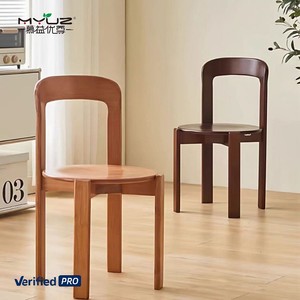
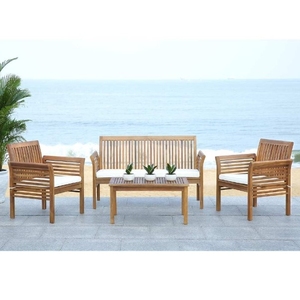
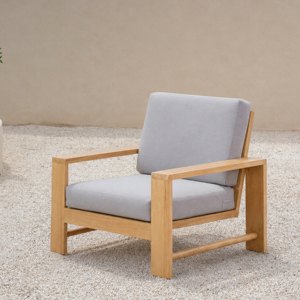
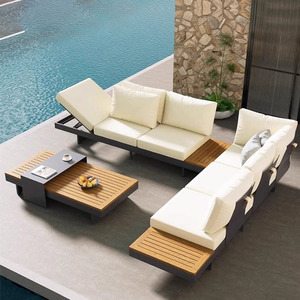
Executive Technical Briefing
Strategic Sourcing of Unfinished Indonesian Teak (Tectona grandis) for the Republic of Iraq
The Iraqi commercial and residential furniture landscape is undergoing a systemic structural transformation. As urbanization accelerates across metropolitan Baghdad, real estate investments scale across Erbil and the Kurdistan Region (KRI), and commercial infrastructure re-emerges along the Basra Shatt al-Arab waterway, institutional developers, high-end hotel chains, and retail importers face a critical technical challenge: sourcing timber that does not split, warp, or delaminate under Mesopotamia's hyper-arid climatic conditions.
Procuring fully finished consumer furniture from overseas often limits Iraqi interior designers and furniture dealers. The primary hurdle lies in surface finishing incompatibility: tropical factory varnishes frequently crack under Iraq’s intense summer UV rays (often exceeding 50°C in July and August) and dry seasonal winds (Al-Shamal). Consequently, the premier trade procurement model has shifted decisively toward Unfinished Teak Furniture Blanks and Raw Precision Frameworks manufactured in Jepara, Central Java, and exported directly to Iraqi trade hubs.
As an established family manufacturing workshop producing high-grade architectural joinery since 1995, Teratai Home (Teratai Furniture) bridges this supply gap. By providing machine-cut, hand-joined, kiln-dried (KD) unfinished teak structures, we allow Iraqi furniture master artisans, project contractors, and luxury upholstery workshops in Baghdad’s Al-Kifah and Karada districts, or Erbil’s Gulan Street and Empire World developments, to apply their proprietary staining, nitrocellulose lacquering, polyurethane sealing, or gold-leaf gilding locally.
Material Performance Analytics
Technical Validation: Why Kiln-Dried Teak Outclasses Alternative Hardwoods in Iraq
In northern and central Iraq, Relative Humidity (RH) routinely fluctuates from 65% in damp winter periods down to under 12% during peak summer heat waves. When importing raw or semi-finished furniture, this dramatic shift triggers catastrophic internal timber tension if the moisture balance is inadequately controlled. The following comparative engineering table illustrates the structural behavior of timber species under Iraqi environmental stressors:
| Property Metric |
Indonesian Teak (Tectona grandis) |
Turkish Beech (Fagus sylvatica) |
European White Oak (Quercus robur) |
Commercial MDF / Veneer |
| Volumetric Shrinkage Coefficient |
5.4% (Ultra-Stable) |
11.8% (Severe movement) |
12.6% (Moderate-High) |
Unstable under moisture cycle |
| Natural Caoutchouc & Resin Content |
Very High (Water & Dust Repellent) |
Extremely Low (Requires coating) |
Low (Subject to tannin bleeding) |
Nil (Synthetic binders) |
| Equilibrium Moisture Content (EMC) in Iraq |
8% – 10% (Pre-calibrated in Kiln) |
12% – 14% (Prone to end-checking) |
11% – 13% (Prone to warping) |
Swells rapidly if unsealed |
| Thermal Shock Resistance (>50°C Sun) |
Exceptional (Does not split) |
Poor (High splitting probability) |
Moderate (Surface checking occurs) |
Adhesive failure / Delamination |
| Termite & Dry Rot Resistance |
Class 1 (Highest Durability) |
Class 5 (Susceptible) |
Class 2–3 (Moderate) |
Class 5 (Highly susceptible) |
Our kiln-drying kilns in Jepara run automated multi-week schedules designed specifically for Middle Eastern exports. Rather than drying timber to a generic European standard (12%–14% MC), timber bound for Iraq is progressively seasoned down to 8%–10%. This rigorous thermal conditioning relieves capillary drying stress and virtually eliminates splitting once arriving in dry ports such as Umm Qasr or traveling via bonded overland trucks through Ibrahim Khalil.
Manufacturing Excellence
Why Global & Iraqi Importers Trust Teratai Home, Jepara
Founded in 1995 on Jl. Raya Soekarno Hatta KM.5, Jepara, Central Java, Teratai Home is not an anonymous broker or trading intermediary. We are a family-owned and operated manufacturing workshop with over 30 years of specialized woodworking heritage. While high-volume automated factories force buyers into rigid minimum order quantities of 500 identical chairs, our workshop configuration empowers boutique importers, interior architects, and commercial distributors.
1. In-House Artisans & Two-Tier QC
Our core in-house team consists of seasoned master woodcrafters, dedicated sanders, and two specialized QC/QA inspectors. Every single tenon, dowel, flush joint, and drawer slide is inspected prior to wrapping. In multi-container orders, buyers receive high-resolution photo/video QA documentation before any container door is sealed.
2. Full Bespoke Fabrication (CAD to Timber)
Send our workshop a CAD technical drawing, an architect's elevation, or even a detailed hand sketch with desired dimensions. Our engineering team calculates timber tolerances, grain orientation, and load-bearing vectors, turning custom design concepts into stable, production-ready furniture.
3. Flexible Container Consolidation
We understand that importing full containers of a single SKU ties up vital liquidity. We welcome mixed 20ft and 40ft High Cube containers combining living sets, dining chairs, console blanks, and folding tables. For trial shipments, we support LCL (Less-than-Container Load) dispatch coordinated with your logistics partners.