
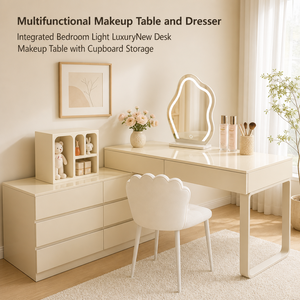
Storage & Vanity
Makeup Vanity Table with Drawers, Multifunctional Dressing Table with Storage, Light Luxury Modern Desk for Bedroom
View Product Specs
Each piece manufactured from certified Indonesian timber, crafted to custom dimensional blueprints, and export-packed for container loading to North America, Europe, and Australasia.
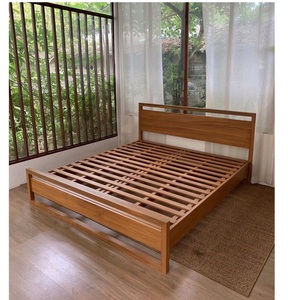
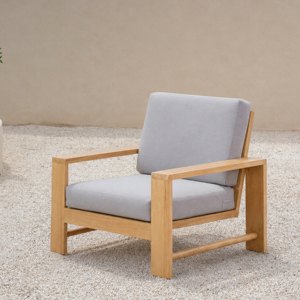
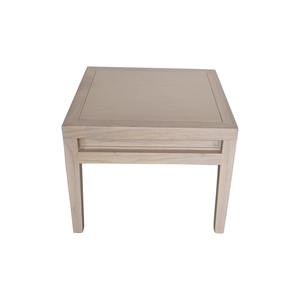
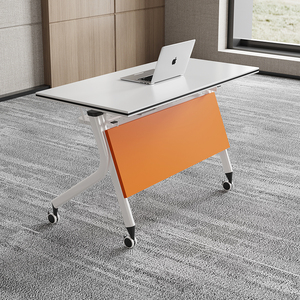
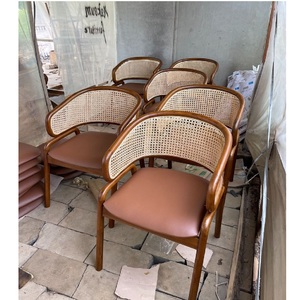
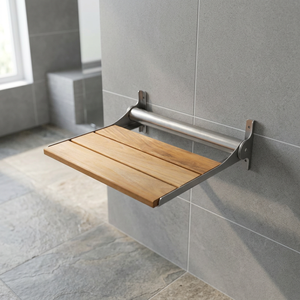
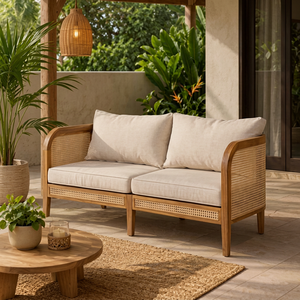
Operating from the epicentre of Indonesian woodworking on Jl. Raya Soekarno Hatta KM.5, Teratai Furniture bridges traditional artisanal joinery with institutional export standards for discerning brand partners.
Whether you require adapting standard credenzas or manufacturing complete bespoke casegoods from 3D CAD models, our master carvers and draftsmen build to micron-level tolerances. We customize core cabinetry depths, internal drawer dividers, wire grommets, and acoustic speaker-cloth mesh inserts.
Unlike monolithic factories demanding 5-container MOQs of identical SKUs, our production model accommodates flexible buyer requirements. We gladly handle full 20ft and 40ft HQ container loading, multi-SKU consolidation, and crated LCL shipments alongside other Indonesian port shipments.
Every sideboard, credenza, and architectural cabinet is supervised by two dedicated Quality Assurance inspectors. Joinery tenons, drawer soft-close glides, moisture readings, and 320-grit surface pre-sanding undergo documented sign-offs prior to multi-layer export carton packing.
Procuring solid teak (*Tectona grandis*) casegoods at scale requires deep material comprehension. Teak is renowned for natural silica content, dense ring formation, and protective essential tectoquinones that resist rot, termites, and atmospheric moisture. However, when exporting handcrafted cabinets from equatorial Indonesia (ambient RH 75–90%) to dry northern hemisphere winters (indoor RH 25–40%), improper timber seasoning causes catastrophic dimensional failure, joint shear, and veneer delamination.
For B2B commercial purchasers, interior designers, and hotel FF&E directors, selecting the correct wood species directly impacts operational lifecycle and margin retention. Below is a comparative material breakdown between our sustainably managed Perum Perhutani Indonesian plantation teak, commercial mahogany, and standard commercial engineered veneers.
| Engineering Factor | Indonesian Plantation Teak (*T. grandis*) | Indonesian Mahogany (*Swietenia*) | Standard Commercial MDF / Veneer |
|---|---|---|---|
| Janka Hardness Rating | 1,000–1,155 lbf (Optimal balance) | 800–900 lbf (Moderate impact) | 400–600 lbf (Low core density) |
| Dimensional Stability | Radial 2.5% / Tangential 5.8% (Superior) | Radial 3.0% / Tangential 4.1% (Good) | High risk of swelling when wet |
| Natural Resin & Oil Content | Rich in natural tectoquinones | Low oil content; requires sealers | None; chemical binding resins only |
| Regulatory Verification | SVLK / V-Legal / EUDR Compliant | SVLK Legal Certification | Formaldehyde CARB P2 / EPA TSCA |
| Refinishing & Longevity | Generational (50+ years sandable) | 20–30 years with recoating | Non-repairable upon edge chipping |
| Best Application | Luxury Sideboards, Credenzas, Wet Bath | Duco Lacquer Painted Cabinets | Disposable flat-pack fast furniture |
At our Jepara workshop, raw planks undergo a three-stage moisture equalization process. First, timber is stacked with uniform sticker spacers for 4 to 8 weeks of open-air seasoning under shaded canopies to discharge free water. Subsequently, timber enters our computerized de-humidification steam kilns where core moisture is drawn down gradually to 10% ±2%, ensuring that internal stress relieves without micro-checking or honeycomb collapse.
In assembly, our carpenters shun cheap dowels or surface brad nails for primary structural chassis. Teak sideboards feature blind mortise-and-tenon joints, housed sliding dovetails for solid timber shelves, and slotted brass z-clips that permit horizontal tabletop drift as ambient humidity fluctuates season to season. Soft-close European concealed hardware (Blum, DTC, or Hettich) is integrated through CNC boring templates to assure silk-smooth drawer action over hundreds of thousands of duty cycles.
Anticipate regulatory transformations, aesthetic shifts, and container efficiency models driving global furniture brand strategies over the next five years.
The implementation of the EU Deforestation Regulation (EUDR) mandates exact GPS polygon tracking back to the harvest plot. Importers will increasingly phase out unverified brokers in favor of established Jepara workshops with closed SVLK chain-of-custody documentation.
Global demand is migrating toward organic curvilinear forms, pill-shaped credenzas, and integrated tambour sliding slatted doors that celebrate tactile grain without aggressive petrochemical stains or synthetic sheen.
Architects and retail brand specifiers demand sideboards integrating solid teak chassis with inset sintered porcelain stone tops, woven natural Viennese cane webbing, and PVD-coated brushed champagne brass hardware accents.
To combat volatile ocean container freight, leading importers prioritize smart knock-down (KD) designs for sideboards where solid legs, door facades, and interior modules pack flat, boosting 40ft HQ container CBM fill rates by up to 45%.
Clear, definitive answers directly from our Jepara workshop floor to help procurement managers, product developers, and overseas buyers finalize import specs.
All teak and mahogany utilized in our production originates from legal Perum Perhutani state plantation concessions and audited community forests certified under Indonesia's mandatory SVLK (Sistem Verifikasi Legalitas Kayu) protocol. Every shipment is accompanied by an authenticated V-Legal Certificate issued through the Ministry of Environment and Forestry, ensuring effortless clearance under the US Lacey Act, EU EUDR, and UK Timber Regulations.
Standard production cycles range between 4 to 6 weeks for a dedicated 20ft FCL and 6 to 8 weeks for a 40ft High Cube container, depending upon the complexity of architectural carving and finish types. For custom OEM prototypes requiring technical CAD shop drawings and wood mockup validation, allow an additional 10 to 14 days prior to mass batch cutting.
Our standard commercial MOQ is one 20ft shipping container, which typically accommodates 65 to 110 assembled solid wood credenzas depending on dimensions. However, we actively accommodate emerging design brands and boutique retailers through consolidated mixed-model containers, where you can combine dining chairs, consoles, tables, and sideboards under a single bill of lading, or arrange LCL consolidation via Surabaya port.
Yes. Approximately 60% of our workshop output is dedicated to OEM/ODM custom contract furniture. Simply provide dimensional requirements, reference imagery, or PDF/AutoCAD blueprints. Our internal technical draughtsman translates your concepts into millwork cut-lists, proposing joinery details, grain orientation, and hardware specifications for written sign-off before sawdust flies.
Moisture control is strictly monitored through calibrated probe hygrometers across every production station. We dry all cabinet boards to an equilibrium moisture content of 8–12%. Furthermore, we use floating mortise-tenon frame-and-panel casework, longitudinal expansion gaps beneath top slabs, and balanced finish coatings on both interior and exterior faces to neutralize hygroscopic tension.
Each sideboard undergoes our rigorous 5-ply export crating procedure: delicate face veneers are lined with soft PE foam, structural corners are shielded with high-density corrugated angles, silica gel desiccant packs are inserted into each drawer cavity to prevent container sweat, and the entire unit is enclosed within double-wall heavy corrugated cartons with optional heat-treated fumigated wooden palletization.
Partner with an authentic, family-run Jepara furniture workshop with 30 years of global export reliability. Speak directly with our master craftsmen, submit your custom architectural casework drawings, or request our complete container catalog.